
 Egypt
Egypt  UAE
UAE  Saudi Arabia
 How to Clean Air Fryer Baskets, Trays and Heating Elements
We may earn a commission from purchases through our links, at no extra cost to you. How we choose · Disclosure.
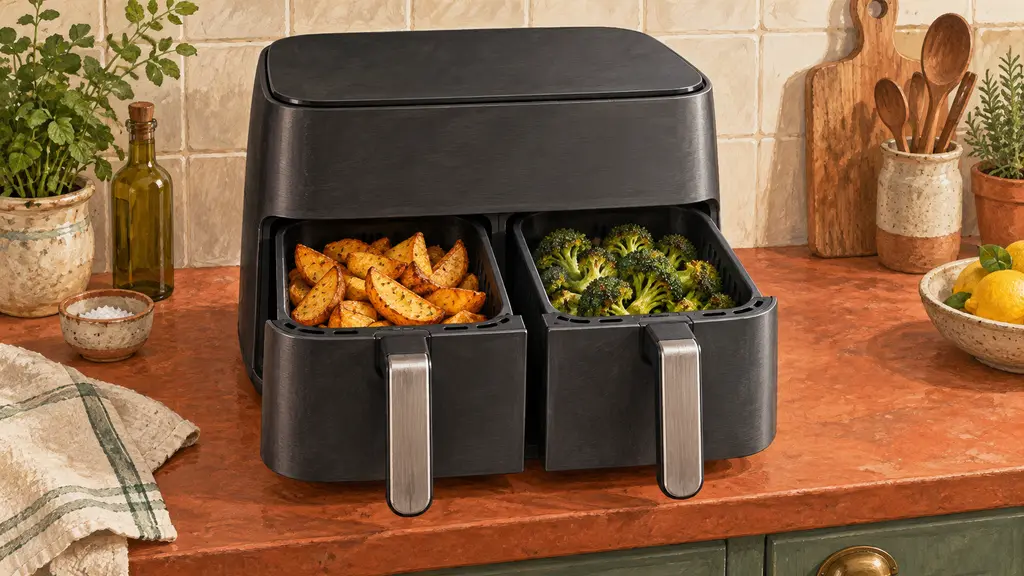
Wash the basket and tray of your air fryer after every use with a soft sponge, warm water, and regular dish soap, and stay away from steel wool or anything abrasive that can scratch the nonstick coating. The heating element gets a wipe once it’s cool, and most parts are technically dishwasher-safe, though hand washing is easier on the coating over the long run.
Never mix vinegar with bleach or any chlorine-based cleaner - the combination releases toxic gases. Use one cleaner at a time and rinse thoroughly between products.
The quick answer
Wash the basket and tray after every use with a soft sponge, warm water, and dish soap, never steel wool or abrasive scrubbers. Wipe the heating element once it’s cooled, soak first instead of scrubbing hard if food is stuck on, and dry everything before you put it back together. That routine alone prevents most of the smoke, smell, and coating damage people run into.
Key takeaways
- An air fryer is essentially a compact convection oven, circulating hot air around the food, which means the oil and crumbs it kicks up land on the basket and the heating element above it (air fryer definition from University of Nebraska-Lincoln Extension).
- The basket and tray have a nonstick coating that scratches easily, so steel wool and abrasive powders are off the table completely.
- Cleaning after every use prevents smoke and a burnt taste, since leftover oil carbonizes the next time you cook and that’s what causes both.
- Many parts are labeled dishwasher-safe, but hand washing is gentler on the coating and extends how long it stays nonstick.
- Never submerge the body of the unit in water. It houses the motor and wiring, so it only ever gets wiped down with a damp, well-wrung cloth (convection oven background from Britannica).
Why cleaning after every use matters
An air fryer works by circulating hot air rapidly around the food so it crisps up, and in the process, small amounts of oil and fat spray off the food and settle on the basket walls and the heating coil above. Leave those deposits in place and they carbonize the next time you cook, which is what causes smoke, lingering smells, and a burnt edge to the taste that a lot of people blame on the appliance itself rather than on buildup. The fix is simple: wash the basket and tray once the unit has cooled, every time you use it. It takes two minutes and saves you a much more tedious deep clean later.
Daily cleaning steps after every use
- Unplug the unit and let it cool for 15 to 20 minutes. Never clean it while it’s hot or still plugged in.
- Remove the basket and tray and scrape any leftover food or excess oil into the trash.
- Soak if food is stuck on. Ten to fifteen minutes in warm water and dish soap loosens grime without hard scrubbing.
- Wash with a soft sponge and regular dish soap, working into the corners and the underside of the tray.
- Wipe the heating element with a damp, well-wrung cloth once it’s cooled, to catch any oil that settled on it.
- Dry everything fully before reassembling. Leftover water can leave spots or, over time, rust.
Basket and coating: do this, not that
The nonstick coating is the most fragile part of the whole unit, and once it’s scratched, it starts flaking and sticking to food. Here’s the quick reference:
| Situation | Do | Don’t |
|---|---|---|
| Scrubbing the basket | Soft sponge or the sponge side of a dual-sided pad | Steel wool or a rough scouring pad |
| Cleaners | Regular dish soap | Abrasive powders or strong bleach |
| Stuck-on food | Soak in warm water first | Chip it off with a knife or metal tool |
| Oil spatter | Wipe it as you go | Let it build up and carbonize |
| Drying | A soft towel | Leaving it wet to air-dry on its own |
The rule of thumb: if you’re scratching the coating, you’re shortening the basket’s life. It’s designed to make cleaning easy in the first place, so it needs gentleness, not force.
Dishwasher-safe parts vs. hand-wash-only parts
Most removable parts, the basket, tray, and rack, are labeled dishwasher-safe in the owner’s manual, so they can technically handle a cycle. But the combination of high heat and strong detergent in a dishwasher can wear down the nonstick coating faster than hand washing does over the life of the unit. If you want the convenience, run those parts on the top rack away from the heating element in your dishwasher, and know you’re trading a bit of coating longevity for less time at the sink. The body of the unit itself, the part with the motor and heating element, never goes in the dishwasher or gets submerged in water. Wipe it from the outside with a damp, well-wrung cloth only.
If you’re cleaning grease out of tight corners
The basket and tray handle most of the mess with a soak and a soft sponge, but the seams around a mesh rack or a separator tray can hold onto grease in spots a flat sponge can’t quite reach. A basket cleaning brush, a small dish brush with stiff-but-nonabrasive bristles built for corners and grates, makes those tight spots faster to clear without you needing to scrub harder or reach for anything abrasive. It’s a small, optional add-on, not a requirement: soaking and a regular sponge get you most of the way there on their own. If you’re still shopping for the unit itself, the Cosori 9-in-1 TurboBlaze 6Qt has removable parts with a good nonstick coating that clean up quickly, and it tops our best air-fryers in the USA guide.
When to stop and call a technician
- Smoke or a burnt smell persists after grease is removed from the basket and cooled heating element.
- The nonstick coating is visibly scratched or flaking.
- Grease around the heating element cannot be reached without spraying or wetting the electrical body.
- Water has entered the body that houses the motor and wiring.
Stop using the air fryer and have it checked by a qualified technician before using it again.
Bottom line
Cleaning an air fryer well comes down to a short routine: wash the basket and tray after every use with a soft sponge and soap, never steel wool or abrasive cleaners, wipe the heating element once it’s cool, and dry everything before reassembling. Parts are usually dishwasher-safe, but hand washing is kinder to the coating over time, and the body itself never touches water. If odors are still hanging around after a good clean, see how to get rid of air fryer smell, and if you’re still deciding whether to buy one at all, read is an air fryer worth it. For the full buying criteria, see our guide to choosing an air fryer, and if a dual-basket model is on your shortlist, is a dual-basket air fryer worth it covers whether the bigger unit is worth the extra cleanup.
For everything in this category in one place, browse our air fryers section.
Sources
- University of Nebraska-Lincoln Extension, “How air fryers work”, definition of the air fryer and how it works (moving hot air that deposits oil and crumbs on the basket): https://food.unl.edu/free-resources/newsletters/food-safety-tips-electric-air-fryers/
- Britannica, “Convection”, background on the convection oven and the forced hot-air principle the air fryer relies on: https://www.britannica.com/science/convection
This analysis is based on published information from University of Nebraska-Lincoln Extension (How air fryers work), Britannica (Convection).
Frequently asked questions
How often should I clean my air fryer?
Wash the basket and tray after every use so oil and crumbs don't build up and cause smoke or a burnt smell later. The heating element only needs a quick wipe every few uses, with a deeper clean once a week or two depending on how often you cook.
Can I put the air fryer basket in the dishwasher?
Many baskets, trays, and racks are labeled dishwasher-safe in the owner's manual, but repeated dishwasher cycles with hot water and strong detergent can wear down the nonstick coating faster over time. Hand washing with a soft sponge is gentler on the coating and helps it last longer. Check your specific model's manual first.
What's the best way to clean burnt-on grease from an air fryer basket?
Soak the basket in hot water and dish soap for 10 to 15 minutes before you scrub anything, which loosens baked-on grease without force. Then wash with a soft sponge and regular dish soap. For stubborn spots, a paste of baking soda and a little water lifts grime without scratching the coating the way an abrasive pad would.
Can I use steel wool or a scouring pad on the basket?
No. Steel wool, scouring pads, and abrasive powders scratch the nonstick coating, which makes it flake and start sticking to food afterward. Stick to a soft sponge, warm water, and regular dish soap, and soak first if food is stuck on instead of scrubbing hard.
How do I clean the heating element inside an air fryer?
Unplug the unit and let it cool completely first. Tilt it gently and wipe the heating coil from above with a sponge dampened in warm, soapy water, then a clean cloth dampened in plain water to rinse off the soap. Never submerge the body of the air fryer or spray water directly into it, since it houses the motor and wiring.