
 Egypt
Egypt  UAE
UAE  Saudi Arabia
 Is a Cheap Air Fryer Good Enough? What You Actually Lose
We may earn a commission from purchases through our links, at no extra cost to you. How we choose · Disclosure.
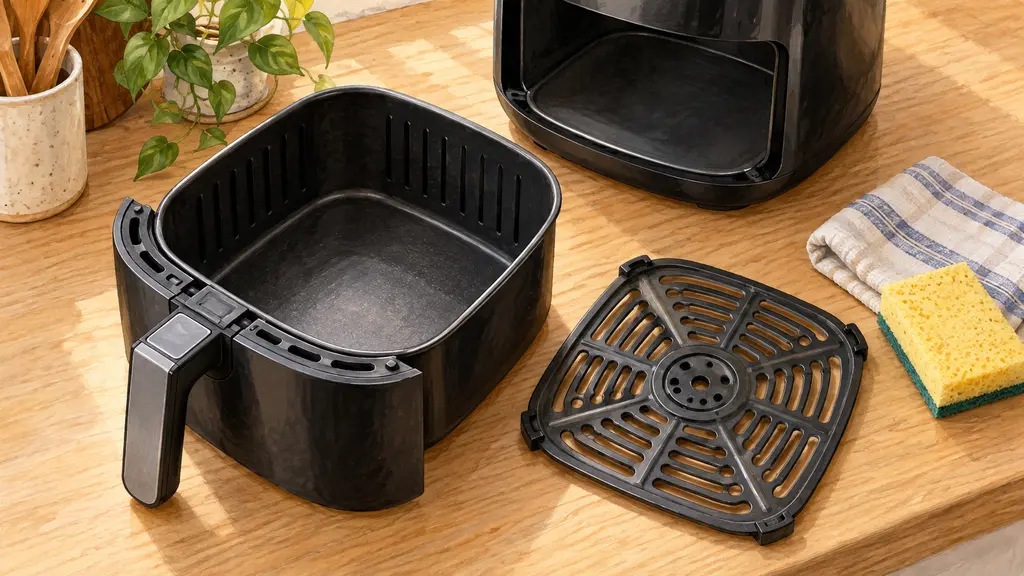
A cheap air fryer, like the CHEFMAN Mini at around $40 can genuinely cook food properly if it has a strong track record of buyer reviews behind it. What you lose at the low end isn’t whether it works, it’s capacity (often a small 2 to 3Qt basket), preset variety, and sometimes how evenly heat reaches every part of the basket. Whether that trade-off is fine for you depends entirely on how many people you’re cooking for and how much you’ll actually use the extra presets.
The quick answer
Yes, a cheap air fryer with solid buyer reviews behind it can cook properly, but you’re trading away basket size, preset variety, and sometimes even-cooking consistency to get the lower price. For one person or light use, that trade is often a smart one. For a family, or if you cook varied meals and want fewer settings to guess at, the mid-tier step-up usually earns its extra cost.
Key takeaways
- The cheapest tier still runs on the same basic principle: a fan circulating hot air around food in a basket, and that core mechanism works at any price point (air fryer definition from University of Nebraska-Lincoln Extension).
- Basket capacity is the first thing that shrinks at the low end. Budget models commonly sit around 2Qt, enough for one person, not a family meal.
- Preset variety drops too, so a cheap unit may leave you guessing time and temperature for foods a pricier model has a dedicated setting for.
- Even cooking is where the real risk lives. A well-reviewed cheap model still crisps evenly enough for daily use, but the cheapest, least-reviewed listings are more likely to need extra shaking to compensate for hot spots.
- Review depth matters more than the price tag itself. Thousands of buyer reviews on a $40 model is a stronger signal than a handful of reviews on a $60 one.
What you actually get at the low end
A budget air fryer still uses the same fan-and-heating-element design as every other model, so it genuinely does cook and crisp food, it isn’t a compromised version of the mechanism itself. The CHEFMAN Mini 2Qt is a real example: it holds digital controls despite its entry price and already carries thousands of positive buyer reviews on Amazon.com. That review depth is the part that actually matters at this price point, since it tells you real owners are using it daily and it’s holding up, not just that it looked fine in a listing photo.
What you give up as the price drops
The most immediate trade-off is capacity. A 2Qt basket suits one person or a light snack, not a family dinner, so if you’re cooking for more than one or two people regularly, the cheapest tier will have you running multiple batches every meal. Preset variety is the second trade-off: pricier models often add 8 or 9 dedicated presets for common foods, while budget units may only offer a handful of basic settings, leaving you to look up or guess the right time and temperature more often. The third, and the one worth paying closest attention to, is even cooking. A fan-and-basket design that isn’t well engineered can leave hot spots that need extra manual shaking mid-cook to get an even result, and this is exactly the kind of issue that shows up in buyer reviews before it shows up in a spec sheet.
Budget vs mid-tier at a glance
| Budget tier (≈ $40-50) | Mid tier (≈ $80-90) | |
|---|---|---|
| Typical capacity | 2 to 3Qt, fits one person | 5 to 6Qt, fits two to four people |
| Presets | A handful of basic settings | 8 to 9 dedicated presets for common foods |
| Even cooking | Fine if well-reviewed, more shaking needed on weaker designs | Purpose-built heating aims to reduce hot spots |
| Best for | One person, light use, a first air fryer to try the format | A household cooking varied meals regularly |
| Review depth to look for | Thousands of reviews even at the low price | Thousands of reviews, often the deepest track record in the category |
When cheap is genuinely the right call
If you’re cooking for one person, or you just want to try the format before committing more money, the cheapest well-reviewed option is a reasonable, low-risk buy. There’s no real functional downside for light, single-serving use, and you’re not paying for capacity or presets you won’t touch. The one thing worth checking before you buy at this tier is the actual review volume, since a cheap listing with only a handful of reviews is a different risk than a cheap listing with thousands of them.
When it’s worth spending more
Once you’re cooking for a household of two or more, want enough presets that you’re not guessing settings every time, or you’ve noticed reviews on the cheapest options mentioning uneven results, the mid-tier step-up starts earning its price. The Cosori 9-in-1 TurboBlaze 6Qt is the clearest example of that step-up done well: roughly double the basket capacity of the cheapest tier, nine presets covering most everyday cooking, and thousands of positive reviews on Amazon.com backing up the even-cooking claim. It’s the top pick in our guide to the best air fryers in the USA for exactly these reasons.
See the Cosori TurboBlaze price on Amazon ↗
Bottom line
A cheap air fryer is good enough if you’re cooking for one, want a low-risk first try, and you pick one with a genuinely deep track record of buyer reviews rather than just the lowest price on the page. Once you’re feeding more than one or two people, want more presets, or capacity matters, the mid-tier step-up is worth the extra cost. Either way, check air fryer prices in the USA before you buy, and match the basket size to your household with our guide on what size air fryer do I need. If you’re weighing durability into the decision too, see how long does an air fryer last, and our full guide to choosing an air fryer covers the rest of the criteria.
For everything in this category in one place, browse our air fryers section.
This analysis is based on published information from Amazon.com.
Frequently asked questions
Is a cheap air fryer good enough for everyday cooking?
For basic cooking, yes. A budget air fryer with a good review track record still circulates hot air and crisps food properly. What you give up at the low end is mostly capacity, preset variety, and sometimes even heating, not whether it works at all.
What's the actual difference between a $40 air fryer and a $90 one?
The main differences are basket size (budget models often top out around 2 to 3Qt), the number and precision of cooking presets, and how evenly the design circulates hot air across the whole basket. A step up to around $90 typically buys a bigger 6Qt basket, more presets, and a heating design aimed specifically at even crisping.
Can a budget air fryer cook as evenly as an expensive one?
It can get close if the design is solid and the reviews back it up, but the cheapest tier is more likely to have hot spots that need extra shaking mid-cook to compensate. Read the actual buyer reviews for even cooking complaints rather than assuming price alone predicts the result.
When does it make sense to spend more than the cheapest air fryer?
Spend more once you need capacity for more than one or two people, want a wider range of presets so you're not guessing settings, or you've read reviews of the cheapest options mentioning uneven cooking or a coating that flakes quickly. If none of those apply to your household, the cheapest well-reviewed option is a reasonable buy.