
 Egypt
Egypt  Saudi Arabia
  USA
USA Is a Baby Food Maker Worth It?
We may earn a commission from purchases through our links, at no extra cost to you. How we choose · Disclosure.
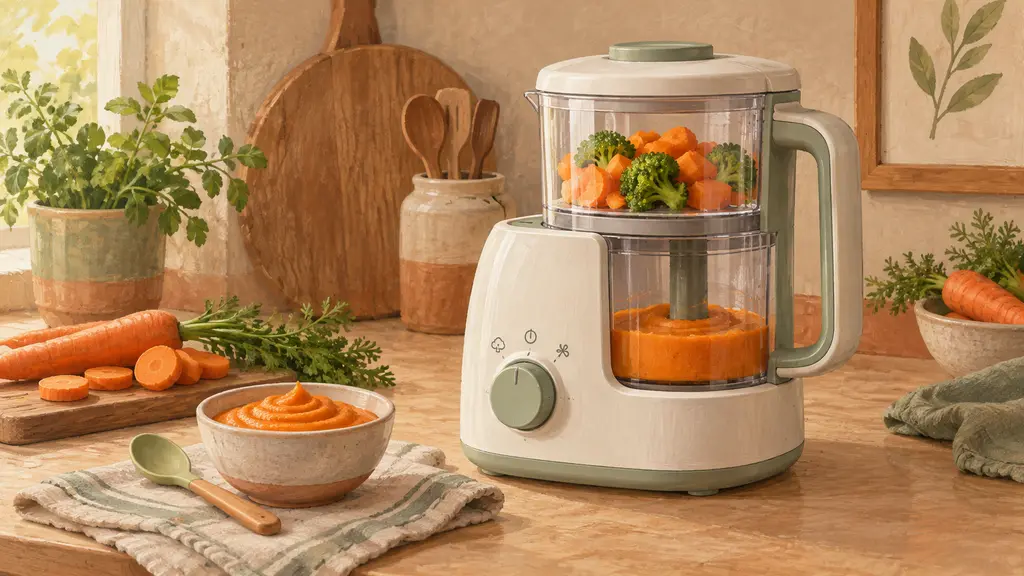
As your baby gets closer to solid foods, a common question comes up: do you buy a dedicated baby food maker, or does your regular blender or food processor already cover it? The answer depends on how often you’ll actually be cooking at home and how much time you want to save, and this guide compares the two honestly before you decide.
The quick answer
A dedicated baby food maker is worth buying if you’re cooking for your baby at home regularly and want to combine steaming, pureeing, and freezing into one appliance instead of juggling multiple tools. If you only prepare small batches occasionally, or mostly rely on ready-made baby food, your regular blender or food processor gets you nearly the same result without an extra appliance on the counter.
Key takeaways
- A dedicated unit combines steaming and pureeing in one step, while the traditional method needs a pot or steamer basket followed by a separate blender (general background on baby food from American Academy of Pediatrics).
- Final food quality is very similar between the two methods, the real difference is workflow convenience and how many dishes you wash afterward.
- A dedicated maker pays off more with frequent cooking, while occasional prep usually doesn’t justify an extra appliance.
- Included freezer accessories, when a model has them, are a genuine add, since they portion a batch into small servings ready for the freezer.
- Readiness for solid foods is a medical question, ask your pediatrician about the right timing for your specific baby before you buy or start.
What does a dedicated baby food maker actually do?
The core idea is simple: one unit steams vegetables or fruit, then purees them directly in the same bowl, saving you the step of moving hot food from a pot to a separate blender. Some models add extra functions like sterilizing, reheating, or defrosting, and some come with dedicated freezer trays or pouches designed to portion a batch into small servings.
What you probably already own
Most kitchens already have tools that do the same job in two separate steps instead of one: a regular steamer basket or pot to cook the vegetables and fruit, then a blender or food processor to puree it to the texture your baby’s age calls for. The result is very close in food quality to a dedicated unit, but you wash an extra pot and manually move hot food between the two tools.
When is the dedicated unit worth it?
A dedicated maker makes more sense if you:
- Cook for your baby at home regularly, several times a week rather than the occasional batch.
- Want fewer dishes and steps every time you make a meal.
- Rely on freezing several portions in advance, and the included freezer trays or pouches on some models actually help.
- Have counter or cabinet space to spare for an appliance you won’t use for anything else.
When do your current tools cover it?
Skip the purchase if you:
- Make small batches occasionally, and mostly rely on ready-made baby food.
- Already own a decent blender or food processor and don’t mind the extra step of moving food from a steamer to it.
- Have limited kitchen space, and would rather not add a single-purpose appliance to the counter.
Quick comparison: dedicated maker vs your current tools
| Factor | Dedicated baby food maker | Blender or food processor + steamer |
|---|---|---|
| Number of steps | One: steam then puree in the same bowl | Two separate steps with manual transfer between them |
| Final food quality | Good | Good, very close to the dedicated unit |
| Extra investment | A new single-purpose appliance | None if you already own the tools |
| Counter or cabinet space | Extra appliance needs its own spot | No extra space if the tools already serve other uses |
| Freezing | Dedicated trays or pouches on some models | Regular freezer containers you buy separately |
| Best for | Frequent home prep, several times a week | Occasional prep, or a tight budget and kitchen |
The simple rule: frequent prep and space to spare, a dedicated maker pays off. Occasional prep or a tight kitchen, your current tools are enough.
Before you buy: other gear this stage needs
The start of solid foods often overlaps with reviewing your bottle sterilizing routine with your pediatrician too, so if you’re wondering when you can stop the daily sterilizing step, our guide on when to stop sterilizing baby bottles breaks down the practical signs parents rely on. And if you’re still sterilizing daily and want an appliance that saves time, the Philips Avent Premium bottle steriliser and dryer tops our picks in the best bottle sterilizer in the UAE guide, since it finishes sterilizing and drying in one step, backed by thousands of buyers on Amazon.ae.
Bottom line
A dedicated baby food maker is worth buying if you cook for your baby at home regularly and want to combine steaming, pureeing, and freezing into one appliance, but it isn’t necessary if you only make small batches occasionally or already own a good blender. Check your kitchen space and how often you’ll actually be cooking before you decide, and always ask your pediatrician about the right timing for starting solid foods. For the bottle stage, see our guide to the best bottle sterilizer in the UAE or read when to stop sterilizing baby bottles. For everything else in this category, browse baby appliances or the guide on how to choose baby appliances.
Sources
- American Academy of Pediatrics, “Starting solid baby foods”, general background on baby food and preparation methods: https://www.healthychildren.org/English/ages-stages/baby/feeding-nutrition/Pages/starting-solid-foods.aspx
This analysis is based on published information from American Academy of Pediatrics (Starting solid baby foods).
Frequently asked questions
Is a baby food maker worth buying?
It's worth it if you're regularly cooking your baby's food at home and want to fold the steaming, pureeing, and freezing steps into one appliance instead of moving between a pot, a blender, and separate freezer containers. If you only make small batches occasionally, or mostly rely on ready-made baby food, your regular blender or food processor likely handles the job fine without an extra appliance.
Can I use a regular blender instead of a dedicated baby food maker?
Yes, absolutely. Steam the vegetables or fruit on the stove or in a regular steamer basket, then puree them in your existing blender or food processor to the texture that suits your baby's age. The difference is that a dedicated unit combines the steaming and pureeing steps in one bowl, saving you an extra pot to wash, but the final food quality is very similar.
When do babies usually start solid foods?
We're not medical professionals, so always follow your pediatrician's recommendation on timing and readiness signs for your specific baby. Starting solids is commonly discussed around six months in a lot of general guidance, but the final call for your child specifically should come from your doctor.
Does a baby food maker need a lot of storage space?
The unit itself takes up roughly the same counter or cabinet space as a mid-size blender, but the real space addition usually comes from included freezer trays or pouches if you pick a model that has them. If your kitchen space is very tight, a small blender or chopper you also use for other things might be the smarter space-wise choice.
Can I freeze baby food in the same machine?
Most dedicated baby food makers don't freeze inside the unit itself, but many come with separate freezer trays or pouches designed to portion a batch into small servings for the regular freezer. Check the specific model's listing on Amazon.ae to see whether it includes freezing accessories or not.