
 Egypt
Egypt  UAE
UAE  USA
USA Why Does an Air Fryer Smell? Causes and Fixes
We may earn a commission from purchases through our links, at no extra cost to you. How we choose · Disclosure.
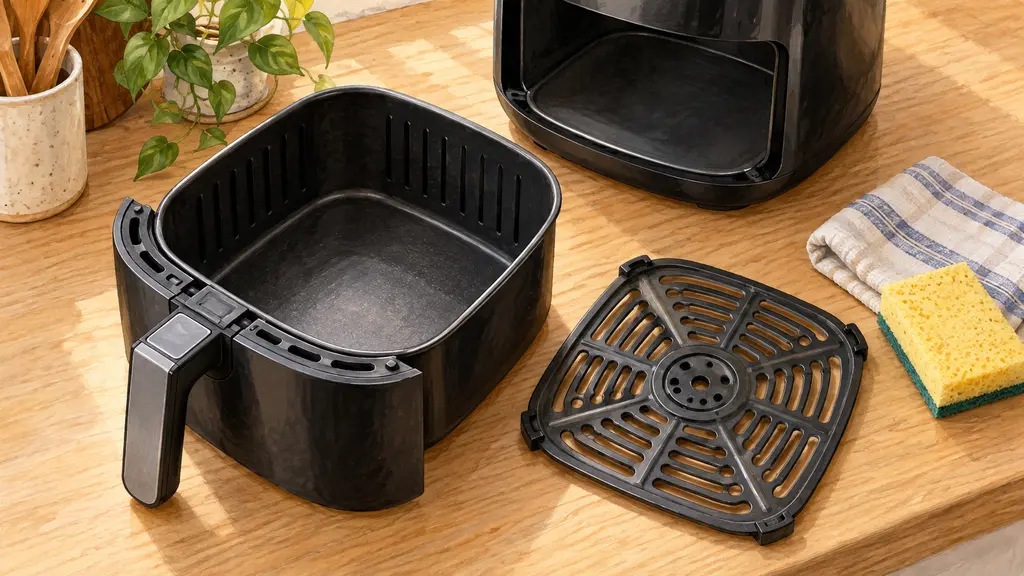
A bad air fryer smell is most often caused by burnt grease built up on the heating element or in the corners of the basket, not a fault in the unit. The fix is a deep clean of the basket, drawer, and heating element once it’s cooled, plus running it empty on low heat for a few minutes with lemon or diluted white vinegar for stubborn odors. A light plastic smell in a new unit is normal and usually fades within the first few uses. Here’s every cause and fix in detail.
Never mix vinegar with bleach or any chlorine-based cleaner - the combination releases toxic gases. Use one cleaner at a time and rinse thoroughly between products.
The quick answer
A bad air fryer smell is mainly caused by burnt grease buildup on the heating element or in the corners of the basket, and the fix is washing the basket and drawer after every use and wiping the heating element once it’s cooled, plus running the unit empty with lemon or diluted white vinegar for stubborn smells. A new-unit plastic smell is normal and fades after the first few uses. Avoid air fresheners, since they mask the cause rather than fix it.
Key points
- An air fryer works on the principle of convection, so oil and fat sprays kicked up while cooking settle on the basket and heating element, and if left to build up they burn and produce a smell the next time the unit heats up (air fryer definition from University of Nebraska-Lincoln Extension).
- A plastic smell in the first uses of a new unit is normal, and usually fades within 3 to 5 runs.
- Food residue in the corners of the basket and drawer is another common cause, especially in corners that are easy to miss during a quick wash.
- Strong-smelling foods like fish need better ventilation while and after cooking, not treatment of the unit itself.
- Air fresheners mask the smell without fixing its cause, the real fix is always removing the built-up grease, not covering it up (convection oven background from Britannica).
Cause one: burnt grease buildup
This is by far the most common cause. Small sprays of oil and fat fly up during cooking and settle on the basket wall and the heating element above it. If they’re not cleaned regularly, these deposits burn (carbonize) every time the unit reheats, which is exactly what produces the smoke and sharp smell. The direct fix: wash the basket and drawer after every use with warm water and regular dish soap, and wipe the heating element with a damp, well-wrung cloth once it’s fully cooled.
Cause two: plastic smell in a new unit
Most new electrical appliances, air fryers included, give off a light plastic or component smell during the first few uses because of the materials used in manufacturing. This smell is completely normal and doesn’t indicate a fault. To speed it up, run the unit empty on low heat for about 10 minutes before the first real cook, with good kitchen ventilation while you do.
Cause three: food residue in neglected corners
A quick wash sometimes misses the corners of the basket, drawer, and bottom rack, where small crumbs and oil residue hide. This buildup adds an extra smell source on top of the heating element itself over time. When washing, take the time to work the corners and underside of the rack, not just a quick wipe of the visible surface.
Cause four: strong-smelling foods without enough ventilation
Some foods, like fish or strong spices, leave a lingering smell in the kitchen and sometimes in the unit itself if ventilation isn’t good enough during and after cooking. This isn’t a fault in the air fryer, it just needs a window open or the kitchen extractor running while cooking that kind of food, and leaving the unit open a bit afterward to air out.
How to fix stubborn smells
- The lemon or vinegar trick: place half a lemon or two tablespoons of diluted white vinegar with a little water in the basket, and run the unit empty on low heat for 3 to 5 minutes. The resulting steam loosens odors and light grease, then leave the unit open to air out.
- Baking soda for stubborn stains: make a paste of baking soda and a little water, apply it to the stain, wait 10 minutes, and wipe it off with a soft sponge. It lifts stains without scratching the coating like abrasives do.
- Air it out after every use: leave the unit open a bit after cleaning instead of closing it right away, which speeds up drying of any leftover moisture and reduces the chance of a stale smell developing.
Quick table: cause versus fix
| Cause | Fix |
|---|---|
| Burnt grease on the heating element | Deep clean once cooled with a soft sponge and soap |
| Plastic smell in a new unit | Run it empty on low heat before the first use |
| Food residue in the corners | Thorough wash of basket, drawer, and rack after every use |
| Strong-smelling foods | Good ventilation during and after cooking |
| Stale smell after washing | Leave the unit open a bit to dry and air out |
Degreaser cleaning spray: a convenient, not necessary, option
Regular cleaning after every use, plus the lemon or vinegar trick and baking soda for stubborn stains, solves the problem in the vast majority of cases with no extra product at all. But for anyone who deals with stubborn grease buildup often and prefers a faster route, a degreaser cleaning spray offers an easier step before rinsing, especially for hard-to-reach corners. It’s a convenience option for speed, not a necessary substitute for regular cleaning with lemon, vinegar, or plain soap.
A model that makes avoiding the smell easier from the start
A unit whose parts clean easily reduces the chance of grease building up in the first place. The Cosori 6.4L Wi-Fi Air Fryer is a good example: its basket and drawer have a non-stick coating that wipes clean easily with a soft sponge, and its parts come apart easily to reach every corner. That simple design is part of why it tops our guide to the best air fryer in Saudi Arabia.
See the Cosori 6.4L Wi-Fi Air Fryer price on Amazon.sa ↗
When to stop and call a technician
- Smoke or a sharp burnt smell returns after built-up grease and crumbs are removed.
- A plastic smell does not fade after the first few empty runs with good ventilation.
- The odor persists after the basket, drawer, and cooled heating element are thoroughly cleaned.
Stop using the appliance and have a qualified technician inspect it before using it again.
Bottom line
An air fryer smell is, in most cases, just built-up grease that needs regular cleaning, not a fault in the unit. Wash the basket and drawer after every use, wipe the heating element once it’s cooled, and use lemon, vinegar, or baking soda for stubborn smells instead of air fresheners that only mask the problem. If you want to care for your unit comprehensively to avoid this issue down the line, see air fryer maintenance tips to make it last longer, and if you’re still choosing the right model, avoid common air fryer buying mistakes first. You can also browse the full air fryers section.
Sources
- University of Nebraska-Lincoln Extension, “How air fryers work”, definition of the air fryer and how it works, and how oil sprays settle on the basket and heating element: https://food.unl.edu/free-resources/newsletters/food-safety-tips-electric-air-fryers/
- Britannica, “Convection”, background on the convection heating principle the air fryer relies on: https://www.britannica.com/science/convection
This analysis is based on published information from University of Nebraska-Lincoln Extension (How air fryers work), Britannica (Convection).
Frequently asked questions
Is a new air fryer smell normal?
Yes, usually. Most new appliances give off a plastic or component smell during the first few uses, which is normal and typically fades within the first 3 to 5 runs. Running the unit empty on low heat for a few minutes before the first real cook speeds up how fast the smell clears.
How do I remove a burnt oil smell from an air fryer?
Wash the basket and drawer well with warm water and dish soap, and wipe the heating element once it's fully cooled. For stubborn smells, place half a lemon or diluted white vinegar in the basket and run the unit empty on low heat for a few minutes, then leave it open to air out.
Does an air fryer smell mean something is broken?
In most cases, no. The smell comes from grease or food residue built up on the heating element or in the corners of the basket, not a mechanical fault. If the smell persists despite repeated thorough cleaning, it's worth checking the manual or contacting customer support to be sure.
Can I use an air freshener inside an air fryer?
It's not recommended. Spraying air fresheners inside the unit masks the smell temporarily without addressing its actual cause, and can leave chemical residue on a surface that later touches food. Actually cleaning off the built-up grease is the right fix, not covering it up.