
 Egypt
Egypt  UAE
UAE  USA
USA Dehumidifier or Air Purifier? Moisture and Dust in Saudi Homes
We may earn a commission from purchases through our links, at no extra cost to you. How we choose · Disclosure.
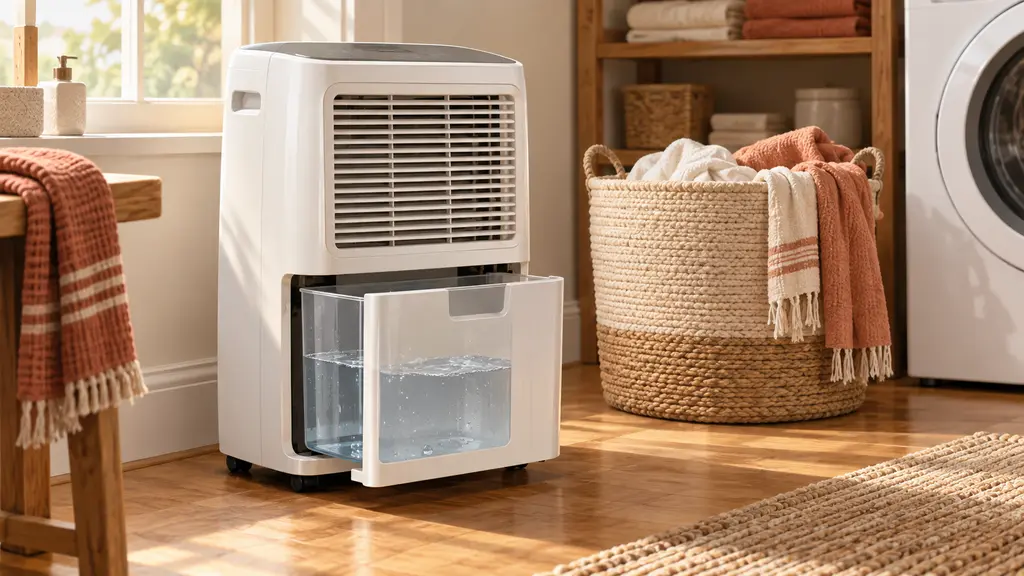
If you’ve searched Amazon.sa wondering whether a dehumidifier or an air purifier is the fix for a stuffy, uncomfortable room, you’re not alone, and it’s an easy mix-up to make since both devices sit in the same “air quality” aisle and both promise a healthier home. But they solve genuinely different problems: moisture versus particles. Get the wrong one and you’ll spend money on a device that does nothing for the actual issue you’re having, so let’s untangle which one you actually need before you shop the best dehumidifier in Saudi Arabia.
The quick answer
A dehumidifier removes water vapor from the air to control humidity, dampness, and musty smells. An air purifier filters particles like dust, pollen, and smoke out of the air you breathe. If your room feels damp, smells musty, or shows condensation, you need a dehumidifier. If you’re dealing with dust buildup, allergy symptoms, or airborne particles, you need an air purifier. They rarely substitute for each other, and plenty of Saudi homes genuinely need both.
Key takeaways
- A dehumidifier’s job is moisture, full stop. It pulls water vapor out of the air, which is what actually fixes a damp, musty room or condensation on windows and walls.
- An air purifier’s job is particles, full stop. It filters dust, pollen, smoke, and similar airborne particles as air passes through it, typically through a HEPA filter.
- Neither one does the other’s job. A dehumidifier won’t filter dust, and an air purifier won’t lower humidity in any meaningful way.
- Saudi conditions can create both problems at once. Closed windows during AC season drive dampness, while dust storms and desert dust drive the particle problem, and they’re unrelated causes.
- Match the symptom to the device. Damp, musty, condensation, that’s humidity. Dusty surfaces, sneezing, hazy air after a dust storm, that’s particles.
What a dehumidifier actually does
A dehumidifier, like the compressor units in our best dehumidifier in Saudi Arabia roundup, pulls air across a cold coil, which condenses the water vapor in the air into liquid water that collects in a tank. The drier air is then released back into the room. This is why a compressor dehumidifier like the Pro Breeze 12L/Day is rated in liters per day, that’s a direct measure of how much moisture it’s pulling out of your air. It does nothing to filter the air itself, if there’s dust or pollen circulating, it passes straight through a dehumidifier untouched.
This matters most in Saudi homes where running the AC with windows closed for long stretches can trap moisture indoors rather than clear it. The result is a musty smell in a closet, condensation on a cooler wall or window, or just that heavy, damp feeling in a room even with the AC running. A dehumidifier working alongside your AC, not instead of it, is what actually fixes that.
What an air purifier actually does
An air purifier pulls air through a filter, usually a HEPA filter, that physically traps particles: dust, pollen, pet dander, smoke, and similar airborne matter. The air that comes out the other side has fewer particles in it, which is what makes a room feel less dusty and can help with allergy symptoms. It has no mechanism for removing water vapor from the air, filtering particles and condensing moisture are simply different physical processes, so an air purifier running in a damp room will filter the dust in that damp air without doing a thing about the dampness itself.
This is the device you want if your actual complaint is dusty surfaces that build up fast, sneezing or allergy flare-ups indoors, or a hazy, gritty feeling in the air after a dust storm, which is a real and recurring issue across Saudi Arabia. If that’s your problem, see our guide to the best air purifier in Saudi Arabia rather than shopping this dehumidifier lineup.
Quick comparison: which one for what?
| Factor | Dehumidifier | Air purifier |
|---|---|---|
| What it removes | Water vapor (humidity) | Particles (dust, pollen, smoke) |
| Fixes a damp or musty room | Yes | No |
| Fixes dusty air or allergy symptoms | No | Yes |
| Rated by | Liters removed per day | Filter type and room coverage |
| Best Saudi trigger | Closed-window AC season, humid rooms | Dust storms, dusty homes, allergies |
The simple rule: room feels damp, musty, or shows condensation → dehumidifier. Air feels dusty, hazy, or triggers allergies → air purifier. If you want the full buying criteria for a dehumidifier specifically, room size and how it works alongside your AC, the guide on how to choose a dehumidifier walks through it in detail.
So which one should you actually buy?
Start by naming the actual symptom, not the product category. If a room smells musty, feels heavy or damp, or you’re seeing condensation on windows or walls, that’s a humidity problem, and a compressor dehumidifier is the fix. A practical example that balances price and real capacity: the Pro Breeze 12L/Day Digital Dehumidifier, which pulls a meaningful 12 liters a day and carries thousands of positive reviews on Amazon.sa. We didn’t pick it because it’s the biggest unit available, we picked it because it’s a genuinely reliable compressor dehumidifier at a fair price for most Saudi bedrooms and living rooms, which is what earns it the top spot in our guide to the best dehumidifier in Saudi Arabia. You’ll find its current price and the Amazon.sa link in the card below.
If instead your actual complaint is dust, allergy symptoms, or that gritty feeling in the air, especially after a dust storm, an air purifier is the tool for that job, not a dehumidifier. And if you’re honestly dealing with both a damp problem and a dust problem, which does happen in closed-window, AC-heavy Saudi homes, running one of each addresses both causes properly instead of hoping one device stretches to cover the other.
Read your needs in a minute
- Ask yourself: does the room feel damp, musty, or show condensation, or does it feel dusty and trigger sneezing or allergies?
- Damp, musty, condensation → you need a dehumidifier. Dusty, hazy, allergy symptoms → you need an air purifier.
- If you’re not sure, check for both: a musty smell plus visible dust buildup usually means you have both problems, not one.
- Size the dehumidifier to your room: a bedroom generally needs less capacity than an open-plan living area, covered in the buying guide.
- See dehumidifier prices in Saudi Arabia to check what each tier actually costs before you decide, and remember all prices are approximate and change.
For everything in this category in one place, browse our dehumidifiers section.
This analysis is based on published information from Amazon.sa.
Frequently asked questions
Can an air purifier reduce humidity in a room?
No, not meaningfully. An air purifier's job is filtering particles like dust, pollen, and smoke out of the air as it passes through a filter, typically HEPA. It doesn't remove water vapor, so a genuinely humid, damp, or musty room stays humid no matter how good the air purifier's filter is. If moisture is the actual problem, you need a dehumidifier like the Pro Breeze 12L/Day, not a purifier.
Will a dehumidifier reduce dust in my home?
Not directly. A dehumidifier's job is pulling water vapor out of the air to control humidity, and while lower humidity can sometimes make a room feel less musty, it doesn't filter dust, pollen, or other airborne particles out of the air the way an air purifier does. If dust is your main complaint, an air purifier is the right tool, and running a dehumidifier alongside it won't substitute for proper filtration.
Can dry air from a dehumidifier make dust worse?
It's not a strong effect either way in most homes, but a dehumidifier and an air purifier aren't working against each other, they're just handling separate problems. If your home has both a damp, musty issue and a dust issue, which is common in Saudi Arabia with closed windows and constant AC, running a dehumidifier for moisture and an air purifier for particles addresses both rather than expecting either device to cover the other's job.
Do I need both a dehumidifier and an air purifier?
Only if you actually have both problems. If your home feels damp, smells musty, or you're seeing condensation, that's a humidity problem calling for a dehumidifier. If you're dealing with dust buildup, allergies, or airborne particles, especially during dust storms, that's a job for an air purifier. Many Saudi homes with closed windows and long AC use do face both issues, in which case running one of each addresses the actual causes rather than hoping one device covers both.