
 Egypt
Egypt  UAE
UAE  USA
USA How to Clean and Sanitize a Water Dispenser at Home
A practical guide to cleaning and sanitizing a water dispenser: removing mold, algae, and mineral scale from the reservoir and taps, plus a cleaning schedule for any home.
We may earn a commission from purchases through our links, at no extra cost to you. Full disclosure.
Clean the water dispenser’s reservoir with warm water and a little mild dish soap at least every two weeks, and rinse it thoroughly every time you swap in a new bottle. Deep-sanitize the tank every one to two months with a diluted white vinegar solution to clear mineral scale and the invisible biological buildup that doesn’t show at a glance. The taps themselves need a weekly wipe with a clean cloth, since buildup around the spout is the number one cause of the off-tasting or smelly water many people complain about.
The quick answer
Clean the water dispenser’s reservoir with warm water and dish soap at least every two weeks, and deep-sanitize it with diluted white vinegar every one to two months to clear mineral scale and invisible biological buildup. Wipe the taps weekly with a clean cloth, and rinse the reservoir thoroughly every time you swap in a new bottle. Avoid concentrated bleach and abrasive cleaners inside the tank, since residue from either can end up in your drinking water.
Key points
- A household water dispenser is essentially a storage vessel connected to hot and cold taps (water cooler background from ENERGY STAR), and any stagnant moisture inside it is a suitable environment for algae and biological buildup over time if cleaning is neglected.
- The white mineral scale around the tap and tank comes from the minerals in the water itself, and it builds up faster in areas with harder water (limescale background from USGS).
- A bad water smell is usually caused by simple biological buildup inside the tank or around the tap spout, not a fault in the machine itself.
- Diluted white vinegar is a safe, cheap cleaner and sanitizer, while concentrated bleach and abrasive materials can leave chemical residue or scratch the interior surface.
- How often you clean matters more than how strong the cleaner is. A tank cleaned regularly every two weeks never needs a painful, overdue deep sanitizing session.
Why does a water dispenser need regular cleaning?
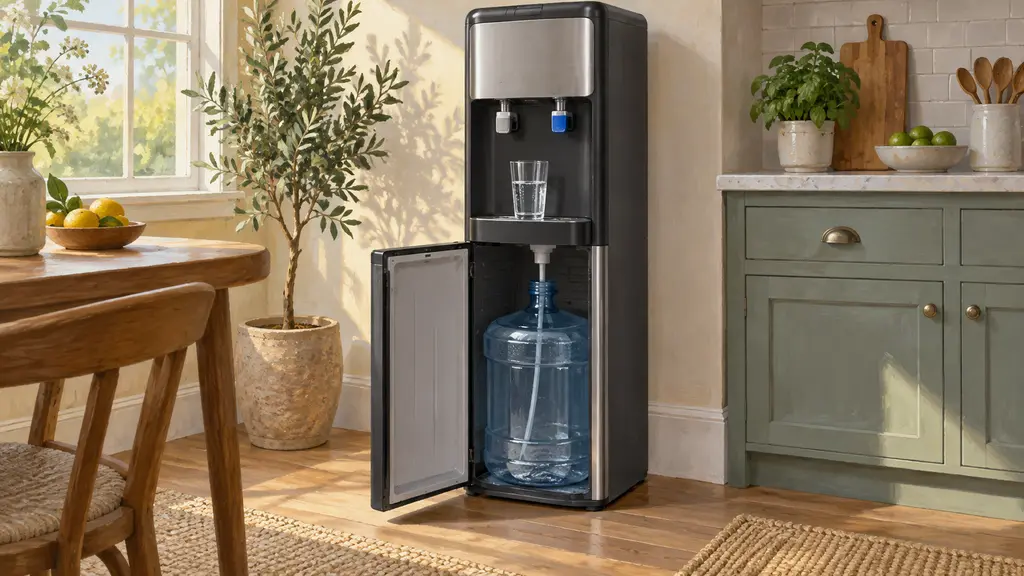
A household water dispenser, whether it’s a full bottom-load unit or a pump that fits onto a standard bottle, is effectively a small reservoir that isn’t sealed airtight, connected to taps that open to the outside air with every use. That means moderate humidity and room temperature inside the unit create a suitable environment for algae and mild biological buildup over time if the tank goes weeks or months without cleaning. At the same time, the minerals in the water itself gradually deposit around the tap spout and tank wall as a white mineral layer, especially in areas with harder water.
The practical result of all this is clear: water that starts tasting or smelling different, and a tap whose flow gradually weakens because of the scale buildup. The good news is the fix is simple and fast, as long as it happens on a regular schedule instead of turning into a delayed, heavier cleaning job.
Quick weekly cleaning steps
The weekly clean takes just a few minutes and doesn’t require taking the unit apart:
- Wipe the taps down from the outside with a clean cloth dampened with warm water and a little dish soap, focusing on the tap spout itself where water residue collects.
- Check the drip tray under the taps and empty and clean it if drips have been collecting there, since stagnant moisture in that spot is an ideal environment for biological buildup.
- Check the current bottle and its top opening for dust or dirt before loading a new one.
- Dry the exterior surfaces well after wiping, since leftover moisture encourages algae growth on the outside too.
Monthly deep-sanitizing of the inner reservoir
Once every one to two months depending on how heavily you use it, run a deeper sanitizing pass on the inner reservoir:
- Unplug the unit if it has a heating or cooling element, and empty out any water left in the inner reservoir.
- Prepare a diluted white vinegar solution, roughly one cup of vinegar per several cups of warm water, and pour it into the inner reservoir if the model allows it, or use it to wipe down the accessible parts. Keep vinegar away from bleach and other chlorine cleaners, since the mixture gives off toxic chlorine gas, and rinse the tank before you try another product.
- Let the solution sit for 15 to 20 minutes to work on breaking down any biological buildup or light mineral scale before rinsing.
- Rinse the reservoir with clean water several times in a row to make sure no vinegar smell remains before loading a fresh drinking bottle.
- Dry every removable part well with a clean towel before reassembling, since leftover moisture just restarts the buildup cycle.
Avoid using concentrated bleach or any strong household cleaner inside the reservoir no matter how effective it seems, since chemical residue from either can end up in your drinking water itself. Diluted white vinegar is enough for most Saudi households and leaves nothing harmful behind after a thorough rinse.
Removing mineral scale from the tap specifically
The white mineral scale around the tap spout is what most people complain about over the long run, since it gradually weakens the water flow. If the tap head is removable, soak it in diluted white vinegar for 30 minutes to an hour, then gently scrub it with a clean old toothbrush to reach the small openings, and rinse it well before reattaching. If the tap isn’t removable, wrapping a vinegar-soaked cloth around the spout for a few minutes before wiping and rinsing works just as well.
What to do about a bad smell
If you notice an odd smell in the water despite your regular weekly cleaning, the next step is an immediate deep sanitizing of the tank instead of waiting for the usual monthly schedule. In most cases, the smell comes from simple biological buildup rather than a fault in the unit, and regular cleaning with white vinegar clears it within one or two cleaning cycles. If the smell persists after a thorough sanitizing, it’s worth checking the bottle itself rather than just the dispenser, since some smells trace back to the water in the bottle before it was swapped.
A practical tool that makes regular cleaning easier
Instead of relying only on a cloth and an old toothbrush, a dedicated water dispenser cleaning kit with a long brush that reaches the bottom of the tank and a cleaning solution rated safe for contact with drinking water makes the monthly sanitizing pass faster and more thorough, especially in corners a regular cloth can’t reach. It isn’t a replacement for the steps above, just a tool that speeds them up if you’d rather have something ready-made instead of mixing a vinegar solution by hand every time.
A dispenser that’s easy to clean from the start
Super General 3-Tap Bottom-Loading Water Dispenser: There was no main offer on Amazon.sa when we re-checked on 25 September 2026. The dispenser you buy affects how easy day-to-day upkeep is. The Super General 3-Tap Bottom-Loading Water Dispenser, kept here as a reference, gives you easy access to all three taps and the drip tray without complicated disassembly, which makes the weekly wipe-down a genuinely quick task. For current choices, see our guide to the best water dispenser in Saudi Arabia.
View the Super General 3-Tap reference listing on Amazon.sa ↗
When to stop and call a technician
- Water has reached an electrical part, or leaks from the base near the plug.
- A burning smell, or the dispenser trips the breaker.
- The cord or plug is damaged or gets hot.
If one of these happens, stop using the water dispenser, unplug it only if the plug and the floor around it are dry (if they are wet, leave the plug alone and switch off the outlet’s breaker at the panel, if you can reach it without stepping in water), and call a qualified technician. Once the checks above are done, if it has no power on a working outlet, an odd taste or smell remains after sanitizing, scale still blocks or slows a tap, the water will not cool or heat, or you cannot reach the tank, follow the cleaning steps in the manual, then ask a certified technician or the manufacturer’s service agent to check the dispenser.
Bottom line
Cleaning a water dispenser isn’t a complicated job, but it does need regularity rather than strong cleaners. Wipe the taps weekly, sanitize the reservoir with diluted white vinegar every one to two months, and clear mineral scale from the tap by soaking it when needed. Avoid concentrated bleach and abrasive materials, and if a strange smell persists after a thorough clean, check the bottle itself. If you’re still deciding which type of dispenser suits you, see our how to choose a water dispenser guide, and if you’re weighing bottom-load against top-load specifically, read bottom-load vs top-load water dispensers. If you’re still torn between a full dispenser and a countertop filter, see water dispenser vs water filter. For everything in this category in one place, browse our water dispensers section.
Sources
- ENERGY STAR, “Water coolers”, general background on water dispensers and how they work: https://www.energystar.gov/products/water_coolers
- USGS, “Hardness of water”, background on mineral scale and why it forms in appliances that come into contact with water: https://www.usgs.gov/water-science-school/science/hardness-water
About this guide
- Editing
- Mizaan Home editorial team
- Last updated
Research based on published specifications, without hands-on testing. How we choose
Prices are checked per product; the oldest check on this page:
This analysis is based on published information from ENERGY STAR (Water coolers), USGS (Hardness of water).
Frequently asked questions
How often should I clean a water dispenser?
Wipe the taps down weekly with a clean cloth, and rinse the reservoir every time you swap in a new bottle. A deeper sanitizing pass with diluted white vinegar is enough once every one to two months for normal household use, and it's worth shortening that interval if you notice any change in the water's taste or smell.
Is white vinegar safe for cleaning a water dispenser tank?
Yes, diluted white vinegar is a safe and common cleaner and sanitizer for water tanks, and it's what we'd recommend over concentrated bleach, which can leave an odor or chemical residue behind. Rinse the tank thoroughly with clean water several times after using vinegar, before reloading a fresh drinking bottle.
How do I remove white mineral scale from the dispenser tap?
Soak the removable tap head in diluted white vinegar for 30 minutes to an hour, then gently scrub it with a clean old toothbrush to clear the scale buildup, and rinse it well before reattaching. If the scale has built up over several months, you may need to repeat the soak more than once.
Does a bad smell from a water dispenser mean it's broken or needs replacing?
Usually not. In most cases the smell comes from simple biological buildup inside the tank or around the tap spout, which is a cleaning issue rather than an equipment fault. A regular cleaning schedule like the one here resolves it in the vast majority of cases without needing to replace the unit.