
 Egypt
Egypt  UAE
UAE  USA
USA Wet and Dry Vacuum Cleaners: Do You Actually Need One?
We may earn a commission from purchases through our links, at no extra cost to you. How we choose · Disclosure.
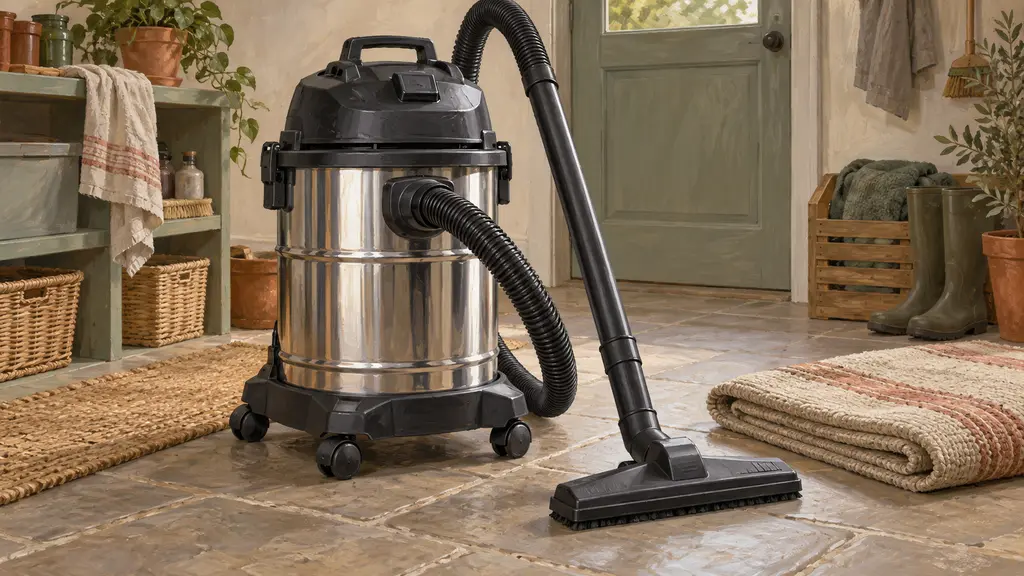
A wet and dry vacuum cleaner earns its place in specific homes only, not every home. If your daily task is dry dust and sand on tile and carpet, a regular cordless stick like the Dyson V8 Animal (≈ 453 SAR) covers it fully and costs a lot less. But if you have a majlis, kitchen, or garage that regularly sees wet spills alongside dry debris at the same time, a dedicated wet and dry vacuum solves a problem that no regular cordless stick can, no matter how strong its suction is.
The quick answer
Not every home needs a separate wet and dry vacuum. If your daily task is dry dust and sand only, a regular cordless stick covers it and saves you an unnecessary extra cost. If you have a majlis, kitchen, or garage that regularly sees wet spills alongside dry debris together, a dedicated wet and dry vacuum earns its place as a second tool alongside your everyday vacuum, not a replacement for it.
Key takeaways
- A wet and dry vacuum is built with a sealed motor and filtration system that handles water, unlike a regular vacuum cleaner, which is designed for dry debris only (vacuum cleaner definition and filtration principle from Britannica).
- Using a regular vacuum on a spilled liquid is a genuine hazard, since the motor and electrical circuit aren’t sealed against water, and it can cause permanent damage or an electric shock.
- Most Saudi homes don’t need a wet and dry vacuum as their main vacuum, since dry dust and sand are the far more frequent problem, not spilled liquids.
- A majlis, kitchen, and garage are the spaces most likely to genuinely justify a wet and dry vacuum, since they’re where liquids and dry debris tend to occur together in the same session.
- A wet and dry vacuum is a specialist second tool, not a substitute for a daily cordless stick, since it’s usually bulkier and heavier than a stick built for quick daily use.
What exactly is a wet and dry vacuum?
A wet and dry vacuum is built internally to suction water and spilled liquids alongside dry debris, thanks to a sealed motor and collection chamber that keep liquid away from the electrical circuit and motor, often paired with a self-cleaning base that rinses the roller after each use. A regular vacuum cleaner, whether a cordless stick or a canister, is never built this way, since its motor and filter always assume dry debris only.
Does your home actually need a wet and dry vacuum?
The answer depends more on the room you clean most than the floor type itself. If your majlis, kitchen, or garage regularly sees spilled liquids, coffee, water, or oil, alongside sand and dry debris in the same session, a wet and dry vacuum clearly earns its place. But if your daily problem is dry dust and sand only on tile and carpet, which is the more common situation in most Saudi homes, a regular cordless stick solves it completely at a much lower price and a lighter footprint for everyday use.
What do you risk by using a regular vacuum on a spill?
The danger here isn’t theoretical. Water or any liquid entering a regular vacuum’s motor or electrical circuit can permanently damage the unit or cause an electric shock, and either one typically voids the warranty immediately. The standing rule: any spill gets wiped up with a cloth or mop first, and a regular vacuum cleaner never goes near it, since it was never designed for liquids.
Quick comparison: which one for which case?
| Factor | Regular cordless stick | Wet and dry vacuum |
|---|---|---|
| Daily dry cleaning | Excellent, its core job | Good, but not its main purpose |
| Spilled liquids | Off-limits, damage and shock risk | Built for it safely |
| Size and weight | Light, easy for daily use | Usually bulkier and heavier |
| Typical starting price | Starts in a reasonable budget tier | Rises noticeably over a regular stick |
| Best for | Most homes for daily cleaning | A majlis, kitchen, or garage with recurring mixed messes |
The simple rule: if your problem is daily dry dust, buy a regular cordless stick. If your problem is liquids and dry debris together on a regular basis in one spot, add a wet and dry vacuum as a second tool.
So which should you actually buy first?
For most Saudi homes, start with a regular cordless stick like the Dyson V8 Animal, since it solves the everyday dust and sand problem with strong suction on both tile and carpet at a genuinely fair price for the Dyson name, backed by thousands of positive reviews on Amazon.sa. We didn’t pick it just for being affordable, we picked it because the balance of suction and price makes sense for most homes, which is why it tops our guide to the best vacuum cleaner in Saudi Arabia. If it later turns out your majlis or kitchen genuinely needs a fix for spilled liquids alongside dry debris, a dedicated wet and dry vacuum from our full lineup rises noticeably in price over a regular stick, but becomes a justified investment for that specific task rather than a replacement for your everyday stick.
See the Dyson V8 Animal price on Amazon.sa ↗
Bottom line
A wet and dry vacuum isn’t an upgrade every home needs, it’s a specialist fix for one specific problem: spilled liquids and dry debris together in the same spot on a regular basis, usually a majlis, kitchen, or garage. If your actual problem is daily dry dust and sand, a regular cordless stick like the Dyson V8 Animal solves it completely at a much lower price. And never use a regular vacuum on a spill, the risk to the machine and to you is real. If you’re still weighing a cordless stick against a robot vacuum for daily cleaning, see robot vs cordless vacuum, and if your budget is tight, read the best cheap vacuum cleaner. To browse every option and price, see vacuum cleaner prices in Saudi Arabia and our how to choose a vacuum guide, or browse the full vacuum cleaners in Saudi Arabia section.
Sources
- Britannica, “Vacuum cleaner”, definition of the vacuum cleaner and the design of its filtration and motor systems: https://www.britannica.com/technology/vacuum-cleaner
This analysis is based on published information from Britannica (Vacuum cleaner).
Frequently asked questions
Do I need a separate wet and dry vacuum in my home?
Most homes don't. If your daily task is dry dust and sand on tile and carpet, a regular cordless stick covers it fully and costs a lot less. But if you have a majlis, kitchen, or garage that regularly sees wet spills alongside dry debris at the same time, a dedicated wet and dry vacuum earns its place as a second tool.
Can I use a regular vacuum cleaner on a spilled liquid?
No, and this is a real hazard, not just general advice. A regular vacuum isn't built to handle liquids, so its motor, filter, and electrical circuit are at risk of damage or even electric shock if liquid gets inside. Any spill should be wiped up with a cloth or mop, never with a regular vacuum cleaner.
What's the real difference between a wet and dry vacuum and a regular cordless stick?
A wet and dry vacuum is built with a sealed motor and filtration system that can handle water and liquids, while a regular cordless stick is designed for dry dust and debris only. The difference isn't about power, it's the internal design itself, which is why one can't substitute for the other's dedicated job.
Does a wet and dry vacuum replace a daily cordless stick?
Usually not. A wet and dry vacuum is typically bulkier and heavier than a regular cordless stick, making it better suited as a specialist tool for occasional mixed messes rather than quick daily cleaning. Most homes that genuinely need one keep a cordless stick alongside it, not instead of it.