
 Egypt
Egypt  UAE
UAE  USA
USA Why Does a Bottle Sterilizer Smell and How to Fix It
We may earn a commission from purchases through our links, at no extra cost to you. How we choose · Disclosure.
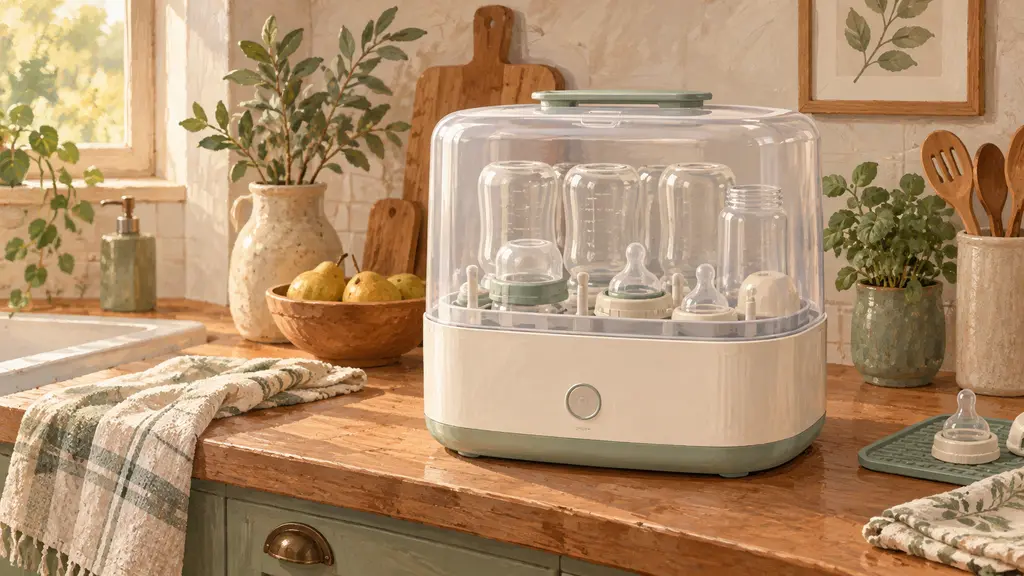
If your bottle sterilizer has developed a musty, metallic, or faintly plasticky smell, the cause is almost always one of three things: trapped moisture between cycles, early limescale buildup, or leftover soap residue from washing bottles before sterilizing, not a fault in the machine. The fix is airing out the tank and lid fully between cycles, descaling regularly, and never adding detergent to the water tank itself.
The quick answer
A bottle sterilizer smell is usually caused by trapped moisture that lets musty odors grow between cycles, early limescale buildup, or leftover soap that wasn’t rinsed off well enough before sterilizing. The fix is leaving the tank and lid open to fully air-dry between uses, descaling regularly, and never adding any detergent inside the water tank itself.
We’re not medical professionals, so always follow the manufacturer’s instructions for cleaning and sterilizing.
Key takeaways
- Trapped moisture between sterilizing cycles is a perfect environment for musty smells, especially if the lid is closed while the tank is still damp inside (background on biofilm growth in trapped moisture from US CDC).
- Early limescale can trap moisture and mineral residue and produce a smell before it ever becomes a visible white layer.
- Leftover soap or detergent from washing bottles before sterilizing can react with heat and produce a faint chemical or plastic smell.
- A brand-new plastic unit may have a mild smell in its first few uses, which is normal and usually fades after several cycles.
- The fix isn’t an air freshener or a strong cleaner, it’s full drying between cycles and regular descaling.
Cause one: trapped moisture between cycles
If you close the sterilizer’s lid right after a cycle while the tank is still damp, that moisture stays trapped in a warm, enclosed space, a good environment for a musty “wet plastic” smell to develop over time. Leave the lid slightly open after each cycle so the unit airs out and dries fully before the next use or storage.
Cause two: early limescale buildup
Even before limescale becomes a visible white layer, it can start trapping moisture and minerals on the heating base and produce a faint metallic or musty smell. If you’re noticing a smell along with any white trace in the tank, early limescale is the likely cause, not a fault in the machine. See bottle sterilizer limescale for how to descale it safely with a citric acid or diluted white vinegar solution.
Never mix vinegar with bleach or any chlorine-based cleaner - the combination releases toxic gases. Use one cleaner at a time and rinse thoroughly between products.
Cause three: leftover soap from washing before sterilizing
If you wash bottles with dish soap before placing them in the sterilizer, any soap residue that isn’t fully rinsed off can react with heat and steam and produce a faint chemical or plastic smell. Rinse every piece thoroughly with clean water after washing and before sterilizing, and avoid adding any detergent inside the appliance’s own water tank for any reason.
Steps to get rid of the smell
- Unplug the unit and let it cool and dry fully, leaving the lid open for several hours.
- Check the tank for any white trace of limescale and remove it with a citric acid or diluted white vinegar solution per your model’s manual.
- Rinse every bottle piece thoroughly with clean water after washing with soap and before sterilizing, so no soap residue reaches the sterilizer.
- Dry the tank and lid completely with a clean cloth after every cycle, and never close the lid while it’s still damp inside.
- Repeat descaling every two to four weeks depending on your local water hardness, to prevent buildup that causes smells later.
If you’d rather use a ready-made solution instead of mixing one yourself each time, cleaning and descaling solutions built for steam sterilizers exist on the market and simplify this step. They’re a practical option for convenience, but they’re not a substitute for full drying between cycles, which remains the most important step to prevent the smell in the first place.
Table: smell type and likely cause
| Smell type | Likely cause | Fix |
|---|---|---|
| Musty or damp smell | Trapped moisture between cycles | Full drying and leaving the lid open after each cycle |
| Faint metallic smell with a white trace | Early limescale buildup | Descale with citric acid or diluted white vinegar |
| Chemical or plastic smell | Soap residue from washing before sterilizing | Thorough rinse with clean water before every cycle |
| Faint plastic smell in a new unit | Normal in first uses | Usually fades after several empty sterilizing cycles |
A sterilizer that’s easy to air out and dry
When choosing a sterilizer in the first place, the tank’s shape and how fully the lid opens for airing out make a real difference in preventing trapped moisture. An example from our shortlist: the GROWNSY Bottle Sterilizer and Dryer adds an automatic drying step right after sterilizing, so bottles aren’t left damp in a closed tank producing a smell later, and it’s backed by thousands of positive reviews on Amazon.sa. This balance of sterilizing and drying is what earns it the top spot in our guide to the best bottle sterilizer in Saudi Arabia. You’ll find its current price and the Amazon.sa link in the card below.
When to stop and call a technician
- A chemical or plastic smell persists after thorough rinsing and several empty cycles.
- A musty smell returns after the tank and lid are fully dried between cycles.
- A metallic smell and white trace remain after the heating base is descaled.
Stop using the appliance and have a qualified technician inspect it before using it again.
Bottom line
A bottle sterilizer smell usually isn’t a fault in the machine, it’s the result of trapped moisture, early limescale, or soap residue. Dry the tank and lid completely between cycles, descale regularly, and rinse bottles thoroughly before every sterilizing run. If you’re noticing a white trace along with the smell, start with bottle sterilizer limescale, and if your unit later stops working well, see bottle sterilizer not working: what to check first. If you’re still weighing steam sterilizing against boiling on the stove, read steam sterilizer vs boiling, and for the full buying criteria, see how to choose baby appliances. Browse everything in this category in our baby appliances section.
Sources
- US CDC, “Biofilm growth in stagnant water systems”, background on microbial growth in trapped, moist environments: https://www.cdc.gov/control-legionella/php/guidance/building-water-system.html
This analysis is based on published information from US CDC (Biofilm growth in stagnant water systems).
Frequently asked questions
Why does my bottle sterilizer smell bad even though I clean it?
The likely cause is trapped moisture between cycles if the lid closes while the tank is still damp, or early limescale buildup trapping moisture before it becomes a visible white layer. Leave the lid open to fully air-dry the unit between uses, and check the tank for any white trace of buildup.
Does a smell from a bottle sterilizer mean it's unsafe to use?
Not necessarily, the smell is usually caused by trapped moisture or early limescale, not a direct safety issue. That said, we're not medical professionals, so if the smell persists after full drying and descaling, check your manufacturer's manual or contact their customer support to be sure.
My brand-new sterilizer smells like plastic, is that normal?
Yes, this is common in new plastic appliances and usually fades after several empty sterilizing cycles with just clean water before you use it with actual bottles. If a strong smell persists after several cycles, check the manufacturer's manual.
Should I use an air freshener or strong cleaner to get rid of the smell?
No, it's best to avoid air fresheners and harsh cleaners inside an appliance that touches your baby's feeding equipment. The right fix is removing the actual cause: full drying between cycles, descaling with a mild solution, and rinsing bottles thoroughly before every cycle.