
 Egypt
Egypt  Saudi Arabia
  USA
USA AC vs Dehumidifier: Which One Controls Your Home's Humidity?
We may earn a commission from purchases through our links, at no extra cost to you. How we choose · Disclosure.
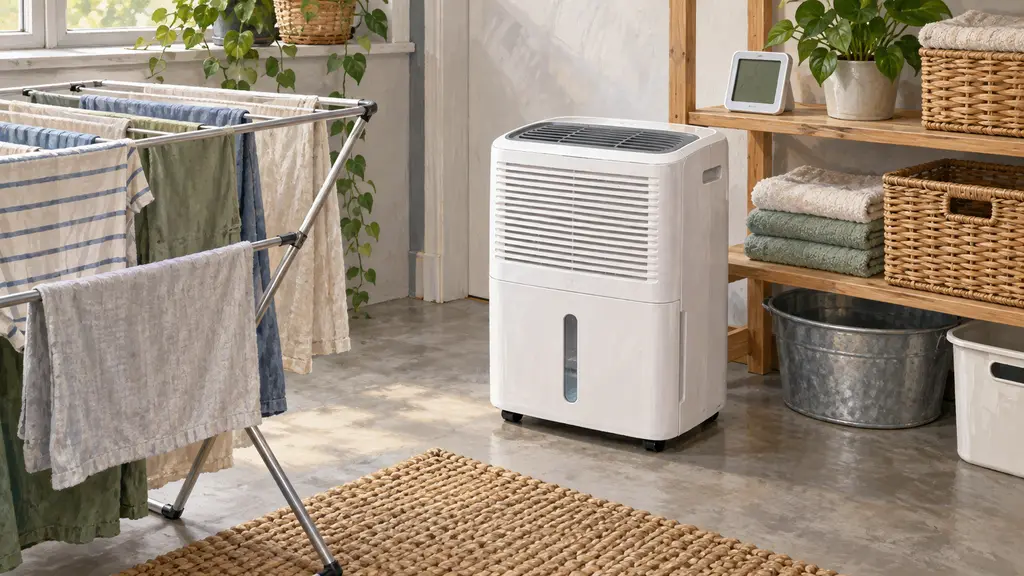
Your AC cools the air and removes a limited amount of moisture as a side effect of cooling, but it isn’t actually built to control humidity. In UAE apartments and villas near the coast, running the AC with windows closed for months can trap moisture indoors rather than remove it. That’s where a dedicated dehumidifier comes in, working alongside the AC rather than replacing it.
The quick answer
Your AC lowers humidity as a side effect while cooling the air, while a dehumidifier is purpose-built to pull water vapor out and actually control the humidity level. If a room feels damp, smells musty, or shows condensation despite the AC running constantly, you need a compressor dehumidifier alongside your AC, not instead of it.
Key points
- The AC removes humidity as a side effect of cooling, not as its main job, so it shuts off once the room hits the target temperature regardless of how humid the air still is (air conditioning background from Britannica).
- A compressor dehumidifier is purpose-built to pull water vapor out of the air, and its performance is rated in liters removed per day, not temperature.
- Closed windows for the whole AC season in the UAE can trap moisture indoors rather than clearing it, a common cause of musty smells and condensation even with the AC running.
- Running both together during humid coastal summer months gives you real humidity control that the AC alone can’t provide.
- Signs your AC alone isn’t enough: a musty smell in a closet, condensation on a window or wall, or a heavy, damp feeling even in a cold room.
What the AC actually does to humidity
An AC works by pulling air across a cooling coil, and during that process some of the water vapor in the air condenses on the cold coil and collects as water that’s usually drained outside. That condensation is real, but it’s a side effect of cooling the air, not an intentional function. The AC’s thermostat only tracks temperature, so once the room hits the target temperature the unit stops running, no matter how much humidity is still in the air. That’s why a room can feel perfectly cold and damp and heavy at the same time.
What a dehumidifier actually does
A compressor dehumidifier, like the units in our best dehumidifier in the UAE roundup, pulls air across a cold coil built specifically for this job, condensing water vapor into liquid water that collects in a tank, then releases drier air back into the room. The key difference from an AC is that it doesn’t track temperature at all, it keeps running until it reaches a target humidity level and holds it there. That’s why a unit like the Pro Breeze 20L/Day is rated in liters of moisture removed per day, a direct measure of how much drying power it actually delivers.
Signs your AC alone isn’t enough
Watch for these signs in your home even with the AC running regularly:
- A musty or damp smell inside a closet or wardrobe.
- Condensation on windows or a wall that’s cooler than the rest of the room, especially in the morning.
- A heavy, damp feeling in the air even though the room is genuinely cold.
- Damp patches or slight discoloration on walls or around window frames.
- Clothes or towels taking longer than usual to dry indoors.
Any one of these means the relative humidity in the room is still high despite the AC running, and that’s exactly what a dehumidifier is built to fix.
Quick comparison: AC vs dehumidifier
| Factor | AC | Dehumidifier |
|---|---|---|
| Main job | Cooling the air | Controlling humidity |
| Removes humidity | Only as a side effect of cooling | Yes, that’s its entire job |
| Stops once cooling is done | Yes, even if humidity stays high | No, keeps running until the target humidity is met |
| Rated by | Target temperature | Liters of moisture removed per day |
| Best for | Lowering room temperature | Musty smells, condensation, dampness despite cooling |
The simple rule: the AC’s job is the room’s temperature, and the dehumidifier’s job is its humidity, and the two work alongside each other rather than one replacing the other. To understand what’s driving humidity in your home in the first place, see why is my house so humid in the UAE.
So do you need both?
If your only issue is room temperature, your AC alone is enough. But if any of the humidity signs above show up despite the AC running, you need a compressor dehumidifier working alongside it. A practical example that balances real capacity and price: the Pro Breeze 20L/Day Dehumidifier (≈ 849 AED), which pulls a meaningful 20 liters of moisture a day and carries thousands of positive reviews on Amazon.ae. We didn’t pick it for having the biggest capacity, we picked it because it’s a sensible balance of performance and price for most UAE bedrooms and living rooms, which is what earns it the top spot in our guide to the best dehumidifier in the UAE. You’ll find its current price and the Amazon.ae link in the card below.
The bottom line
Your AC cools the air and removes a limited amount of humidity as a side effect, but it can’t control humidity the way a dedicated dehumidifier can. If you’re seeing condensation, smelling a musty odor, or feeling a heavy dampness despite the AC running constantly, that’s a sign the two devices need to work together rather than relying on one alone. For the full buying criteria for your space, see our guide on how to choose a dehumidifier, or browse every option in one place at dehumidifiers.
Sources
- Britannica, “Air conditioning”, background on how air conditioning works and its side-effect condensation of humidity: https://www.britannica.com/technology/air-conditioning
- ENERGY STAR, “Dehumidifiers”, definition of a dehumidifier and its continuous condensation principle: https://www.energystar.gov/products/dehumidifiers
This analysis is based on published information from Britannica (Air conditioning), ENERGY STAR (Dehumidifiers).
Frequently asked questions
Does the AC remove humidity from a room?
Some, but only as a side effect of cooling, not as its actual job. As the AC cools air, some water vapor condenses on its cold coil, but the unit shuts off once the room hits the target temperature, regardless of how humid the air still is. A dehumidifier is built to keep working until it reaches a set humidity level.
Why is my apartment humid even though the AC runs all the time?
Because the AC was never a humidity-control tool. In UAE apartments and villas near the coast, running the AC with windows closed for months can trap moisture indoors rather than clear it, showing up as a musty smell in a closet or condensation on a cooler window or wall even with the AC running nonstop.
Do I need a dehumidifier if I have central AC?
Often yes, especially if a room feels damp, smells musty, or shows condensation despite the AC running. A compressor dehumidifier like the Pro Breeze 20L/Day works alongside central AC rather than replacing it, targeting specifically the humidity that cooling leaves behind.
Does setting the AC colder lower humidity more?
Not reliably. A lower target temperature can slightly increase side-effect condensation during cooling cycles, but the AC still shuts off once it hits the temperature target regardless of humidity, so it's a partial and inconsistent fix. A separate dehumidifier is the reliable way to reach a target humidity level and hold it there.