
 Egypt
Egypt  Saudi Arabia
  USA
USA Air Purifier for Allergies: The Specs That Actually Matter
We may earn a commission from purchases through our links, at no extra cost to you. How we choose · Disclosure.
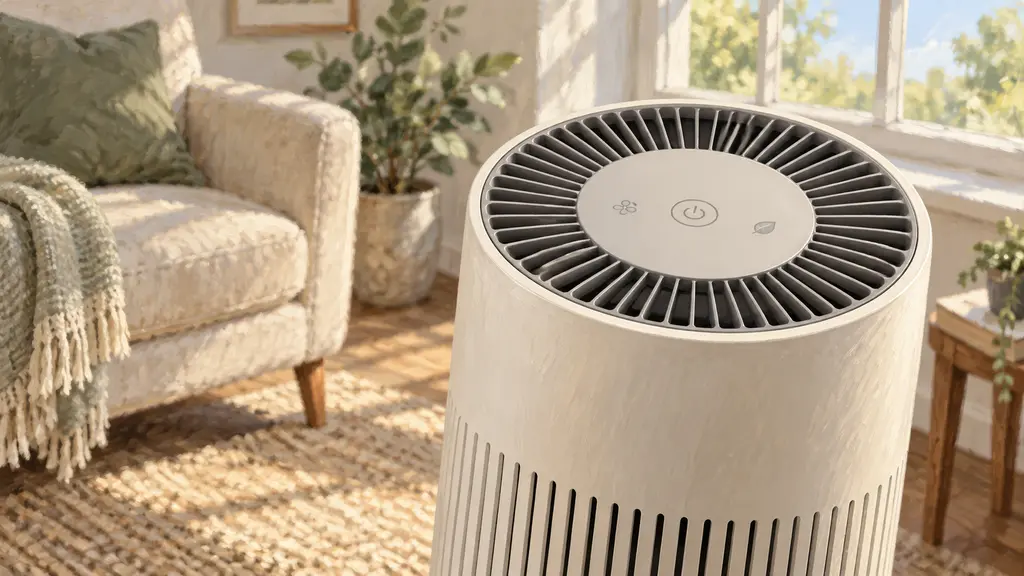
For allergies, three specs matter more than anything else on the box: a genuine true HEPA filter (not “HEPA-type”), a rated coverage that matches your actual room rather than the biggest number printed on the packaging, and a pre-filter that catches pet hair before it clogs the main filter. App control, colors, and extra modes are nice-to-haves, not the reason a unit clears dust, pollen, and pet dander from the air you breathe.
The quick answer
The air purifier specs that actually matter for allergies are true HEPA grade, rated coverage matched to your room, and a pre-filter for pet hair. Everything else on a spec sheet, smart app control, display screens, extra fan modes, is a convenience feature layered on top, not the thing doing the allergen-removal work.
Key takeaways
- “True HEPA” and “HEPA-type” are not the same claim. True HEPA is held to a strict fine-particle capture standard; “HEPA-type” or “HEPA-like” filters are not, even though the wording looks similar on a listing (HEPA from US EPA).
- Rated coverage should match your actual room, not the box’s biggest number. An undersized unit in an open living area is a common reason people feel a purifier “isn’t working” (air purifier basics from US EPA).
- A pre-filter stage matters if you have pets. It catches larger hair and fur before it reaches and clogs the main HEPA filter, extending the filter’s working life.
- Noise level matters for bedroom use, since a purifier that helps with nighttime allergy symptoms needs to run quietly enough to leave on overnight.
- Filter replacement cost and local availability are part of the real cost of ownership, not a one-time purchase decision.
The spec that matters most: true HEPA, not “HEPA-type”
This is the single biggest source of confusion when shopping for allergy relief. “True HEPA” refers to a specific fine-particle filtration standard. “HEPA-type,” “HEPA-like,” or “99% filtration” without the word “true” attached are softer marketing claims that do not carry the same guarantee. If a product listing does not explicitly say true HEPA, treat its allergy performance as unproven, because the visual difference between the two filters is invisible to a buyer.
Match rated coverage to your actual room, not the box
Every purifier lists a rated coverage area, and this number needs to match the room you will actually place it in. A bedroom-sized true HEPA unit is genuinely enough for a bedroom or small living room, but the same unit in an open-plan living and dining space will struggle to keep up, especially on high-pollen or high-dust days. Oversizing wastes money on capacity you do not need; undersizing leaves the air feeling hazy no matter how good the filter itself is. Check the rated square footage against your room’s actual size before you buy, not after.
Other allergy-specific specs worth checking
- Pre-filter for pet hair and larger debris: a washable or replaceable pre-filter stage catches hair and larger particles before they reach the main HEPA filter, so the expensive filter lasts longer.
- Noise level for bedroom use: if the unit is meant to run overnight next to the bed, check for a low or sleep mode rather than assuming it will be quiet on its lowest setting.
- Filter replacement cost and availability: confirm replacement filters are actually sold in the UAE for the model you are considering, since an unavailable filter turns a good purifier into an expensive paperweight.
Allergy specs at a glance
| Spec | Why it matters for allergies | What to look for |
|---|---|---|
| True HEPA filter | Physically captures fine dust, pollen, and dander | Listing explicitly says “true HEPA,” not “HEPA-type” |
| Rated coverage | An undersized unit leaves a room hazy on bad days | Match the rated square footage to your actual room |
| Pre-filter | Catches pet hair before it clogs the main filter | A washable or replaceable pre-filter stage |
| Noise level | Bedroom use means it needs to run overnight | Check for a dedicated low or sleep mode |
| Filter replacement | Ongoing cost, not a one-time purchase | Confirm replacement filters are sold in the UAE |
Which pick fits an allergy-focused shopper
For most allergy sufferers in a bedroom or small living room, the Levoit Core True-HEPA, at roughly ≈ 199 AED, checks the boxes that actually matter: a genuine true HEPA filter, simple controls with no learning curve, and thousands of positive Amazon.ae reviews. It is not rated for a large open-plan space, so if your allergy triggers are spread across a bigger area, size up rather than expecting this model to keep pace. Our best air purifier for a home roundup covers the larger-room options if that is your situation.
See the Levoit Core True-HEPA price on Amazon.ae ↗
Bottom line
For allergy relief, prioritize true HEPA grade, rated coverage matched to your room, and a pre-filter if you have pets, over app features and extra modes. See our full best air purifier in the UAE picks, or read our how to choose an air purifier guide for a deeper look at sizing and filter grade. If you are still deciding between HEPA and an ionizer specifically, see HEPA vs ionizer air purifier. For the full lineup, browse air purifiers in the UAE.
Sources
- US EPA, “What is a HEPA filter”, definition of the true HEPA filtration standard: https://www.epa.gov/indoor-air-quality-iaq/what-hepa-filter
- US EPA, “Guide to air cleaners in the home”, background on air purifier types and rated coverage: https://www.epa.gov/indoor-air-quality-iaq/guide-air-cleaners-home
This analysis is based on published information from US EPA (What is a HEPA filter), US EPA (Guide to air cleaners in the home).
Frequently asked questions
What CADR rating do I need for allergies?
A higher Clean Air Delivery Rate means the unit processes more air per hour, which matters more as your room gets bigger. Rather than chasing the highest CADR number on the box, match the purifier's rated coverage to your actual room size, since an oversized rating for a small bedroom is money spent on capacity you will not use.
Is a 'HEPA-type' filter the same as true HEPA?
No. 'HEPA-type' or 'HEPA-like' filters are marketing terms for filters that resemble true HEPA but are not held to the same fine-particle capture standard. If a listing does not explicitly say true HEPA, treat the allergy performance as unproven and look for another model.
Does room size really matter for allergy relief?
Yes. A unit rated for a bedroom will struggle to keep up in an open-plan living and dining area, and undersizing is one of the most common reasons people feel their purifier 'isn't working'. Check the rated square footage against your actual room before buying, not the biggest number on the box.
How often should I replace the filter for allergy relief?
Follow the manufacturer's replacement schedule, typically every few months with regular use, and sooner if you have pets or run the unit continuously during high-pollen or high-dust periods. A clogged filter loses capture efficiency well before it looks visibly dirty.