
 Egypt
Egypt  Saudi Arabia
  USA
USA HEPA vs Ionizer Air Purifier: Which One Should You Buy?
We may earn a commission from purchases through our links, at no extra cost to you. How we choose · Disclosure.
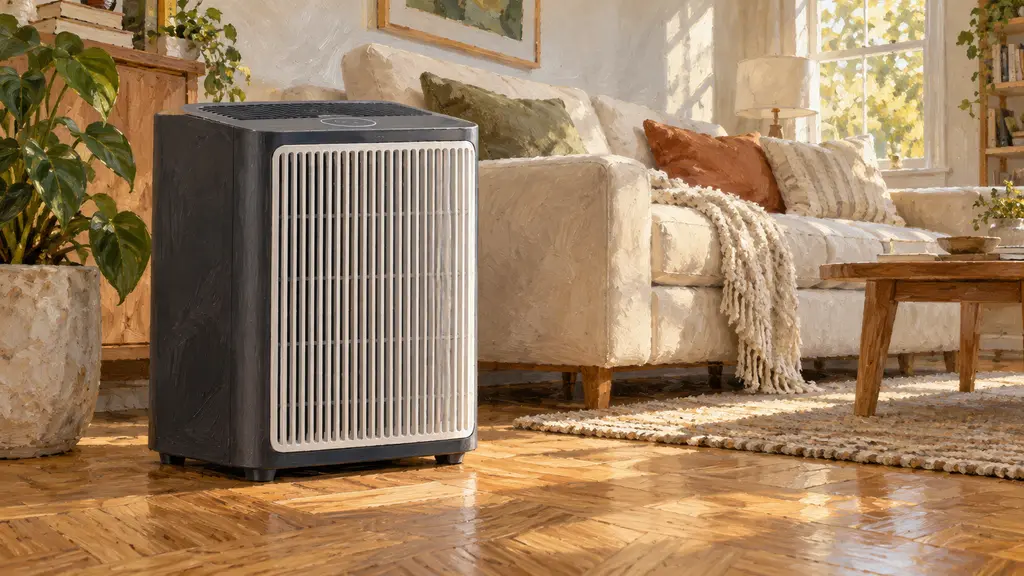
If you are choosing between a HEPA air purifier and an ionizer, the short answer is: pick true HEPA. A HEPA filter physically traps fine dust, pollen, and pet dander as air passes through it, with no byproduct. An ionizer charges those particles so they clump and settle onto surfaces instead, and some models release ozone while doing it, which irritates the lungs rather than helping them.
The quick answer
A true HEPA filter is the safer, more reliable choice for cleaning the air in a home, because it physically removes particles with no side effect. An ionizer can lower the count of airborne particles too, but it works by pushing them onto your walls and furniture rather than out of the room, and some ionizer and electrostatic models add ozone, a known lung irritant, to the air in the process.
Key takeaways
- A true HEPA filter is a mechanical filtration standard, rated to capture a very high percentage of fine particles as air is pulled through a dense filter mesh (HEPA from US EPA).
- An ionizer works differently: it releases charged ions into the air that attach to dust and allergen particles, making them heavier so they fall out of the air and stick to nearby surfaces instead of being captured in a filter (ionizer from US EPA).
- Some ionizers and electrostatic precipitators produce ozone as a byproduct, and ozone is a lung irritant, which is why these are treated with more caution than a plain HEPA unit.
- HEPA filters need periodic replacement, while ionizers have no filter to swap, though the trade-off is that particles end up on your furniture rather than gone from the room.
- For most homes, especially where allergies are the concern, true HEPA is the simpler and safer pick.
How a true HEPA filter actually works
A true HEPA filter is a dense mesh of fine fibers. A fan pulls room air through that mesh, and particles get trapped in the fibers as they pass through, the same way a very fine sieve catches flour. Nothing is added to the air in the process, and nothing is released back into the room except the filtered air itself. This is why HEPA is the standard recommendation for allergy sufferers: dust, pollen, and pet dander pulled into the unit stay in the filter until you replace it.
How an ionizer actually works, and the ozone question
An ionizer takes a different approach. It releases a stream of charged ions into the room, and those ions attach to airborne particles, making them heavier. The heavier particles then fall out of the air faster and stick to nearby surfaces, walls, furniture, the floor, rather than continuing to float. That does lower the particle count in the air you are breathing, but it does not remove the dust from your home, it just relocates it onto whatever is nearby.
The bigger concern is ozone. Some ionizers, and especially devices marketed as ozone generators, produce ozone as part of how they charge the air. Ozone is a lung irritant, and in a sealed apartment with the windows shut for AC season, that can matter more than it would outdoors. Not every ionizer produces meaningful ozone, but it is worth checking a model’s certification before buying one for continuous use.
HEPA vs ionizer at a glance
| True HEPA filter | Ionizer | |
|---|---|---|
| How it works | Mechanical filter traps particles | Charged ions make particles clump and settle |
| Byproduct | None | Some models release ozone |
| What happens to particles | Removed from the air, held in the filter | Settle onto furniture and surfaces |
| Maintenance | Replace the filter periodically | No filter, but plates need occasional cleaning on some models |
| Best for allergy sufferers | Yes, the standard recommendation | Use with caution, check ozone certification |
Which one should you actually buy
If your goal is cleaner air with no side effect to worry about, a true HEPA unit is the straightforward choice, and it is what most allergy guidance points to. A bedroom-sized model like the Levoit Core True-HEPA, at roughly ≈ 199 AED, is a genuine true-HEPA filter with simple controls and no ionizer function to second-guess, which is why it tops our best air purifier for a home shortlist. If you are specifically weighing this for allergy symptoms, our guide on air purifier for allergies covers the exact specs that matter beyond the HEPA-vs-ionizer question.
See the Levoit Core True-HEPA price on Amazon.ae ↗
Bottom line
A true HEPA filter removes particles from the air with no byproduct, while an ionizer relocates particles onto your surfaces and, in some models, adds ozone in the process. For most UAE homes, especially where allergies or dust are the concern, true HEPA is the safer and simpler pick. See our full best air purifier in the UAE picks, or our how to choose an air purifier guide for sizing and filter grade. If dust storms are your main worry rather than allergies specifically, read do air purifiers help with dust. For the full lineup, browse air purifiers in the UAE.
Sources
- US EPA, “What is a HEPA filter”, definition of the high-efficiency particulate air filtration standard: https://www.epa.gov/indoor-air-quality-iaq/what-hepa-filter
- US EPA, “How ionizers work as air cleaners”, how ion-based air purification works: https://www.epa.gov/indoor-air-quality-iaq/what-are-ionizers-and-other-ozone-generating-air-cleaners
This analysis is based on published information from US EPA (What is a HEPA filter), US EPA (How ionizers work as air cleaners).
Frequently asked questions
Do ionizer air purifiers produce ozone?
Some do. Certain ionizers and electrostatic models release ozone as a byproduct of charging the air, and ozone is a lung irritant, especially in a sealed apartment. A true HEPA filter produces no byproduct at all, since it works by physically trapping particles rather than charging them.
Is a HEPA air purifier better than an ionizer for allergies?
For most allergy sufferers, yes. A true HEPA filter physically removes fine dust, pollen, and pet dander from the air passing through it, with no side effect. An ionizer can reduce airborne particles too, but it does so by making them settle onto your furniture and walls rather than removing them from the room, and some models add ozone to the mix.
Can I use both a HEPA filter and an ionizer together?
Some purifiers combine a HEPA filter with an ionizer function, which can help with genuinely fine particles the filter alone might miss. If you go this route, check that the model is certified for low ozone output, and treat the HEPA filter as the part doing the reliable, no-side-effect work.
Are ozone generators safe to use at home?
Ozone generators marketed as air purifiers are generally not recommended for continuous home use, since ozone is a lung irritant at the concentrations these units can produce indoors. A true HEPA filter reaches the same goal, cleaner air, without generating anything you then have to worry about breathing.