
 Egypt
Egypt  Saudi Arabia
  USA
USA How Much Electricity Does an Air Purifier Use?
We may earn a commission from purchases through our links, at no extra cost to you. How we choose · Disclosure.
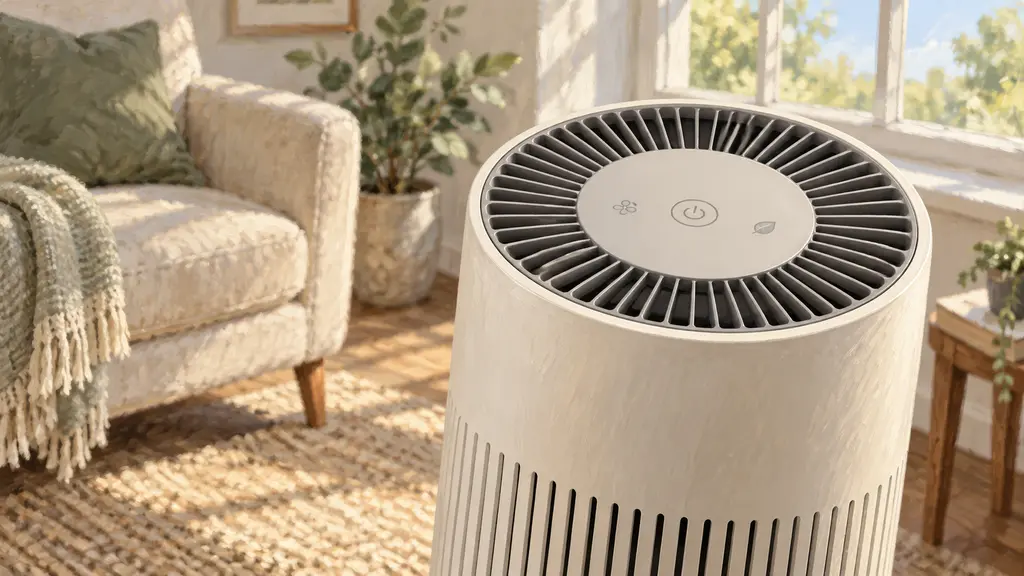
How much electricity does an air purifier use? Compact units draw roughly 15 to 30 watts, the mid-size units most common in homes draw roughly 30 to 60 watts, and even running one around the clock for a full month typically adds under 50 AED to a DEWA bill. That’s a small number next to what an AC unit adds. The real difference in consumption comes from the unit’s size and fan speed, not simply from leaving it running all day.
The quick answer
An air purifier is one of the cheapest appliances in the house to run, and leaving it on continuously isn’t a real burden on your bill. Compact and mid-size units use well under one kWh a day even running nonstop, and even a large-room unit rarely exceeds 2 to 3 kWh a day. Compare that to an AC unit using several kWh in a single day, and it’s clear why the purifier itself isn’t worth worrying about unless you leave it on max fan speed for no reason.
Key points
- Consumption is measured in watts at any given moment and in kWh over a billing period, and kWh is the unit that actually shows up on an electricity bill (kilowatt-hour definition from US EIA).
- Unit size drives consumption more than any other factor. A bedroom-sized unit draws far fewer watts than one rated for an open-plan villa floor, because a bigger fan needs more power to move a larger volume of air (background on how an air purifier works from US EPA).
- Fan speed changes consumption noticeably. High speed draws clearly more than auto or low, sometimes double or more.
- A clogged filter makes the fan work harder to move the same amount of air, so cleaning or replacing the filter on schedule keeps consumption at its normal level.
- DEWA’s Dubai residential tariff is tiered in slabs, starting around 23 fils per kWh in the lowest slab and rising as a home’s total usage climbs (slab tariff on DEWA’s site).
How many watts each size actually uses
An air purifier works with a fan that pulls air through a filter, and the watts it draws come down mainly to the size and speed of that fan, not whether it has a HEPA filter specifically. Roughly:
- Compact units (desk or nightstand size, typically the cheapest models) draw roughly 15 to 30 watts.
- Mid-size units (bedroom or small living room size, the most common category in UAE homes) draw roughly 30 to 60 watts on normal speeds, and can approach 100 watts on their highest fan speed.
- Large-room units (rated for an open-plan living area or a villa floor) can reach 100 to 150 watts or more, especially on higher speeds.
These are rough figures that vary model to model, and the most accurate way to know your own unit’s real draw is a simple plug-in energy usage monitor between the plug and the wall outlet.
Working out the monthly cost on a DEWA bill
To turn watts into an actual cost, assume continuous running around the clock for a full month (30 days), which is a worst-case scenario since most units spend part of their time on a lower speed through auto mode. DEWA’s Dubai tariff starts around 23 fils per kWh in the lowest slab, and once the monthly fuel surcharge is added, the effective rate for many homes lands closer to 30 fils per kWh. On that basis:
| Category | Approx. wattage | kWh per day, continuous | Approx. monthly cost (AED) |
|---|---|---|---|
| Compact (small room) | 15 - 30 | ≈ 0.5 | ≈ 5 |
| Mid-size (bedroom / living room) | 30 - 60 | ≈ 1.1 | ≈ 10 |
| Large (open-plan space) | 60 - 150 | ≈ 2.4 | ≈ 22 |
These are illustrative estimates, and your own tariff depends on which slab your household’s total usage falls into, especially during heavy AC months when overall consumption climbs into pricier slabs.
What actually raises consumption
Since the gap between a low-consumption unit and a higher one comes down to specific details, here are the factors actually worth your attention:
- Unit size versus room size: an undersized unit in a large space often runs at max speed trying to keep up, so it uses more electricity than a correctly sized unit would from the start.
- Manual high speed versus auto mode: leaving a unit on high speed manually all the time uses more than an auto mode that lowers speed once air quality is already good.
- A dust-clogged filter: a filter that needs cleaning or replacing forces the fan to work harder to move the same amount of air, gradually raising consumption without you noticing.
- Running multiple units in the same home: running several small units across different rooms adds up to more total consumption than one correctly sized unit for the overall space.
A unit that balances filtration with reasonable consumption
If you’re shopping for a bedroom-sized unit that won’t weigh on your bill, the practical criteria are a true HEPA filter paired with simple controls that let you dial in a moderate speed instead of leaving it maxed out. A practical example from our shortlist: the Levoit Core True-HEPA at roughly ≈ 199 AED, sized right for a bedroom or small living room with a true HEPA filter, which is why it tops our guide to the best air purifier in the UAE. We didn’t pick it for being the lowest-consumption unit specifically, but because its correct sizing for most rooms means you won’t need to run it at max speed constantly to compensate for an undersized unit in a bigger space.
See the Levoit Core True-HEPA price on Amazon.ae ↗
Bottom line
An air purifier is one of the cheapest appliances in the house to run: mid-size units common in UAE homes use roughly 30 to 60 watts, and even running one around the clock for a full month typically adds under 50 AED to a DEWA bill, a small number next to AC. What actually raises consumption is an undersized unit for its space, leaving it on max fan speed all the time, or a clogged filter that needs cleaning. Match the unit’s size to your actual room first, then let auto mode handle the speed. If you’re still choosing the right size, see our guide to choosing an air purifier in the UAE, and if you’re wondering whether a purifier really helps with dust, read do air purifiers help with dust. To compare prices by category, see air purifier prices in the UAE, and for the full lineup browse air purifiers in the UAE.
Sources
- US EIA, “Measuring electricity in kilowatt-hours”, definition of the unit of electricity consumption used on power bills: https://www.eia.gov/energyexplained/electricity/measuring-electricity.php
- US EPA, “Guide to air cleaners in the home”, background on how the fan-and-filter mechanism works: https://www.epa.gov/indoor-air-quality-iaq/guide-air-cleaners-home
- Dubai Electricity and Water Authority (DEWA), slab-based consumption tariff used for the monthly cost estimate: https://dewa.gov.ae/en/consumer/billing/slab-tariff
This analysis is based on published information from US EIA (Measuring electricity in kilowatt-hours), US EPA (Guide to air cleaners in the home), Dubai Electricity and Water Authority, slab tariff.
Frequently asked questions
Does an air purifier raise my electricity bill by a lot?
No, not compared to an AC unit or a water heater. A bedroom-sized air purifier running around the clock for a full month typically adds well under 50 AED to a DEWA bill, and even a larger unit rated for an open-plan space stays under 50 AED a month running continuously. That's a small addition next to AC, which dominates most UAE electricity bills.
How many watts does an air purifier use?
It depends on size and speed. Compact units draw roughly 15 to 30 watts, the mid-size units most common in homes draw roughly 30 to 60 watts on normal speeds, and large-room units can reach 100 watts or more on their highest fan speed. These are rough figures that vary by model, and the most accurate way to know your own unit's draw is a plug-in energy usage monitor between the plug and the wall outlet.
Does leaving an air purifier running all day use a lot of electricity?
No, and that's actually the recommended way to use most units, since steady filtration at a low to medium speed is what keeps particulate levels down through the day. Running a bedroom-sized unit continuously typically uses less than one kWh per day, a small draw next to other appliances running in the same home.
Is an air purifier cheaper to run than an AC unit?
Yes, by a wide margin. An AC unit typically uses several kWh a day, while a bedroom-sized air purifier uses a small fraction of one kWh. Even running the purifier around the clock every day of the month, its addition to the bill stays far smaller than any extra AC runtime.
Does high fan speed use a lot more electricity than low speed?
Yes, the fan pulls more air and draws more watts on high speed than on low or auto, sometimes double the consumption or more. Most modern units have an auto mode that lowers the speed once air quality is already good, and running that instead of leaving the unit on max speed all the time saves real electricity without sacrificing filtration when it's actually needed.