
 Egypt
Egypt  Saudi Arabia
  USA
USA How to Clean and Maintain an Air Purifier (and How Often)
We may earn a commission from purchases through our links, at no extra cost to you. How we choose · Disclosure.
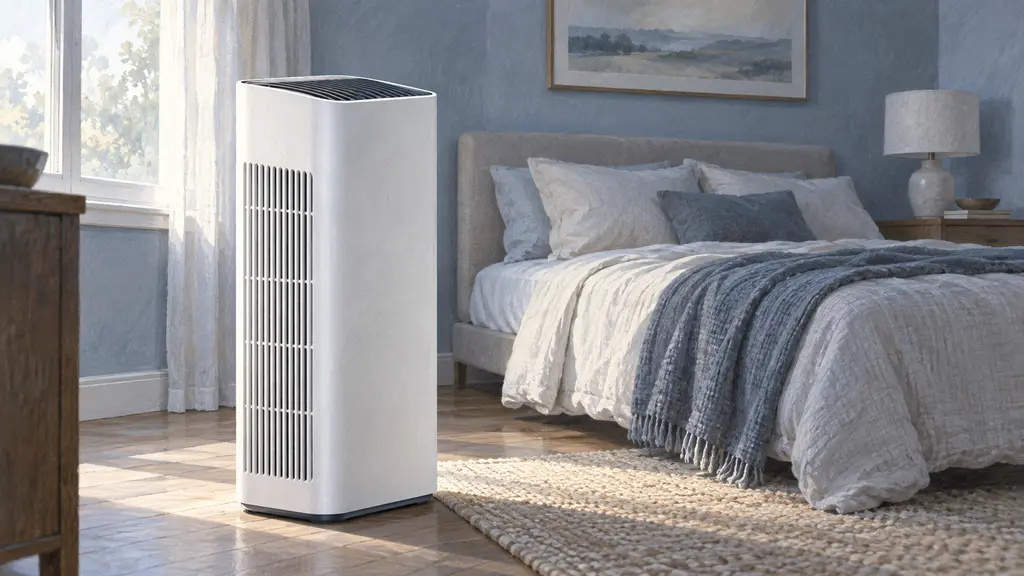
Clean an air purifier’s pre-filter with a vacuum brush or soft brush roughly monthly, and wipe the exterior and vents every two weeks. The HEPA filter itself isn’t washed on most models, it’s replaced every 6 to 12 months depending on use and how dusty your home gets. Skipping these simple steps gradually reduces airflow until the unit feels like it’s not working even though it’s running continuously.
Quick answer
Clean the pre-filter with a vacuum brush or soft brush roughly monthly, wipe the body and vents every two weeks, and watch the HEPA filter for replacement on the manufacturer’s schedule, typically every 6 to 12 months. Don’t wash a HEPA filter with water unless your model’s manual explicitly says to. Simple, regular maintenance protects filtration efficiency and extends the unit’s life more than any other setting.
Key points
- The pre-filter is the first line of defense, catching hair, dander, and larger particles before they reach the HEPA filter, so cleaning it regularly protects the main filter from clogging early.
- A true HEPA filter is replaced, not washed, because its fine mesh is built for capture, not repeated water washing (HEPA definition from US EPA).
- Reduced airflow or a returning smell despite cleaning is a replacement sign, not just a cue for extra cleaning.
- UAE dust season shortens the real replacement interval, so watch a filter indicator if your unit has one instead of relying only on the default schedule.
- A neglected, dirty pre-filter strains the motor, shortening the entire unit’s lifespan over time.
Weekly and monthly cleaning steps
Routine maintenance is simple and needs no special tools:
- Unplug the unit before any cleaning, to avoid any electrical risk.
- Wipe the exterior and the air intake and outlet vents with a dry or lightly damp cloth roughly every two weeks, to remove dust building up on the openings.
- Check the pre-filter (if it’s a separate layer or mesh in front of the HEPA filter) and brush off dust with a handheld vacuum or soft brush, monthly if the unit runs daily.
- Check the filter status indicator if your model has one, it’s more accurate than a visual guess.
- Reassemble every part snugly before running the unit, since a loose seal cuts filtration efficiency even with a clean filter.
The HEPA filter: when to replace it and how to tell
A true HEPA filter is designed for periodic replacement rather than home washing on most models, because water can damage the fine mesh that traps very small particles. The typical replacement window runs 6 to 12 months depending on how heavily you use it and how dusty your home gets, but the more accurate cue is watching the actual signs: a noticeable drop in airflow, a smell returning despite regular pre-filter cleaning, or a built-in change indicator if your unit has one. Check your specific model’s manual before attempting any wash, since some fabric pre-filters are washable, but not the HEPA filter itself.
Table: maintenance tasks and how often
| Task | Suggested frequency | Note |
|---|---|---|
| Wipe exterior and vents | Every 2 weeks | Dry or lightly damp cloth |
| Clean pre-filter | Monthly (daily use) | Handheld vacuum or soft brush |
| Check filter status indicator | At every cleaning | If your model has one |
| Replace HEPA filter | Every 6 to 12 months | Depends on use and dust |
A sign it’s time for a new filter
If you notice the air coming out of the unit feels weaker than usual, or a faint smell returns despite regularly cleaning the pre-filter, that’s a practical signal the HEPA filter is nearing the end of its useful life, regardless of the date printed on the box. A replacement HEPA filter matched to your model is the direct fix here, not extra cleaning or replacing the whole unit. Check your model number before buying any replacement filter, to make sure it’s an exact fit.
Choosing a unit that’s easy to clean from the start
If you’re still shopping, easier maintenance starts with the design itself. The Levoit Core True-HEPA, sized right for a bedroom or small living room with simple controls, gives easy access to its pre-filter without complex disassembly, at roughly ≈ 199 AED at the time of writing. You’ll find its current price and buy link in the pick card below.
When to stop and call a technician
- Airflow stays weak after the pre-filter is cleaned and the HEPA filter is replaced with an exact match.
- A smell returns after the pre-filter is cleaned and the correctly matched HEPA filter is replaced.
- The filter housing or another part will not reassemble snugly after the maintenance steps.
Stop using the air purifier and have it checked by a qualified technician before using it again.
Bottom line
Air purifier maintenance is simple: wipe the body and vents every two weeks, clean the pre-filter monthly, and watch for HEPA replacement signs every 6 to 12 months rather than washing it with water. These small steps protect filtration efficiency and extend the unit’s life more than any other setting. If you’re still choosing the right size for your room, see what size air purifier do you need for your room, and if budget is the deciding factor, read best budget air purifier. If you’re still wondering whether it’s worth buying at all, see is an air purifier worth it. For the full buying criteria, see our guide to choosing an air purifier in the UAE, and for the full lineup, check our guide to the best air purifier in the UAE or browse our air purifiers section.
Sources
- US EPA, “What is a HEPA filter”, definition of high-efficiency particulate air filtration and its design as a replaceable, not washable, filter: https://www.epa.gov/indoor-air-quality-iaq/what-hepa-filter
This analysis is based on published information from US EPA (What is a HEPA filter).
Frequently asked questions
How often should I clean an air purifier?
Wipe the exterior and check the pre-filter roughly every two weeks, and clean the pre-filter with a vacuum brush or soft brush monthly if you run it daily. The HEPA filter itself isn't usually washed, it's replaced on the manufacturer's schedule, typically every 6 to 12 months depending on use.
Can I wash a HEPA filter with water?
On most models, no. A true HEPA filter is designed to be replaced, not washed, because water can damage the fine mesh that traps particles. Check your specific model's manual, some fabric pre-filters are washable, but not the HEPA filter itself.
What are the signs a HEPA filter needs replacing?
A noticeable drop in airflow, a smell returning despite regular cleaning, or a built-in filter-change indicator if your unit has one. Ignoring these signs gradually reduces filtration effectiveness even if the unit still seems to run normally.
Does neglecting the pre-filter damage the unit?
Yes, a dirty pre-filter restricts airflow reaching the HEPA filter, forcing the motor to work harder. Over time that shortens the unit's lifespan and reduces overall filtration efficiency.