
 Egypt
Egypt  Saudi Arabia
  USA
USA Is an Air Fryer Healthy? The Full Picture
We may earn a commission from purchases through our links, at no extra cost to you. How we choose · Disclosure.
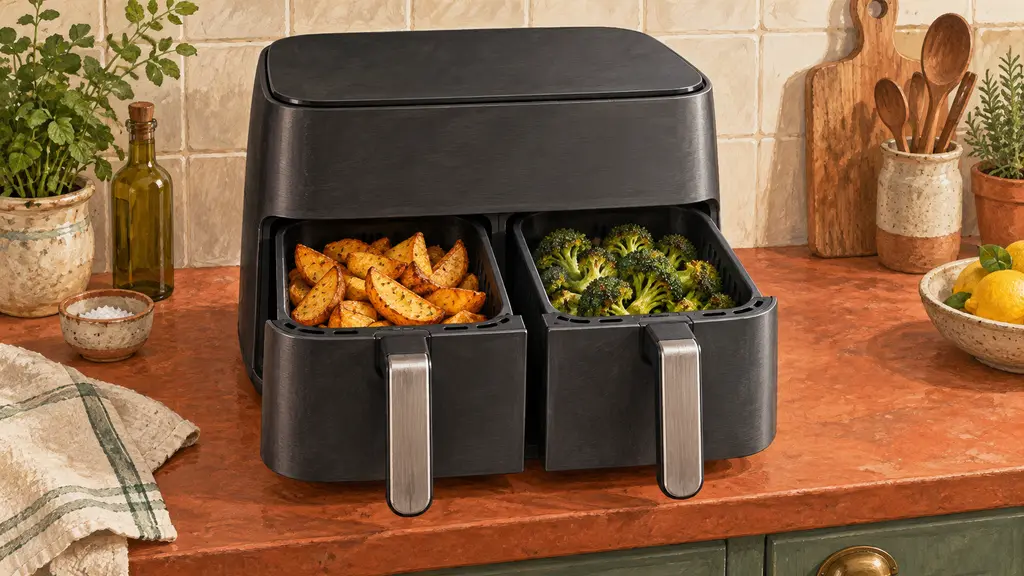
An air fryer is healthier than deep frying in oil in most cases, but it’s not a magic appliance that turns any food into a health food. The real benefit is that food needs far less oil, often just a teaspoon or two instead of enough to fully submerge it, and that typically cuts the fat and calories absorbed into the finished dish. But the ingredient itself, whether fresh chicken or a heavily processed frozen product, is still the bigger factor in actual nutrition.
The quick answer
An air fryer is generally healthier than deep frying in oil, because it needs far less oil to reach a similarly crisp result. It still needs a little oil for most foods, and it doesn’t turn a processed or heavily breaded product into a health food automatically. The real health benefit comes from reducing absorbed oil, not from removing the need for it entirely.
Key points
- An air fryer is a compact convection appliance that uses moving hot air instead of submerging food in oil, which is what cuts the oil requirement significantly (air fryer definition from University of Nebraska-Lincoln Extension).
- Most foods still need a teaspoon or two of oil to reach a convincingly golden crisp, so it isn’t zero-oil cooking across the board.
- Traditional frying (frying from Britannica) relies on fully submerging food in oil, which increases the amount of fat absorbed compared to hot air.
- The ingredient itself matters more than the cooking method, since chicken pieces coated in heavy breading or highly processed frozen products stay calorie-dense regardless of how they’re cooked.
- Spreading oil evenly and not overcrowding the basket delivers both the best health outcome and the crispest result at the same time.
How an air fryer actually cuts oil
An air fryer circulates hot air at high speed around food sitting in a perforated basket, so the outer surface dries out and crisps without needing to be fully submerged in oil. That means the oil requirement drops from a large volume needed for deep frying down to a light spray or a thin surface coating. Some naturally fatty foods, like skin-on chicken pieces or a well-marbled marinated cut, need no added oil at all, since their own fat is enough to produce a crisp finish.
An air fryer isn’t a completely oil-free appliance
It’s a common assumption that an air fryer means frying with zero oil, and that’s not quite accurate for most foods. Fries and dry vegetables usually need a light coat of oil to help heat transfer and reach a golden crisp, and some nutrients in vegetables, like certain fat-soluble vitamins, are absorbed better with a small amount of fat present in the meal. The real health goal isn’t eliminating oil completely, it’s using the smallest amount that still gets the result you want.
Healthy results depend on habits, not the appliance alone
Cooking a chicken piece coated in a thick layer of pre-fried breading, or a fully processed frozen product, in an air fryer doesn’t make it a health food, since those items still carry high calories and sodium regardless of the cooking tool. The real health benefit shows up more when you choose less processed ingredients, like fresh chicken breast or cut vegetables, then use a small, evenly distributed amount of oil instead of pouring it directly onto the food, while avoiding overloading the basket in a way that blocks hot air from reaching every piece evenly.
Even oil distribution: the practical tool that makes a difference
Most people pouring from a regular oil bottle end up using more than they actually need, since direct pouring is hard to control precisely. A dedicated oil mister spray bottle spreads a thin, even layer over the food’s surface with one or two pumps, delivering a good crisp with the least oil possible without sacrificing taste, and it’s the simplest practical change that boosts an air fryer’s health benefit at almost no extra cost. It’s a helpful tool, not a substitute for choosing less processed ingredients in the first place.
If you’re still shopping for an air fryer, a model like the Philips Airfryer 2000 Series 4.2L (≈ 299 AED) balances capacity and ease of use for most UAE homes, and it’s the top pick in our guide to the best air fryer in the UAE.
Bottom line
An air fryer is generally healthier than deep frying in oil, since it needs far less oil to reach a similar crisp, but it doesn’t remove the need for oil entirely and it doesn’t turn a processed food into a health food just by changing the cooking tool. The real health benefit comes from choosing less processed ingredients and spreading a small amount of oil evenly, not from the appliance on its own. For a detailed comparison against traditional frying, see air fryer vs deep fryer. To pick the right size for your household, see our guide on how to choose an air fryer, or browse the full air fryers section.
Sources
- University of Nebraska-Lincoln Extension, “How air fryers work”,” definition of the air fryer and its moving hot-air principle: https://food.unl.edu/free-resources/newsletters/food-safety-tips-electric-air-fryers/
- Britannica, “Frying”,” background on traditional frying methods and oil absorption: https://www.britannica.com/topic/frying
This analysis is based on published information from University of Nebraska-Lincoln Extension (How air fryers work), Britannica (Frying).
Frequently asked questions
Does an air fryer remove the need for oil entirely?
No. Most foods still need a teaspoon or two of oil to get a good golden crisp, and a little oil also helps the body absorb certain fat-soluble vitamins from vegetables. An air fryer cuts oil use significantly compared to deep frying, but it's not a zero-oil appliance for every food.
Is air-fried food always lower in calories?
Usually yes compared to deep frying the exact same dish, because far less oil gets absorbed. But that doesn't mean anything that comes out of an air fryer is automatically healthy. Chicken pieces coated in a thick layer of breading, or heavily processed frozen products, don't become a health food just because they were cooked with air instead of oil.
Is an air fryer healthier than a regular oven?
In terms of oil use, an air fryer and a conventional oven are fairly close, since both can cook with very little oil or none at all. The real difference between them isn't health, it's practical: cooking speed, heat distribution, and batch size, not a fundamental gap in the nutritional value of the food itself.
How do I get the most health benefit out of an air fryer?
Choose less processed ingredients, like fresh chicken breast or cut vegetables, instead of frozen products coated in heavy breading, and mist a small, even amount of oil rather than pouring it directly. Avoid overloading the basket so hot air can reach every piece. These habits are what actually make the health difference, not the appliance alone.