
 Egypt
Egypt  UAE
UAE  USA
USA Bottle Sterilizer Limescale: Causes and Safe Descaling
We may earn a commission from purchases through our links, at no extra cost to you. How we choose · Disclosure.
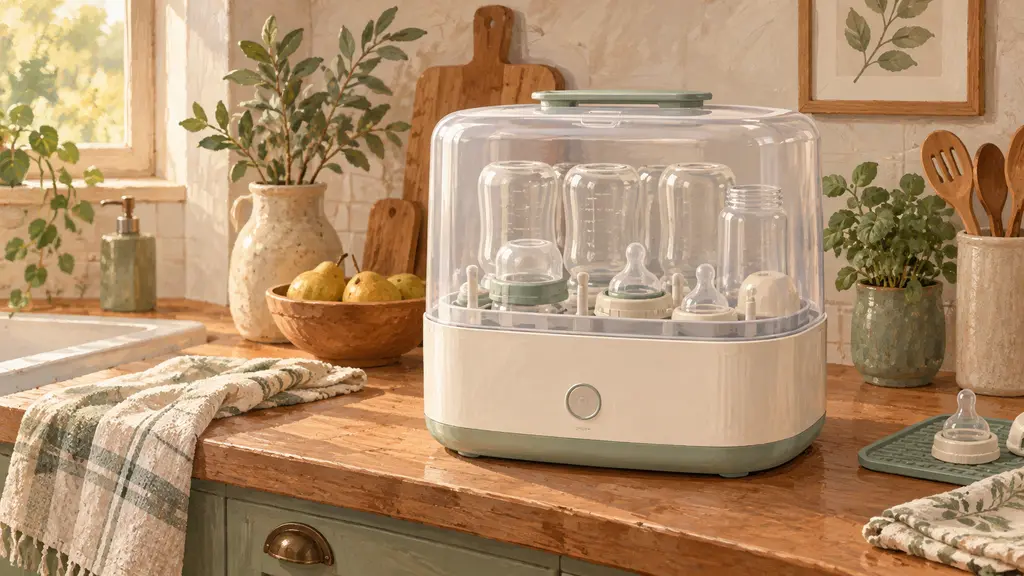
If you’re seeing a white, crusty layer building up inside your bottle sterilizer, the cause is almost certainly dissolved calcium and magnesium minerals in your tap water, not a fault in the machine. The fix isn’t a new appliance, it’s using lower-mineral water where you can and descaling regularly with a mild acid solution like citric acid or diluted white vinegar before the buildup affects heating and sterilizing.
The quick answer
White limescale inside a bottle sterilizer comes from hard tap water minerals that settle with every heating cycle, and it is not a fault in the appliance. Use lower-mineral water where available, and descale every two to four weeks with a citric acid or diluted white vinegar solution per your manufacturer’s guide, rinsing thoroughly before the next use with feeding items.
We’re not medical professionals, so always follow your appliance manufacturer’s instructions for the descaling schedule and which solution is safe for your specific model.
Key takeaways
- Limescale is dissolved minerals that settle out during repeated heating, a well-known phenomenon in any appliance that heats water, not something specific to bottle sterilizers (background on limescale from USGS).
- Tap water hardness varies by region in Saudi Arabia, so some homes see buildup faster than others.
- Built-up scale slows heating and reduces efficiency over time, and can lengthen the cycle or keep water from reaching the temperature needed for sterilizing.
- Descaling doesn’t need abrasives or hard scrubbing, a mild acid solution with enough soak time usually does the job.
- Thorough rinsing after every descale is mandatory, so no cleaning solution residue is left on items that touch a baby’s feeding equipment.
Why does limescale form inside a bottle sterilizer in the first place?
When a bottle sterilizer heats water to generate steam, the dissolved minerals in it, mainly calcium and magnesium, stay behind after the water evaporates and gradually settle on the heating base and tank walls. The harder your tap water, meaning the more minerals it carries, the faster that white layer forms. This is normal behavior for any appliance that heats water repeatedly, from an electric kettle to a steam iron, and a bottle sterilizer is no exception.
What kind of water slows down buildup?
You can’t fully prevent limescale if you’re using tap water, but you can slow it down:
- Filtered water or low-mineral bottled water slows buildup compared to straight tap water in higher-hardness areas.
- Check your specific model’s manual, since some manufacturers recommend a particular water type or warn against mineral-rich water.
- Regular tap water is fine in most cases, as long as you stick to a regular descaling schedule rather than relying on water choice alone.
How to descale it safely
The key move is treating buildup with a mild solution instead of scrubbing or abrasives that can scratch the tank:
- Unplug the unit and let it cool completely before starting.
- Mix a mild solution: one to two tablespoons of citric acid in a cup of warm water, or diluted white vinegar mixed roughly equally with water, per what your model’s manual allows.
- Pour the solution into the water tank and run an empty cycle, or let it soak per the manufacturer’s instructions.
- Rinse the tank several times with clean water afterward, since citric acid or vinegar residue should never reach feeding items.
- Run one more empty cycle with plain water to confirm no trace of the solution remains before sterilizing bottles again.
If you’d rather not mix a solution yourself every time, ready-made descaling solutions built for baby bottle sterilizers exist on the market. They’re essentially the same mild-acid idea in a pre-measured, ready-to-use form, and they’re a practical option if you’d rather trade a bit of cost for convenience than measure ingredients each cycle.
Quick comparison: descaling methods
| Method | Cost | Effort | Note |
|---|---|---|---|
| Diluted citric acid | Very low, available at most pharmacies or groceries | Simple solution to mix | The most common choice for baby items |
| Diluted white vinegar | Very low | Simple to mix, stronger smell temporarily | Needs extra rinsing to clear the smell |
| Ready-made descaling solution | Slightly higher than home acids | Ready to use, no measuring | Best for those who prefer convenience over saving |
A sterilizer that’s easy to maintain
If you’re still choosing a unit and want one that’s easy to keep clean from the start, the tank’s shape and how easily you can reach the heating base make a real difference at descaling time. An example from our shortlist: the GROWNSY Bottle Sterilizer and Dryer pairs steam sterilizing with a built-in dryer, and its tank is shaped to make routine cleaning easier, backed by thousands of positive reviews on Amazon.sa. We didn’t pick it for being the cheapest, we picked it because the balance of performance and everyday maintenance makes sense, which is why it tops our guide to the best bottle sterilizer in Saudi Arabia. You’ll find its current price and the Amazon.sa link in the card below.
Bottom line
Limescale in a bottle sterilizer is a natural result of tap water minerals, not a fault in the appliance. Use lower-mineral water where you can, descale regularly with a citric acid or diluted white vinegar solution followed by a thorough rinse, and avoid hard scrubbing or abrasives on the tank. If you’re noticing an odd smell along with the buildup, see why does a bottle sterilizer smell and how to fix it, and if your unit has stopped working well after a period of neglect, start with bottle sterilizer not working: what to check first. If you’re still weighing steam sterilizing against boiling on the stove, our steam sterilizer vs boiling explainer covers the trade-offs, and for the full buying criteria, see how to choose baby appliances. Browse everything in this category in our baby appliances section.
Sources
- USGS, “Hardness of water”, background on limescale and how it forms from dissolved water minerals during repeated heating: https://www.usgs.gov/water-science-school/science/hardness-water
This analysis is based on published information from USGS (Hardness of water).
Frequently asked questions
Why does white buildup appear inside a bottle sterilizer?
It's almost always dissolved calcium and magnesium minerals from tap water, which stay behind and settle after every heating and evaporation cycle. The harder your local water, the faster the buildup appears, and it's normal behavior in any appliance that heats water repeatedly, not a fault in the sterilizer itself.
Can I use vinegar to descale a bottle sterilizer?
Yes, white vinegar diluted with roughly equal parts water works well on most steam sterilizers, on the same principle as citric acid. Rinse thoroughly with clean water several times afterward, since vinegar smell can linger if you don't rinse enough, and check your specific model's manual for any manufacturer warnings.
How often should I descale a bottle sterilizer?
It depends on your local water hardness and how often you use it, but checking the tank every couple of weeks and removing any visible white layer as soon as you notice it prevents tougher buildup later. Your appliance's manual usually lists a more precise recommended schedule.
Does limescale affect how well a sterilizer works?
It can over time. Buildup on the heating base slows heat transfer, which can lengthen the cycle or keep water from reaching the temperature needed for sterilizing, which is one more reason not to ignore it even if it looks like a purely cosmetic issue at first.