
 Egypt
Egypt  UAE
UAE  USA
USA Dehumidifier Not Working? What to Check Before You Replace It
We may earn a commission from purchases through our links, at no extra cost to you. How we choose · Disclosure.
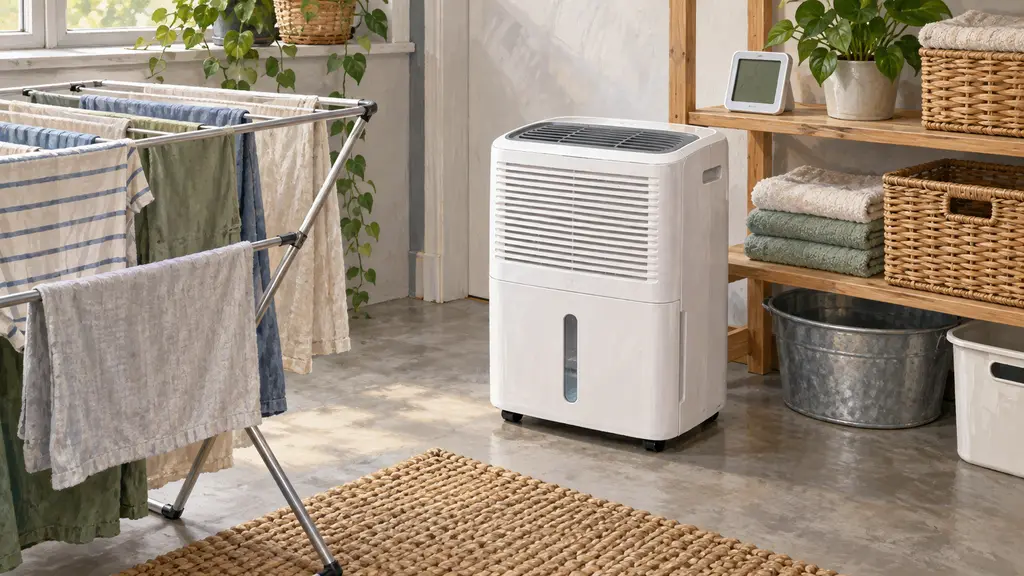
A dehumidifier that’s stopped working isn’t necessarily a fault that means you need a new one. Start with three quick checks: the outlet and power, whether the water tank is fully seated in place, and frost or dust buildup around the cold coil that can stop the unit from collecting water even though it seems to be running. Most “dehumidifier not working” cases trace back to one of these simple causes. If all three checks come back clean, the problem is more likely internal wiring, which is worth a technician’s opinion or a replacement.
The quick answer
If your dehumidifier won’t turn on at all, test the outlet with another device you know works, and make sure the water tank is fully seated in place. If it runs but doesn’t collect water, the most common cause is frost on the cold coil from a low room temperature, or a filter clogged with dust. If it shuts off suddenly, check the tank first, since a full tank triggers an automatic shutoff as a safety feature, not a fault. If the problem continues after these checks and the unit is out of warranty, repair costs often come close to the price of a new one.
Key points
- Most dehumidifiers have a safety switch at the tank slot that blocks operation unless the tank is properly seated in place, a common cause that gets mistaken for an actual fault (dehumidifier definition from ENERGY STAR).
- The float switch itself automatically shuts the unit off once the tank is full, a safety feature designed to prevent overflow, not a defect.
- Frost or ice on the cold coil in a cooler room stops water collection, a known phenomenon in compressor units that happens when room temperature drops below the level the unit works efficiently at (thermal fuse background from Britannica).
- A filter clogged with dust reduces airflow around the coil, which speeds up frost forming or generally lowers moisture-removal efficiency.
- A failed compressor or control board after the warranty ends usually makes replacing the unit the smarter financial call over repairing it.
Won’t turn on at all?
Before assuming an internal fault, check these in order:
- Outlet and power: plug another device you know works into the same outlet. If it doesn’t work either, the problem is the outlet or circuit, not the dehumidifier.
- Circuit breaker: check your home’s electrical panel, since some compressor units draw a fairly high current at startup and can trip a weak breaker or one shared with other appliances on the same circuit.
- Tank seated properly: most models won’t run unless the water tank is fully seated in place, because an internal safety switch blocks operation until the tank settles fully. Pull the tank out and reinsert it to make sure it’s fully in.
- Power button or display: if the display lights up but nothing happens when you press it, the control board itself may be at fault, which usually needs a technician to check.
Runs but doesn’t collect water?
If the display lights up and the fan spins but the water level in the tank isn’t actually rising, the most common cause is frost or ice forming on the cold coil inside the unit, a known phenomenon in compressor units when room temperature drops below the level the unit works efficiently at. Another common cause is a filter clogged with dust, reducing the normal airflow around the coil. Clean the filter thoroughly if you haven’t in a while, our guide on how to clean a dehumidifier walks through the right method, and let the unit run in a slightly warmer room if it’s on the cool side. If the problem continues after a thorough clean and a warmer room, the coil or the compressor itself is likely damaged and needs a technician.
Shuts off suddenly during operation?
A sudden shutoff mid-operation usually means the tank is genuinely full and the float switch shut the unit off automatically as a safety feature designed to prevent overflow, not an actual fault. Check the tank first and empty it if it’s full. If sudden shutoffs continue with a genuinely empty tank and enough clear space around the unit, the issue is more likely overheat protection triggered by blocked vents or a filter clogged with dust, not user error.
Quick troubleshooting table
| Symptom | Likely cause | What to check | DIY or technician |
|---|---|---|---|
| Won’t turn on at all | Outlet, breaker, or tank not seated | Another outlet, electrical panel, tank seating | Usually DIY |
| Runs but doesn’t collect water | Frost on the coil or a clogged filter | Clean the filter, room temperature | DIY first, then technician |
| Shuts off suddenly during operation | Full tank or overheat protection | Tank level, unit ventilation | Usually DIY |
| Display lit, buttons unresponsive | Control board fault | No safe home check | Technician |
| Unusual noise during operation | Clogged filter or uneven placement | Clean the filter, level surface | Usually DIY |
When to repair it and when to replace it
If the unit is still under warranty, contact the manufacturer or retailer first. If it’s out of warranty and the fault is in the compressor or the control board rather than a simple outlet or tank issue, the cost of diagnosis and repair often comes close to the price of a new unit, and at that point replacing it is usually the smarter financial call. If you’ve reached that decision, the top pick in our guide to the best dehumidifier in Saudi Arabia is the Pro Breeze 12L/Day Digital Dehumidifier, with enough capacity for a bedroom or living room and thousands of positive reviews on Amazon.sa.
See the Pro Breeze 12L/Day Digital Dehumidifier price on Amazon.sa ↗
When to stop and call a technician
- The unit will not start after the outlet, breaker, and tank-seating checks.
- It keeps shutting off with an empty tank, clear vents, and a clean filter.
- It runs but collects no water after the room-temperature, frost, and filter checks.
- Unusual noise continues after cleaning the filter and leveling the unit.
Stop using the appliance and have a qualified technician inspect it before using it again.
Bottom line
Most “dehumidifier not working” cases come down to simple, checkable causes: an outlet or breaker issue, a tank that isn’t fully seated, or frost and dust buildup around the cold coil. Check these in order before assuming a major fault. If the problem continues and the unit is out of warranty, replacing it is usually the smarter financial call, and the Pro Breeze 12L/Day Digital Dehumidifier, the top pick in our guide to the best dehumidifier in Saudi Arabia, is a solid place to start. To avoid a repeat of the problem, see how to clean a dehumidifier, and for the full buying criteria, read our guide on how to choose a dehumidifier. For everything in this category, browse our dehumidifiers section.
Sources
- ENERGY STAR, “Dehumidifiers”, definition of the dehumidifier and how the cold coil and compressor work: https://www.energystar.gov/products/dehumidifiers
- Britannica, “Electrical fuse”, background on thermal safety fuses used in home appliances to cut power when they overheat: https://www.britannica.com/technology/fuse-electronic-device
This analysis is based on published information from ENERGY STAR (Dehumidifiers), Britannica (Electrical fuse).
Frequently asked questions
My dehumidifier won't turn on at all, what should I check first?
Test the outlet itself by plugging in another device you know works, then check whether a circuit breaker in your electrical panel has tripped. Also make sure the water tank is fully seated in place, because most dehumidifiers have a safety switch that blocks operation unless the tank is properly inserted.
Why does my dehumidifier run but not collect any water?
The most common cause is frost or ice forming on the cold coil inside the unit, which usually happens if the room temperature is on the low side for the compressor to work efficiently. Another common cause is a filter clogged with dust, reducing airflow around the coil. Clean the filter and let the unit run in a slightly warmer room, and if the problem continues, the coil or the compressor itself is likely damaged.
Why does my dehumidifier shut off on its own during operation?
Most likely the tank is genuinely full and the float switch shut the unit off automatically as designed, which isn't a fault. Check the tank and empty it if it's full. If sudden shutoffs continue with a genuinely empty tank and enough clearance around the unit, the issue is more likely overheat protection triggered by blocked vents or a clogged filter.
When should I replace a dehumidifier instead of repairing it?
If the unit is out of warranty and the fault is in the compressor or the control board rather than a simple outlet or tank issue, the cost of diagnosis and repair often comes close to the price of a new unit. At that point, replacing it is usually the smarter financial call.