
 Egypt
Egypt  UAE
UAE  USA
USA Is a Dehumidifier Worth It in Saudi Arabia?
We may earn a commission from purchases through our links, at no extra cost to you. How we choose · Disclosure.
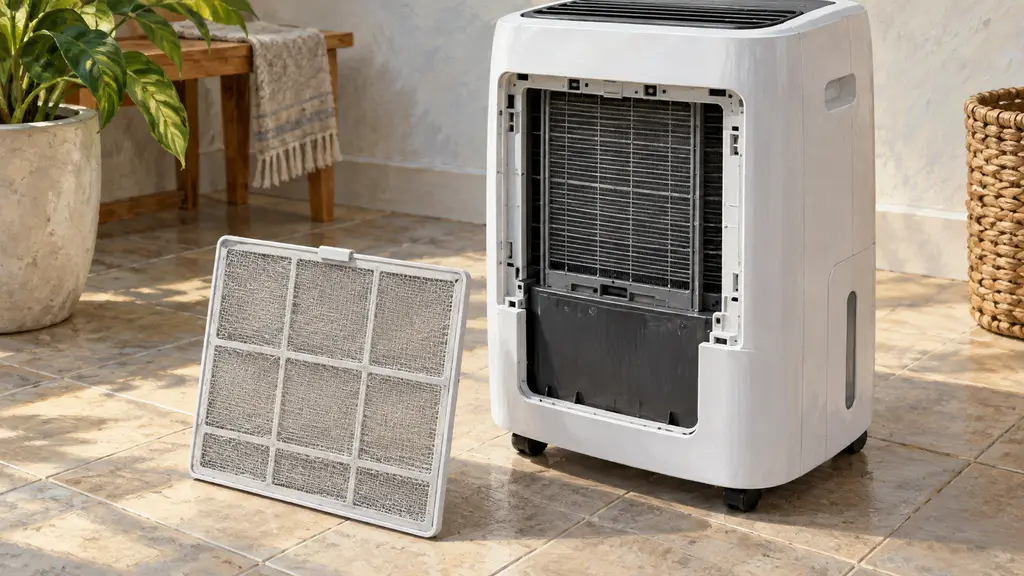
Yes, a dehumidifier is worth buying for most Saudi homes that genuinely deal with a musty smell, a damp closet, or condensation on windows, because it fixes a problem the AC alone can’t solve no matter how long it runs. A dedicated compressor unit pulls real moisture out of the air, not just cools it, and carries strong consensus from buyer reviews on Amazon.sa. The real exception is narrow: a home that doesn’t actually feel humid doesn’t need one at all. Here are the real benefits and drawbacks before you decide.
The quick answer
A dehumidifier is worth it for most homes with a genuine humidity problem, because it fixes the musty smell, condensation, and mold risk in a way the AC alone doesn’t. The one real downside is noise, needing a dedicated spot, and regular tank emptying, a small trade-off for genuinely removing moisture. If your home feels heavy and damp despite the AC running, the answer is clearly yes.
Key points
- A dehumidifier actively pulls water vapor out of the air, while an AC cools the air and removes some humidity only as a side effect, not as its main job (dehumidifier definition from ENERGY STAR).
- Closed windows during AC season trap moisture indoors, which is the most common cause of a musty smell or condensation even when the AC is running normally.
- A compressor unit is louder, pricier, and uses more electricity than a regular AC unit, and that’s the one real trade-off worth knowing.
- It doesn’t fix dust or allergy symptoms, that’s a separate job for an air purifier, unrelated to humidity (relative humidity background from US EPA).
- Running it only during genuinely humid months or hours, instead of leaving it on constantly, cuts electricity use without giving up most of the benefit.
The real benefits of a dehumidifier
The biggest benefit is that it treats the cause, not the symptom. A musty smell in a closet, condensation on a cooler wall or window, or that heavy, damp feeling in a room despite the AC running are all signs of genuine humidity that cooling alone doesn’t fix. A dedicated compressor unit pulls that moisture straight out of the air, which lowers the risk of mold on clothes and wooden furniture and reduces the musty smell at its source instead of masking it with an air freshener. It also works alongside your AC rather than replacing it, specifically targeting the humidity your cooling system leaves behind in a home with windows closed for long stretches.
The drawbacks you should know before buying
Noise and footprint are the biggest constraint. A compressor unit is louder and bigger than a regular AC unit, and needs a dedicated spot rather than a tight corner to work efficiently. It also needs regular tank emptying, a near-daily task in genuinely humid conditions, not something you can forget after buying it. Electricity use depends on capacity and runtime, and leaving it on around the clock will show up clearly on your electricity bill, while running it only during genuinely humid periods cuts that consumption noticeably. Finally, it does nothing for dust or allergy symptoms, so anyone whose main complaint is dust rather than moisture needs an air purifier instead.
Dehumidifier vs AC alone: a quick comparison
| Criteria | Dedicated dehumidifier | AC alone with closed windows |
|---|---|---|
| Removing water vapor | Its main, direct job | A limited side effect of cooling |
| Musty smell and condensation | Fixes it at the source | Can trap moisture instead of removing it |
| Noise and footprint | Needs a dedicated spot and regular emptying | Nothing extra to speak of |
| Electricity use | Additional, based on runtime | Already part of running the AC |
| Dust and allergy symptoms | Doesn’t fix them | Doesn’t fix them either, needs an air purifier |
When a dehumidifier is genuinely the right call
If your home feels heavy and damp despite the AC running, or you smell mustiness in a closet, or you see condensation on the windows, the answer is clearly yes. A reliable unit like the Pro Breeze 12L/Day Digital Dehumidifier shows why: it actually pulls 12 liters of moisture a day, carries thousands of positive reviews on Amazon.sa, and its digital display makes daily performance easy to track. We didn’t pick it for being the cheapest, we picked it because it’s a genuinely reliable compressor unit at a fair price for most bedrooms and living rooms, which is what earns it the top spot in our guide to the best dehumidifier in Saudi Arabia.
See the Pro Breeze 12L/Day Digital Dehumidifier price on Amazon.sa ↗
Bottom line
A dehumidifier is worth buying for most Saudi homes with a genuine humidity problem, because it fixes musty smells and condensation at the source in a way the AC alone doesn’t. The one real constraint is noise, needing a dedicated spot, and regular emptying, a small price for a real result. If you’re convinced and want to know the right size for your apartment, see the best dehumidifier for a small apartment, and if you’re still torn between one and an air purifier, read dehumidifier vs air purifier. For the full buying criteria, see our guide on how to choose a dehumidifier, and for everything in this category, browse our dehumidifiers section.
Sources
- ENERGY STAR, “Dehumidifiers”, definition of the dehumidifier and the principle of pulling water vapor out of the air: https://www.energystar.gov/products/dehumidifiers
- US EPA, “Controlling moisture and relative humidity at home”, background on relative humidity and its effect on comfort indoors: https://www.epa.gov/mold/what-are-main-ways-control-moisture-your-home
This analysis is based on published information from ENERGY STAR (Dehumidifiers), US EPA (Controlling moisture and relative humidity at home).
Frequently asked questions
Is a dehumidifier really worth buying in Saudi Arabia?
Yes, for most homes that actually deal with a musty smell, condensation, or a damp closet, because it fixes a problem the AC alone doesn't solve. Based on specs and buyer review consensus, a compressor unit like the Pro Breeze 12L/Day pulls real moisture out of a bedroom or living room and carries thousands of positive reviews on Amazon.sa. The real exception is narrow: a home with no actual humidity problem doesn't need one.
Is running the AC enough instead of buying a dehumidifier?
Usually not. Air conditioning cools the air and removes some humidity as a side effect, but it isn't built to control humidity specifically, and closed windows during AC season can trap moisture indoors rather than clear it. A dedicated dehumidifier works alongside your AC, targeting the humidity your AC leaves behind rather than replacing it.
How much electricity does a dehumidifier use?
It depends on capacity and daily runtime, and the exact figure for a specific model lives in its official specs rather than a general estimate. In practice, running a compressor unit a few hours a day during genuinely humid periods, instead of leaving it on around the clock, noticeably cuts consumption without giving up most of the benefit.
What's the biggest downside of a dehumidifier to know before buying?
Noise and needing a dedicated spot. A compressor unit is louder and bigger than a regular AC unit, and needs regular tank emptying. Anyone wanting a completely silent solution or zero extra floor space in the home may find this trade-off annoying, but it's the price of real moisture removal rather than mild relief.