
 Egypt
Egypt  UAE
UAE  USA
USA Is Sterilizing Baby Bottles Really Necessary?
We may earn a commission from purchases through our links, at no extra cost to you. How we choose · Disclosure.
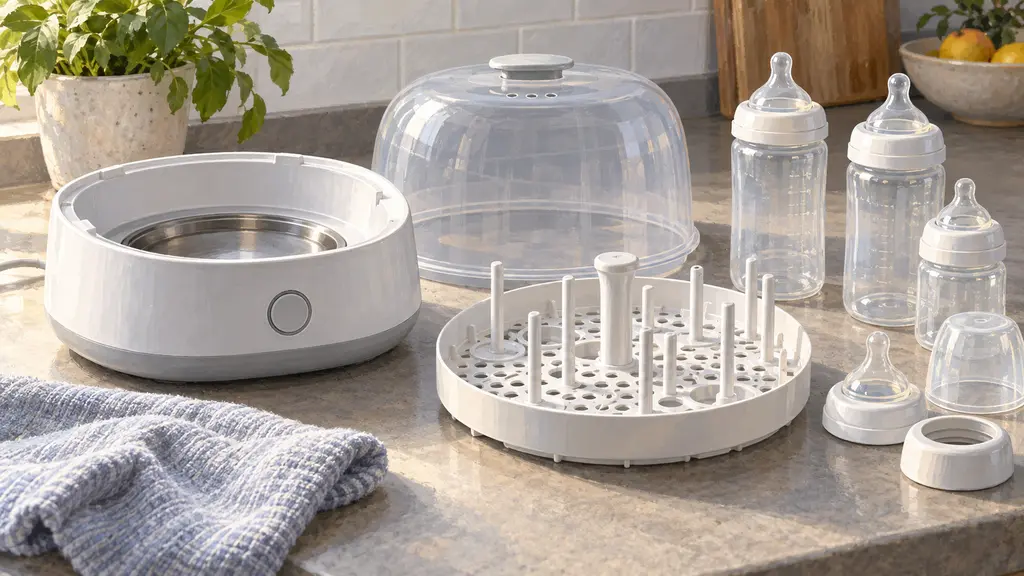
Sterilizing baby bottles matters most in the first few months of a baby’s life, roughly before three months old, or if the baby was born premature or has weaker immunity. After that, washing bottles well with hot water and soap is enough for most households according to a lot of general health guidance, unless your pediatrician advises otherwise. We’re not medical professionals, so always follow your pediatrician’s guidance on sterilizing before making a call.
The quick answer
Yes, sterilizing is necessary in the first few months and for any baby with weaker immunity or born premature, but it often becomes an optional step afterward if the water is clean and the baby is healthy. Washing bottles well with hot water and soap, by hand or in the dishwasher, is enough for many households later on. If you keep sterilizing for any reason, a dedicated steam sterilizer like the GROWNSY Bottle Sterilizer and Dryer turns it into a hands-off routine.
Key takeaways
- The first few months matter most for sterilizing, because a baby’s immune system is still developing and doesn’t fight off germs as well as an older child’s does (general background on sterilizing from US CDC).
- A premature or immune-compromised baby is the exception that keeps sterilizing important for longer, based on direct guidance from a pediatrician.
- Washing well with hot water and soap is often enough later, by hand or in the dishwasher, if your household’s drinking water is reliable.
- Water source and recent illness in the household change the math, temporary sterilizing pays off even after most parents have otherwise stopped.
- We’re not medical professionals, and this article doesn’t replace your pediatrician’s advice, it just explains what general health guidance says and the practical difference between sterilizing and washing.
Why do we sterilize baby bottles in the first place?
Sterilizing means killing or removing germs from the bottle and nipple surface more thoroughly than regular soap washing does. The logic behind its importance in the early months is simple: a newborn’s immune system is still developing, so a germ that wouldn’t bother an older child can be harder on a small body that hasn’t built up resistance yet. That’s why a lot of health guidance concentrates the importance of sterilizing in that early window specifically, not across the entire span of bottle-feeding.
When sterilizing is genuinely necessary
Based on general health guidance, there are situations where sterilizing stays more than just an extra precaution:
| Situation | Is sterilizing necessary? | Why |
|---|---|---|
| Roughly the first three months | Yes | Immune system is still developing |
| Premature or immune-compromised baby | Yes, for longer | Higher risk from ordinary germs |
| After a recent illness in the household | Yes, temporarily | Lowers the risk of re-infection between family members |
| Household drinking water isn’t reliable | Yes | Added contamination risk from the water source itself |
| Older, healthy baby with clean water | Often optional | Washing well with hot water and soap is enough per a lot of guidance |
This table is a general summary, not a substitute for your pediatrician’s guidance, who knows your baby’s health history and your household’s specific conditions.
When thorough washing is enough instead of full sterilizing
After the first few months, if the baby is healthy and your household’s drinking water is reliable, a lot of general health guidance treats washing well with hot water and soap as sufficient for daily use. A dishwasher’s high heat is a practical option for many households at this stage too. The shift here isn’t that sterilizing becomes harmful, it’s that it moves from a necessity to an optional extra step depending on your comfort and your pediatrician’s guidance.
So what if you decide to keep sterilizing?
Some parents prefer to keep sterilizing past the first few months for extra peace of mind, especially with several bottles a day or uncertain water while traveling. If that’s your call, a dedicated steam sterilizer is easier than boiling on the stove or running a full dishwasher cycle for one bottle. The GROWNSY Bottle Sterilizer and Dryer pairs steam sterilizing with automatic drying in one cycle, and it’s backed by thousands of positive reviews on Amazon.sa. We didn’t recommend it for being the cheapest, we recommended it because it finishes the whole job with no wet bottles left on a rack, which is what earns it the top spot in our guide to the best bottle sterilizer in Saudi Arabia.
Bottom line
Sterilizing is genuinely necessary in the first few months and for any premature or immune-compromised baby, but it becomes optional for many households afterward if the water is clean and the baby is healthy. Ask your pediatrician when it’s right for you to shift from full sterilizing to thorough washing, and don’t hesitate to keep sterilizing longer if you’re unsure. If sterilizing is still part of your routine, compare steam sterilizing vs boiling to see which method fits, and if you’re torn between a small or large sterilizer, read what size bottle sterilizer do you need. Before buying, also check common bottle sterilizer buying mistakes, and for the full buying criteria across other baby appliances, read how to choose baby appliances or browse our baby appliances section.
Sources
- US CDC, “Cleaning and sanitizing infant feeding items”, general background on the principle of sterilizing and removing germs from surfaces: https://www.cdc.gov/hygiene/about/clean-sanitize-store-infant-feeding-items.html
- The consensus of buyer reviews and prices for bottle sterilizers on Amazon.sa at the time of publication.
This analysis is based on published information from US CDC (Cleaning and sanitizing infant feeding items), Amazon.sa.
Frequently asked questions
Do I need to sterilize my baby's bottle before every use?
We're not medical professionals, so always follow your pediatrician's guidance on sterilizing routines. What a lot of general health guidance points to is that sterilizing before every use matters most in the first few months, especially for a premature or immune-compromised baby, while afterward washing the bottle well with hot water and soap each time is often enough. Always check the bottle manufacturer's own instructions too.
When can I stop sterilizing bottles?
There's no single age that fits every baby, this is a call for your pediatrician. In general, most health guidance ties the importance of sterilizing to a baby's age and how developed their immune system is rather than a fixed month count, so ask your doctor when it makes sense for your baby specifically to shift from full sterilizing to thorough washing.
Is washing bottles in the dishwasher enough instead of a dedicated sterilizer?
A dishwasher's high heat cleans bottles well and gets close to sterilizing for many parents after the first few months, but it isn't the same mechanism as a dedicated steam sterilizer. If your pediatrician recommends full sterilizing, a steam sterilizer like the GROWNSY Bottle Sterilizer and Dryer gives you a cycle built for that instead of relying on a dishwasher cycle designed for regular dishes.
Is there a risk to stopping sterilizing too early?
We're not medical professionals and this isn't health advice. It depends on your baby's age, general health, and your household's drinking water source, factors your pediatrician weighs better than any buying guide can. If you're unsure, continuing to sterilize a bit longer doesn't hurt, and asking your doctor directly is the safest step before you stop.