
 Egypt
Egypt  UAE
UAE  USA
USA What Size Bottle Sterilizer Do You Need?
We may earn a commission from purchases through our links, at no extra cost to you. How we choose · Disclosure.
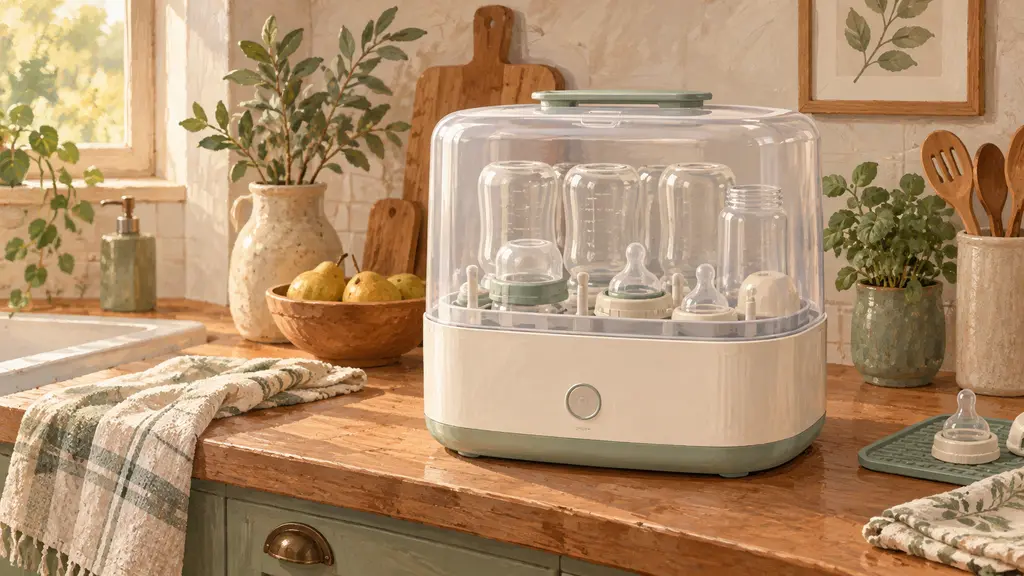
The right bottle sterilizer size depends on how many bottles and pump parts you sterilize in one batch, not price alone. A parent sterilizing one or two bottles once a day can get by with a cheap, compact microwave sterilizer bag. Parents sterilizing several bottles a day, combining them with breast pump parts, or feeding twins need a larger unit that fits a full batch in one cycle.
The quick answer
If you’re only sterilizing one or two bottles once a day, a small unit or a microwave sterilizer bag is enough. If your routine includes several bottles a day, breast pump parts, or more than one baby, a larger sterilizer that fits everything in one cycle saves you from running the cycle repeatedly. From our best bottle sterilizer guide, the GROWNSY Bottle Sterilizer and Dryer is a practical pick for anyone who needs more capacity plus automatic drying. See the price card below.
Key takeaways
- The number that matters is how many bottles you sterilize per batch, not per day. If you gather several bottles for one sterilizing session instead of sterilizing after every feed, you need more capacity than a parent who sterilizes one bottle at a time.
- Breast pump parts take up extra room inside the sterilizer. If you use a pump, factor its size into your capacity math, not just the bottles.
- Twins or more than one baby double the parts in every cycle, which tips the balance toward a larger unit compared to a single baby.
- A bigger unit isn’t always the better choice. It costs more and takes up more counter space, and the real benefit only shows up with genuinely frequent daily use.
- You can always upgrade later, so there’s no need to buy a large unit just in case a need that might not materialize.
How many bottles do you actually sterilize per batch?
Before looking at any specs, ask yourself a simple question: how many bottles do you sterilize together at once, not how many bottles your baby uses per day. A parent who sterilizes one bottle right after each feed doesn’t need the same capacity as a parent who prefers to batch the whole day’s bottles into one sterilizing session in the evening. That difference in routine, not the number of bottles you own, is what actually determines the right capacity.
Breast pump parts need extra room
If you use a breast pump, the funnels, valves, and tubing need regular sterilizing just like bottles do, and they take up room inside the sterilizer that isn’t dedicated to a full bottle. Parents who combine bottles and pump parts in one daily cycle typically need a noticeably larger unit than a parent who doesn’t use a pump at all. Overlooking this detail before buying is a common reason some people end up with a small sterilizer they have to run two or three times a day instead of once.
A small size is enough if…
- You sterilize just one or two bottles per batch.
- You don’t use a breast pump, or you sterilize its parts separately.
- You have one baby and aren’t planning to expand your bottle count soon.
- Your budget or counter space is tight, and a cheap microwave sterilizer bag genuinely covers your needs.
A larger size is worth the extra cost if…
- You sterilize several bottles together in one batch daily.
- You combine bottles with breast pump parts in the same cycle.
- You have twins or more than one baby using bottles at the same time.
- You want automatic drying instead of hand-drying bottles after every cycle, which is exactly what the GROWNSY Bottle Sterilizer and Dryer adds on top of its larger capacity.
Quick comparison by usage pattern
| Usage pattern | Right capacity | Why |
|---|---|---|
| One or two bottles once a day | Small unit or microwave sterilizer bag | Enough for a few parts, lower price |
| Several bottles a day for one baby | Medium to large electric unit | Fits a full batch instead of repeating the cycle |
| Bottles plus breast pump parts | Large unit like the GROWNSY Bottle Sterilizer and Dryer | Enough room for funnels, valves, and tubing alongside bottles |
| Twins or more than one baby | Large-capacity unit | Roughly halves the number of daily cycles needed |
The simple rule: small, infrequent batches mean a small capacity is enough. Large, frequent batches, or pump parts, mean a bigger capacity actually saves time.
So which size should you pick?
If today’s routine tops out at one or two bottles, there’s no reason to pay more for capacity you won’t use. But if your day includes several bottles and maybe pump parts, a larger unit finishes the job in one cycle instead of three. The GROWNSY Bottle Sterilizer and Dryer fits that pattern well, since it pairs more capacity with automatic drying so you don’t need an extra hand-drying step after every big batch. We didn’t recommend it for being the cheapest in the lineup, we recommended it because it finishes the job for anyone sterilizing frequently, which is what earns it the top spot in our guide to the best bottle sterilizer in Saudi Arabia. You’ll find its current price and the Amazon.sa link in the card below.
Bottom line
The right capacity is measured by the number of bottles and pump parts per batch, not price or available counter space alone. Small, infrequent batches mean a small unit is enough. Large, frequent batches, or pump parts, or twins, mean a bigger capacity genuinely saves you time every day. If you’re still deciding whether sterilizing is necessary for your baby’s age at all, read is sterilizing baby bottles really necessary, and before buying, check common bottle sterilizer buying mistakes and compare steam sterilizing vs boiling to see which method fits your routine. For the full buying criteria across other baby appliances, read how to choose baby appliances or browse our baby appliances section.
Sources
- The consensus of buyer reviews and prices for bottle sterilizers of different capacities on Amazon.sa at the time of publication.
This analysis is based on published information from Amazon.sa.
Frequently asked questions
How many bottles should a bottle sterilizer hold?
This depends on how many bottles you sterilize in one batch, not a fixed number that fits everyone. A parent sterilizing one or two bottles once a day can get by with a compact microwave sterilizer bag. Parents sterilizing several bottles at once, especially alongside a breast pump or with twins, need a larger unit that fits a full batch in one cycle instead of running the cycle multiple times.
Do I need a sterilizer that also fits breast pump parts?
If you use a breast pump, the pump parts (funnels, valves, tubing) need regular sterilizing just like bottles and take up extra room inside the sterilizer. Parents who combine bottles and pump parts in one cycle typically need a larger-capacity unit than parents sterilizing bottles alone, otherwise you end up running two separate cycles each time.
Is a small unit enough for one baby?
Usually yes, if you're only sterilizing one or two bottles once or twice a day. A small unit or a microwave sterilizer bag covers that use case at a lower price and a smaller footprint on the counter. The point where you need more capacity is when sterilizing happens several times a day, or when it includes extra parts beyond the bottles themselves.
Is it a good idea to buy a bigger unit than I need right now, just in case?
Not necessarily. A bigger unit means a higher price and more counter space in your kitchen, and if you're only sterilizing one bottle a day, the practical difference is limited. It's better to size for your actual routine today, not a possible future change, since you can always upgrade if the number of bottles genuinely increases.