 Egypt
Egypt  UAE
UAE  USA
USA Steam Iron or Garment Steamer for Thobes, Abayas and Shirts?
We may earn a commission from purchases through our links, at no extra cost to you. How we choose · Disclosure.
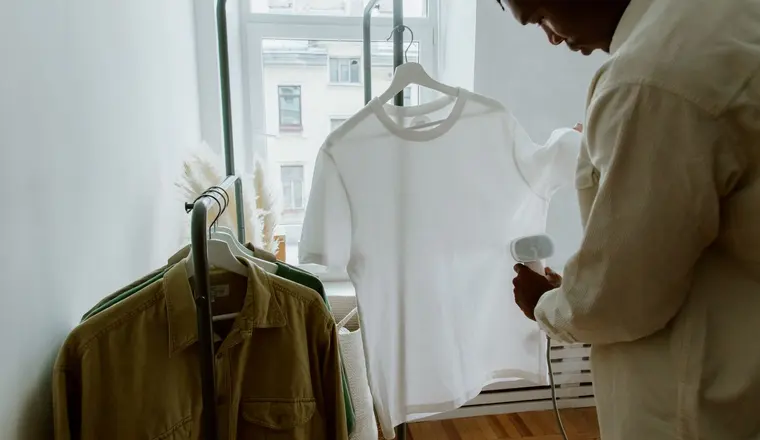
If you’ve stood in front of the iron and steamer section on Amazon.sa wondering which one your laundry routine actually needs, you’re weighing two genuinely different jobs: a crisp, precise crease for shirts and thobes versus speed and gentleness on delicate fabric, abayas, dresses, and travel. Neither is objectively “better,” they solve different problems, so let’s untangle which one actually fits your wardrobe before you shop the best steam iron in Saudi Arabia.
The quick answer
A steam iron wins on a crisp, precise crease for shirts and thobes. A garment steamer wins on speed and gentleness for delicate fabric, hanging garments, and travel. If your wardrobe is mostly formal shirts, thobes, and household linens that need a sharp, flat finish, get an iron. If it leans abayas, dresses, delicate weaves, or you travel often and need to de-wrinkle fast, a steamer is the better fit, or the better addition alongside an iron.
Key takeaways
- An iron presses; a steamer smooths. An iron uses direct heat and pressure against a flat soleplate to create a sharp crease. A steamer uses only steam, with no direct contact against a hot surface, to relax wrinkles out of hanging fabric.
- Steamers are gentler on delicate fabric. Because the fabric never touches a hot soleplate, a steamer avoids the scorching or shine marks a hot iron can leave on delicate weaves, sequins, or embellished abayas and dresses.
- Irons are faster for a stack of shirts and thobes. Pressing a garment flat on a board is quicker per piece than steaming it upright, especially with a well-rounded iron like the Russell Hobbs Light & Easy Steam Iron.
- Steamers are faster for a whole wardrobe rack. Working through several hanging garments in a row with a standing steamer, like the Philips Standing Garment Steamer with Tilting Stand, beats setting up an ironing board for each piece.
- Travel favors a steamer. A compact, dual-voltage steamer like the Jack & Rose Dual-Voltage Travel Clothes Steamer packs into a suitcase and works abroad, which a full-size iron and board can’t match.
Steam irons: precision and a crisp, flat crease
An iron does its job with direct heat and pressure: a hot soleplate pressed against fabric on a flat board, with steam added to help loosen fibers as you go. That combination is what produces a genuinely sharp, flat crease down a trouser leg, a thobe, or a crisp collar on a dress shirt, something no amount of steam alone can replicate. A well-rounded iron like the Russell Hobbs Light & Easy Steam Iron is light and comfortable to handle through a full ironing session, and a powerful full-size iron like the BLACK+DECKER 2400W Steam Iron pushes enough heat through everyday shirts and linens to get the job done in one pass.
The trade-off is that an iron needs a flat surface to work against, which means setting up a board, and it isn’t the right tool for anything that shouldn’t touch a hot soleplate directly, delicate embellished fabric, sequins, or certain synthetic weaves that can scorch or shine under direct heat.
Garment steamers: speed and gentleness on hanging fabric
A garment steamer skips the soleplate and pressure entirely. Steam alone relaxes the fibers of a hanging garment, which is why it’s noticeably gentler: there’s no direct contact with a hot surface, so there’s no risk of scorching, shine marks, or flattening delicate texture. A handheld steamer like the TEFAL Pure POP Handheld Garment Steamer is quick to grab for one or two garments, while a standing steamer like the Philips Standing Garment Steamer with Tilting Stand is built to work through a whole wardrobe rack in a row, holding the garment upright while you steam, which is genuinely faster than setting up an ironing board for each piece one at a time. This is a big part of why steamers are popular for abayas and formal dresses specifically, where a hot iron risks damaging embellishments or delicate weaves.
The trade-off is that a steamer can’t replicate the sharp, flat crease an iron presses into a collar or trouser front, since there’s no pressure or flat surface involved. It smooths wrinkles well but it isn’t a substitute for an iron on anything that needs a genuinely crisp finish.
Quick comparison: which one for what?
| Factor | Steam iron | Garment steamer |
|---|---|---|
| Best result | Crisp, flat crease | Smooth, wrinkle-free hanging fabric |
| Delicate fabric, abayas, dresses | Risk of scorching or shine marks | Gentle, no direct contact with heat |
| Speed for a stack of shirts or thobes | Faster per garment on a board | Slower per garment upright |
| Speed for a whole wardrobe rack | Slower, one board setup per piece | Faster, work through several garments in a row |
| Travel | Bulky, needs a board | Compact, dual-voltage options pack into a suitcase |
The simple rule: need a sharp, precise crease → steam iron. Need speed and gentleness on delicate fabric, hanging garments, or travel → garment steamer. If you want the full buying criteria beyond just this one trade-off, the guide on how to choose a steam iron walks through wattage, build comfort, and soleplate material too.
So which one should you actually buy?
If your wardrobe is mostly work shirts, thobes, and household linens that need a genuinely crisp finish, start with a reliable iron, it’s the tool built for exactly that job. A practical example that balances comfort and price: the Russell Hobbs Light & Easy Steam Iron, a light, easy-to-handle build backed by hundreds of positive reviews on Amazon.sa. We didn’t pick it because it’s the most powerful iron on the market, we picked it because it’s a genuinely well-rounded iron at a fair price, which is what earns it the top spot in our guide to the best steam iron in Saudi Arabia. You’ll find its current price and the Amazon.sa link in the card below.
If your wardrobe leans delicate fabric, abayas, or formal dresses, or you regularly need to de-wrinkle a whole rack of hanging clothes fast, a garment steamer earns its place too, whether alongside an iron or instead of one. A handheld steamer like the TEFAL Pure POP Handheld Garment Steamer handles quick touch-ups, a standing steamer like the Philips Standing Garment Steamer with Tilting Stand handles a whole wardrobe rack at home, and a dual-voltage travel steamer like the Jack & Rose Dual-Voltage Travel Clothes Steamer covers the same job on the road.
Read your needs in a minute
- Ask yourself: does most of what you iron or steam need a sharp, flat crease, or does it need to look wrinkle-free without direct heat touching the fabric?
- If it’s mostly shirts and thobes needing a crisp finish, a steam iron is the right tool.
- If it’s mostly abayas, dresses, or delicate fabric, or you’re steaming a whole wardrobe rack at once, a garment steamer is the better fit.
- If you travel often, look at a compact, dual-voltage steamer rather than packing a full-size iron and board.
- See steam iron prices in Saudi Arabia to check what each tier actually costs before you decide, and remember all prices are approximate and change.
For everything in this category in one place, browse our steam irons section.
This analysis is based on published information from Amazon.sa.
Frequently asked questions
Is a garment steamer better than a steam iron?
Neither is objectively better, they solve different problems. A steam iron presses a flat, sharp crease into shirts and thobes, which a steamer can't replicate. A garment steamer smooths wrinkles on hanging garments without the fabric touching a hot surface, which is gentler on delicate fabric and faster for a whole wardrobe rack at once. If your wardrobe is mostly formal shirts, get an iron. If it leans delicate fabric, abayas, or dresses, a steamer earns its place.
Can a garment steamer replace an iron completely?
For most wardrobes, no. A steamer smooths wrinkles well but can't press a crisp, flat crease into a collar or trouser front the way an iron does, since there's no pressure or flat surface involved. Many households end up with both: an iron for shirts, thobes, and formalwear, and a steamer for delicate fabric, abayas, dresses, and quick touch-ups on hanging clothes.
Is a steamer safe for abayas and delicate fabric?
Yes, that's actually where a steamer has a real advantage over an iron. Since the steam smooths wrinkles without the fabric touching a hot soleplate directly, there's no risk of scorching or shine marks on delicate weaves, sequins, or embellishments the way a hot iron can leave behind. This is a big part of why steamers are popular for abayas and formal dresses specifically.
What steamer should I take when traveling?
A dual-voltage travel steamer, like the Jack & Rose Dual-Voltage Travel Clothes Steamer, is built for this: it works on both Saudi voltage and abroad without a separate converter, and its compact 2-in-1 design packs into a suitcase or carry-on far more easily than a standing steamer or a full-size iron.