
 Egypt
Egypt  UAE
UAE  Saudi Arabia
 The Best Kitchen Knife Set Is Often Just One Good Knife
We may earn a commission from purchases through our links, at no extra cost to you. How we choose · Disclosure.
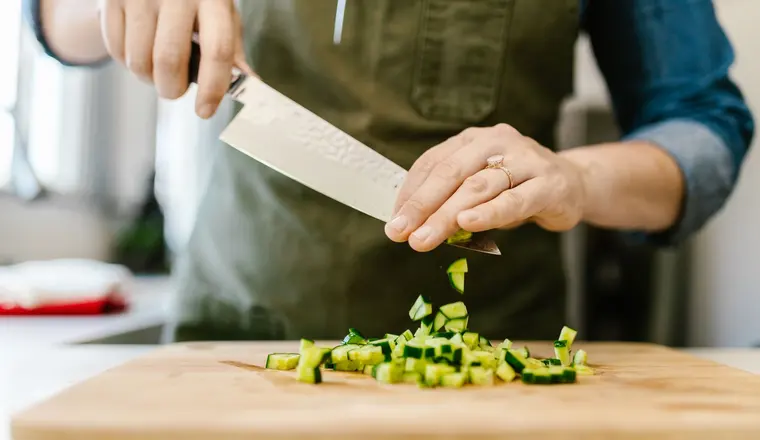
Most people shopping for a “kitchen knife set” don’t actually need a set. One good 8-inch chef’s knife, sharpened and cared for, handles the overwhelming majority of home cooking, and buying that one knife well beats spreading the same budget across a block of ten you’ll mostly ignore. A block only earns its keep if you genuinely use more than three or four of the knives in it.
Quick answer
Skip the block unless you have a specific reason for it. Buy one well-reviewed chef’s knife, add a paring knife and a serrated bread knife once you notice you need them, and you’ll own better steel in the pieces you actually pick up than any 10-to-15-piece set sells at the same price. A block set only makes sense if you genuinely want dedicated boning, utility, and steak knives and will use them regularly.
Key points
- A chef’s knife is the general-purpose workhorse of any kitchen, built for chopping, slicing, and mincing; it’s the single blade that does the most work in a typical home kitchen.
- Most home cooks use three knives regularly: chef’s, paring, and serrated bread. Everything else in a big block tends to sit in the wood.
- A block set splits a fixed budget across many pieces, so the knives you’ll actually reach for daily often get thinner steel and a lower-grade edge than a single knife bought at the same price point.
- The wooden block or magnetic strip is a storage decision, not a knife-quality decision; you can buy the same storage separately and put better knives in it.
- Buying knives individually lets you upgrade what wears out, usually the chef’s knife first, without replacing pieces that are still fine.
Why sets look like a better deal than they are
A ten-piece block set at $80 to $150 looks like more knife for your money than a single $48 chef’s knife. The math changes once you look at what’s actually in the block: a handful of steak knives, a boning knife most people never touch, a kitchen shear, and sometimes a sharpening steel of unstated steel quality, all competing for the same manufacturing budget as the one or two blades that get daily use. Spend that $48 to $60 on one well-reviewed chef’s knife instead, and you get better steel, a better edge, and a handle actually vetted by thousands of buyer reviews, in the piece that matters most.
What a set gets right
Sets aren’t a scam. If you genuinely cook a wide range of foods, bread most days, occasional steak dinners, some boning work, a coordinated set solves real storage and matching-handle problems in one purchase. The block also keeps knives organized and the edges protected from drawer clutter, which matters if you don’t already have a knife-safe storage habit. The honest question isn’t “is a set bad” but “will I use more than three or four of these regularly,” and for most single-person or small-household kitchens, the answer is no.
One knife versus a set: the real trade-off
| Single chef’s knife | Typical 10-15 piece set | |
|---|---|---|
| Cost | Roughly $48 to $60 | Roughly $80 to $150 |
| Steel quality where it matters | Full budget goes into one blade | Split across many blades |
| Covers daily cooking | Yes, on its own | Yes, plus rarely-used pieces |
| Storage | Any drawer or block you choose | Comes with matching storage |
| Best for | Most home cooks, one-person or small households | Households that genuinely cook a wide range and want matched handles |
Building your set the smart way
If you’re starting from nothing, buy the chef’s knife first and use it alone for a few weeks. You’ll quickly notice the one or two gaps, usually a paring knife for small fruit and garlic, or a serrated knife once you hit a crusty loaf of bread or a ripe tomato. Add those individually, and you’ll end up with three knives that were each chosen on their own merits rather than bundled because a set needed to hit a piece count. This is also how professional kitchens build their kits: one great chef’s knife, a paring knife, and whatever specialty blades the job actually calls for.
The bottom line
Buy the best kitchen knife, starting with the Victorinox Fibrox Pro 8-Inch at roughly $48, before you buy a set. Add a paring and serrated knife only once you notice the gap, and check the current price tiers so you know what a fair price looks like at each level. If you want help picking that one all-purpose blade, our guide to the best all-purpose kitchen knife walks through it, and the chef knife buying guide covers shape, steel, and handle in full. Everything else lives in the kitchen knives hub.
Sources
- Britannica, “Knife”, overview of kitchen knife types and their typical roles: https://www.britannica.com/technology/knife
- ZWILLING knife guide, “Choosing a chef’s knife”, background on the chef’s knife as the general-purpose kitchen blade: https://www.zwilling.com/us/magazine/product-guide-knives/knives-finding-the-right-chefs-knife.html
This analysis is based on published information from Britannica (Knife), ZWILLING knife guide (Choosing a chef's knife).
Frequently asked questions
Is it better to buy a knife set or just one good knife?
For most home cooks, one good chef's knife does more of the daily work than an entire block. A quality 8-inch chef's knife handles chopping, slicing, and mincing on its own, and buying it well means better steel and a better handle than the same money spread across ten pieces in a set.
How many kitchen knives does a home cook actually need?
Three covers almost everyone: a chef's knife for most cutting, a paring knife for small detail work, and a serrated knife for bread and tomatoes. Everything past those three in a typical block, boning knives, cleavers, extra steak knives, sits unused in most home kitchens.
What's wrong with cheap knife block sets?
The block itself and the extra pieces, steak knives, kitchen shears, a sharpening steel of unstated quality, eat into the budget, which usually means the one or two knives you actually use, the chef's and paring knife, get thinner steel and a worse edge than a single well-chosen knife at the same price.
If I already own a full knife set, should I replace it?
Not necessarily. Check which knives you reach for; if it's really just the chef's knife and paring knife, you're already using your set the way we'd recommend. Replace individual knives as they dull past saving rather than buying a whole new set.