
 Egypt
Egypt  UAE
UAE  Saudi Arabia
 Why Does an Air Purifier Smell? Causes and How to Fix It
We may earn a commission from purchases through our links, at no extra cost to you. How we choose · Disclosure.
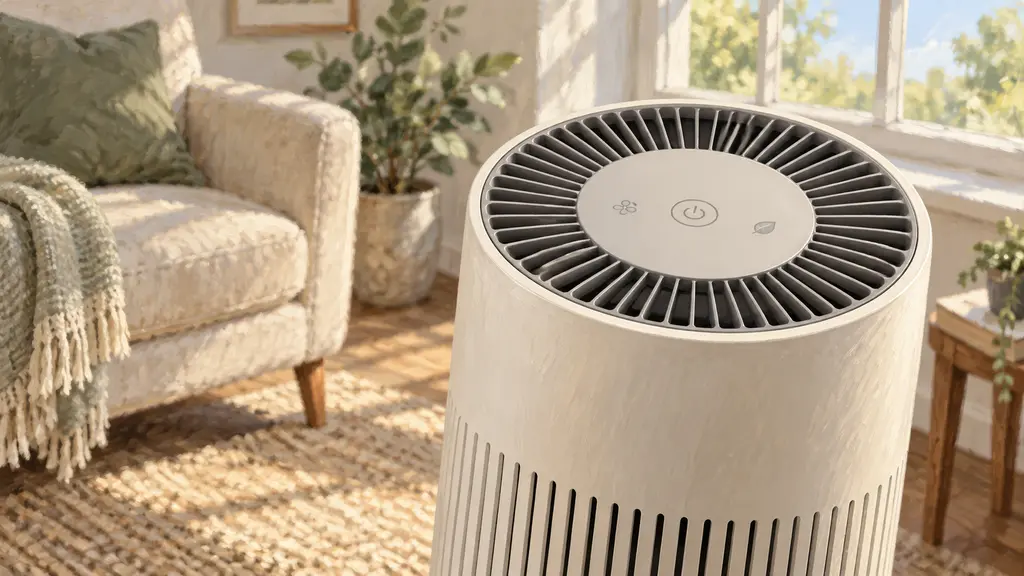
A new air purifier can smell faintly of plastic for the first few days, and that’s normal, it fades on its own. A smell that shows up later, or gets stronger over time, almost always means the filter is holding onto more than it can handle: dust, pet dander, kitchen grease, or trapped moisture gone musty. It’s rarely a sign the unit itself is broken. Here’s what’s actually causing the smell and how to clear it for good.
The quick answer
Most air purifier smells come from a filter that’s saturated with whatever it’s been catching, cooking grease, pet dander, dust, or trapped moisture that’s turned musty, not a defect in the unit. A faint plastic smell during the first few days of a new purifier is normal and fades on its own. A sharp chemical smell or any hint of burning is different, stop using the unit and check it before running it again. Cleaning or replacing the filter clears almost every other case.
Key takeaways
- A HEPA filter works by trapping particles as air passes through it, and once it’s holding as much as it can, whatever it caught (dust, dander, grease) starts giving off a smell instead of just being filtered out (HEPA filtration from US EPA).
- New-unit smell is off-gassing from plastic components and packaging, and it fades within days of running the unit in a ventilated room.
- A musty smell usually means moisture got trapped in the filter, often in a humid bathroom or basement, and mildew has started to grow in the material.
- A sharp or chemical smell is common on ionizing purifiers, which release charged particles into the air as part of how they work; it isn’t present on HEPA-only units.
- Any burning smell is the one exception that isn’t a filter issue. Unplug the unit and stop using it, that points to the fan or motor, not the filter.
New-unit smell versus a smell that develops later
A brand-new air purifier can smell faintly of plastic when you first set it up. That’s off-gassing from the housing and packaging materials, and it clears up within a few days of normal use in a room with some airflow. It’s not a sign anything is wrong.
A smell that shows up weeks or months into owning the unit is a different story. By then, the filter has been pulling dust, pet dander, cooking grease, and moisture out of the air for a while, and whatever it’s caught is what you’re smelling. The fix almost always lives in the filter, not the machine.
Smell types, causes, and fixes
| Smell | Likely cause | What to do |
|---|---|---|
| Faint plastic smell (new unit) | Off-gassing from packaging and new components | Run it in a ventilated room for a few days, it fades on its own |
| Musty or damp smell | Moisture trapped in the filter, often in a humid room | Let the filter dry out fully, or replace it if you see discoloration |
| Stale, dusty smell | Dust, pet dander, and grease built up on the filter | Vacuum the pre-filter and replace the main filter on schedule |
| Sharp chemical or “electrical” smell | Common on ionizing purifiers, not HEPA-only units | Turn off the ionizer function if the unit has one |
| Any burning smell | Rare, points to the fan or motor rather than the filter | Unplug it immediately and stop using it |
Why the filter is almost always the answer
Think about what a purifier’s filter does all day: air moves through it, and everything the filter is rated to catch stays behind in the material. That’s the whole point of it. But a filter that’s been catching cooking grease, dust, and pet dander for months is holding a lot of what used to be floating around your home, and once it’s saturated, some of that starts giving off a smell again instead of staying trapped.
Manufacturers publish a replacement schedule for a reason, usually every six to eight months with normal use, sometimes sooner in a home with pets or a lot of cooking. Running well past that schedule is the single most common reason a purifier starts to smell.
Many purifiers also pair the HEPA layer with a separate activated carbon filter built specifically to adsorb odor molecules, which a HEPA filter alone isn’t designed to catch (activated carbon and odor absorption from Britannica). If your unit doesn’t already include one, an air purifier activated carbon filter is a simple, inexpensive add-on aimed at smell specifically rather than just particulates, worth considering if odor rather than dust is your main complaint.
When it’s the unit, not the filter
If you’ve replaced the filter, cleaned the pre-filter, and the musty smell keeps coming back no matter what, the housing itself may have mold growth that no filter swap reaches. At that point, replacing the unit is more practical than chasing a recurring smell. For most homes, we’d point you to the LEVOIT Core 200S-P at ≈ $75, a compact true-HEPA purifier sized for a bedroom or small living room with a straightforward control panel, our top pick in the best air purifier in the USA guide.
See the LEVOIT Core 200S-P price on Amazon ↗
When to stop and call a technician
- Any burning smell comes from the unit.
- A strong plastic smell remains after a week or two of ventilated use.
- A sharp chemical smell remains after the ionizer function is turned off.
- A musty smell keeps returning after the pre-filter is cleaned and the main filter is replaced.
Stop using the air purifier and have it checked by a qualified technician before using it again.
The bottom line
A smelly air purifier is almost never a broken one. New-unit plastic smell fades on its own, musty smells mean the filter got damp, stale smells mean it’s overdue for a swap, and a chemical smell usually points to the ionizer function rather than the filter. Only a burning smell means stop and unplug it right away. Keep the pre-filter clean and the main filter on schedule, and most smells clear up without buying anything new. If the unit is running but doesn’t seem to be helping at all, see our guide to air purifier not working: what to check. For sizing and setup basics, our guide to choosing an air purifier covers it, and if dust rather than smell is the real complaint, read do air purifiers help with dust. To compare current prices, see air purifier prices in the USA, or browse our air purifiers section for the full lineup.
Sources
- US EPA, “What is a HEPA filter”, definition of high-efficiency particulate air filtration and what it’s rated to capture: https://www.epa.gov/indoor-air-quality-iaq/what-hepa-filter
- Britannica, “Activated carbon”, background on adsorption and how activated carbon filters odor molecules rather than particulates: https://www.britannica.com/science/activated-carbon
This analysis is based on published information from US EPA (What is a HEPA filter), Britannica (Activated carbon).
Frequently asked questions
Why does my air purifier smell bad?
Almost always because the filter is holding onto more than it can handle: dust, pet dander, cooking grease, or trapped moisture that's gone musty. The smell is coming from what the filter caught, not from the unit itself. Cleaning the pre-filter and replacing the main filter on schedule clears the large majority of cases.
Is it normal for a brand-new air purifier to smell like plastic?
Yes. New plastic components and packaging materials off-gas a faint smell for the first few days of use, and it fades on its own once the unit has run in a ventilated room. If that smell is still noticeable after a week or two, or it's stronger than faint, that's no longer normal off-gassing.
How do I get rid of a musty smell from my air purifier?
A musty smell almost always means moisture got trapped in the filter material, often in a humid room like a bathroom or basement, and mildew has started growing in it. Let the filter dry out completely away from the unit, and if the smell doesn't clear or you can see discoloration, replace the filter rather than keep running it.
Is a burning smell from an air purifier dangerous?
Treat any burning smell as different from a normal filter odor. Unplug the unit immediately and stop using it. A burning smell points to the fan or motor rather than the filter, and it's not something to keep running while you figure it out.
Will an activated carbon filter fix a smelly air purifier?
It helps with odor specifically. A HEPA filter is built to catch particles, not odor molecules, so many units pair it with a separate activated carbon layer designed to adsorb smells like cooking odor or light chemical smells. It won't fix a musty smell caused by mildew already growing in a damp filter, that one needs a filter swap.