
 Egypt
Egypt  Saudi Arabia
  USA
USA Cordless Vacuum Battery Life: How Many Minutes Do You Actually Need?
We may earn a commission from purchases through our links, at no extra cost to you. How we choose · Disclosure.
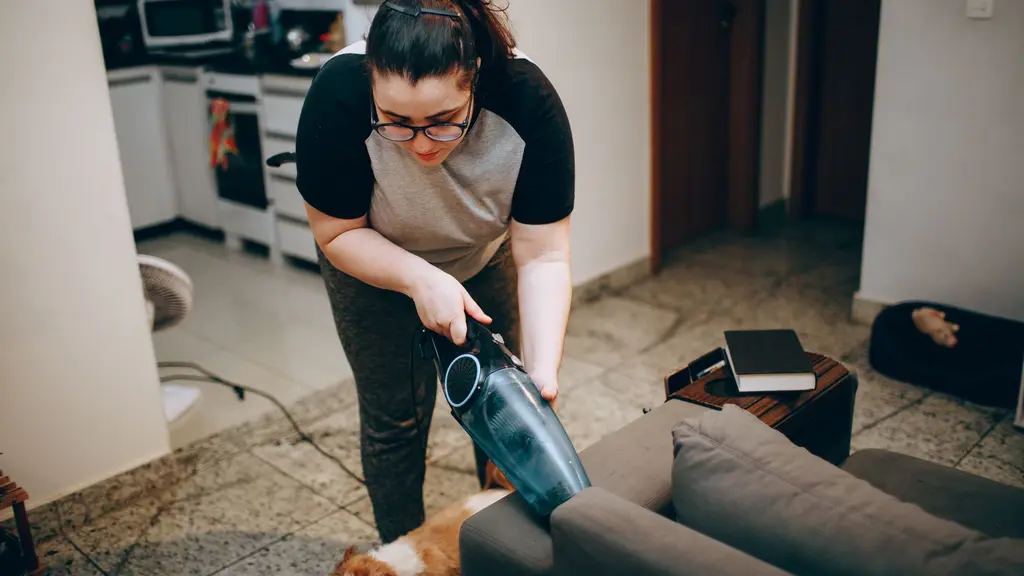
The runtime numbers printed on a cordless vacuum’s box are usually higher than what you’ll actually get, because they’re measured on the lightest suction setting. The practical rule: a small apartment needs 15 to 20 minutes of real runtime, a mid-size home needs 20 to 30 minutes, and a large villa or a home with a lot of carpet needs 40 minutes or more, or a swappable battery, because the max power mode carpet demands drains the battery far faster than the normal setting.
The quick answer
The runtime figure on the box is usually measured on the lightest suction setting, so your real-world expectation on max power mode is much lower, sometimes dropping to just five or ten minutes. For a small apartment, 15 to 20 minutes of real runtime is usually enough. For a mid-size home, look for 20 to 30 minutes. For a large villa or heavy carpet that needs high power mode constantly, consider a swappable battery or a corded vacuum with no time limit at all.
Key takeaways
- Cordless vacuum batteries are usually rechargeable lithium-ion cells (rechargeable battery background from Britannica).
- The runtime figure on the box is measured on the lightest suction setting, and max or boost mode drains the battery far faster, sometimes to less than half the advertised time.
- Home size and floor type determine the real runtime you need, not just the box figure.
- A swappable battery solves the large-villa problem by charging a spare while you use the first.
- A corded vacuum never has this problem at all, since its runtime is unlimited as long as it’s plugged in (general background on vacuum cleaner types, from Britannica).
Why the box number is partly misleading
Manufacturers usually test the advertised runtime on the lightest suction setting, or sometimes an eco mode meant only for smooth floors. The moment you switch to the max or boost mode needed for thick carpet or a deep clean, battery drain multiplies several times over, and actual runtime can drop to just five or ten minutes from a box figure of forty or fifty. That doesn’t make the number a lie, it represents the best-case scenario, not realistic daily use on a mixed floor with carpet.
How many minutes you actually need, by home size
| Home size | Recommended runtime | Note |
|---|---|---|
| Small apartment (studio or one bedroom) | 15 to 20 minutes | A quick daily pass is usually enough on the normal setting |
| Mid-size apartment (two or three bedrooms) | 20 to 30 minutes | Look for a battery that lasts this long even above eco mode |
| Villa or a home with a lot of carpet | 40 minutes or more, or a swappable battery | Max power mode on carpet drains the battery far faster |
| Car cleaning or tight spaces only | Doesn’t need a big number | Short, repeated sessions, charging time matters more than a single runtime |
A swappable battery: is it worth the price difference?
In a large home or villa, a swappable spare battery solves the mid-clean shutdown problem: you charge the first battery while using the second, and pick up right where you left off with no waiting. Cheaper models usually come with only one built-in battery, so you have to stop and fully recharge before finishing the job if it runs out midway. If your home’s size regularly outlasts the unit’s runtime, the price difference for a swappable battery is worth weighing.
When to consider a corded vacuum instead
If the anxiety of running out of battery mid-clean is a recurring annoyance, the simplest fix is to drop the cordless idea altogether. A corded canister vacuum like the Philips 5000 Series FC9570/62 in our guide has no time limit at all as long as it’s plugged in, and delivers strong, consistent suction on both tile and carpet without ever counting down remaining minutes. The trade-off is the usual one: you’re tied to an outlet and cable length while cleaning, but that removes the runtime question from the equation entirely, which is one reason it earns a spot in our guide to the best vacuum cleaner in the UAE. You’ll find its current price and the Amazon.ae link in the card above.
See the Philips FC9570/62 price on Amazon.ae ↗
If you’re also weighing a robot vacuum, know that robot vacuums have an entirely different runtime calculation, based on floor area covered rather than minutes of manual use, see robot vacuum for villa for the details, or compare the types in robot vs cordless vacuum.
Bottom line
Don’t judge a cordless vacuum by the runtime number on the box alone, it represents the lightest suction setting, not real use on carpet. Work out your home size: a small apartment needs 15 to 20 minutes, a mid-size home needs 20 to 30, and a large villa needs 40 minutes or more, or a swappable battery. And if the worry of running out of charge is a constant annoyance, a corded vacuum removes the problem entirely. For a broader comparison of vacuum types, see our guide to choosing a vacuum, and to see current price ranges for both cordless and corded models, browse vacuum cleaner prices in the UAE or the full lineup at vacuum cleaners in the UAE.
Sources
- Britannica, “Rechargeable storage batteries”, background on the rechargeable batteries used in cordless home appliances: https://www.britannica.com/technology/battery-electronics
- Britannica, “Vacuum cleaner”, general background on vacuum cleaner types and their power systems: https://www.britannica.com/technology/vacuum-cleaner
This analysis is based on published information from Britannica (Rechargeable storage batteries), Britannica (Vacuum cleaner).
Frequently asked questions
How long does a cordless vacuum battery usually last per charge?
It varies by model and mode, but the box figure is usually measured on the lightest suction setting, so the advertised number might be 30 to 60 minutes, while max or boost mode can cut that down to just five or ten minutes. Calculate your need around the mode you'll actually use, not the highest number on the box.
Does max power mode really reduce runtime that much?
Yes, significantly. Max or boost mode, usually needed for thick carpet or a deep clean, draws far more power than the normal setting, and can cut actual runtime down to a quarter, or even a tenth, of the advertised figure.
Can a cordless vacuum's battery be replaced when it wears out?
It depends on the model. Some cordless vacuums come with a swappable battery you can buy a spare for or replace separately when needed, while others with a built-in battery may need specialist servicing or a full unit replacement. Check this before buying if long-term battery life matters to you.
How many years does a cordless vacuum battery last before needing replacement?
Lithium-ion batteries in cordless vacuums gradually lose some capacity over hundreds of charge cycles, and you'll often start noticing shorter runtime after two to three years of regular use. Frequent partial charges rather than fully draining then fully charging helps extend battery life.
Does a robot vacuum have the same runtime problem?
In a different way. A robot vacuum's runtime is measured by the area it covers, not minutes of manual use, so the equivalent question there is whether one charge covers the full villa or apartment, and whether it has recharge-and-resume to finish automatically if it doesn't.