
 Egypt
Egypt  Saudi Arabia
  USA
USA Why Your Portable AC Isn't Cooling Enough in UAE Heat
We may earn a commission from purchases through our links, at no extra cost to you. How we choose · Disclosure.
Example availability update: The Pro Breeze 5L cooler was unavailable on Amazon.ae for the checked Dubai destination on 11 September 2026. It remains a comparison reference; its previous price is not a current offer.
Yes, a true portable AC can cool a room in UAE heat, but single-hose units often feel weaker than expected, and the cause usually isn’t the machine itself. While pushing heat out through the window hose, the unit draws its makeup air from the room it’s cooling, creating slight negative pressure that pulls hot, humid air back in through any gap around the hose or under the door. Fixing that leak is far cheaper than giving up on the idea or buying a bigger unit.
The quick answer
A portable AC genuinely cools a room in UAE heat when it’s sized correctly and the window hose is sealed tight, but most “weak cooling” complaints trace back to negative pressure in single-hose units: the unit pulls room air to push out with the heat, and that pulls hot air right back in through any unsealed gap around the window. Seal that gap with a proper vent kit, keep the room door closed while it runs, and confirm the BTU rating actually matches your room size. Those three fixes solve most weak-cooling complaints before you need to consider a different type of unit.
Key takeaways
- A single-hose unit pulls its own room’s air to push it out, which slightly lowers the room’s air pressure and pulls hot, humid air back in through any unsealed gap (background on portable air conditioning from Britannica).
- The window hose gap is the biggest source of that leak, if the installation kit that came with the unit doesn’t seal tightly around the window frame.
- An open room door makes it worse, because the unit then pulls uncooled air from the rest of the home instead of the room’s own cold air.
- An undersized BTU rating compounds the weak-cooling feeling, and a unit sized below your room’s area won’t keep up with UAE heat no matter how well you seal the hose.
- Evaporative coolers don’t have this problem at all, because they need no exhaust hose in the first place, but they cool by a completely different principle that weakens as humidity climbs (how evaporative cooling works from Britannica).
Why your portable AC feels weaker than expected
Most portable ACs sold on Amazon.ae are single-hose units: one hose runs out the window and exhausts the hot air that passed over the condenser. The catch is that exhausted air is drawn from inside the room, not from outside, so the room loses roughly the same volume of air every minute that leaves through the hose. That gap creates a small pocket of negative pressure inside the room relative to the space around it, and any leak, whether around the window hose, under the door, or at the edge of another window, becomes a path for hot, humid air to rush in and equalize the difference. Part of the unit’s cooling capacity then goes toward re-cooling that incoming air instead of lowering the room further, which is exactly why the unit runs and runs without delivering the drop you expected from its BTU rating.
Seal the gap before you consider a bigger unit
The real fix starts at the source of the leak, not at a stronger machine:
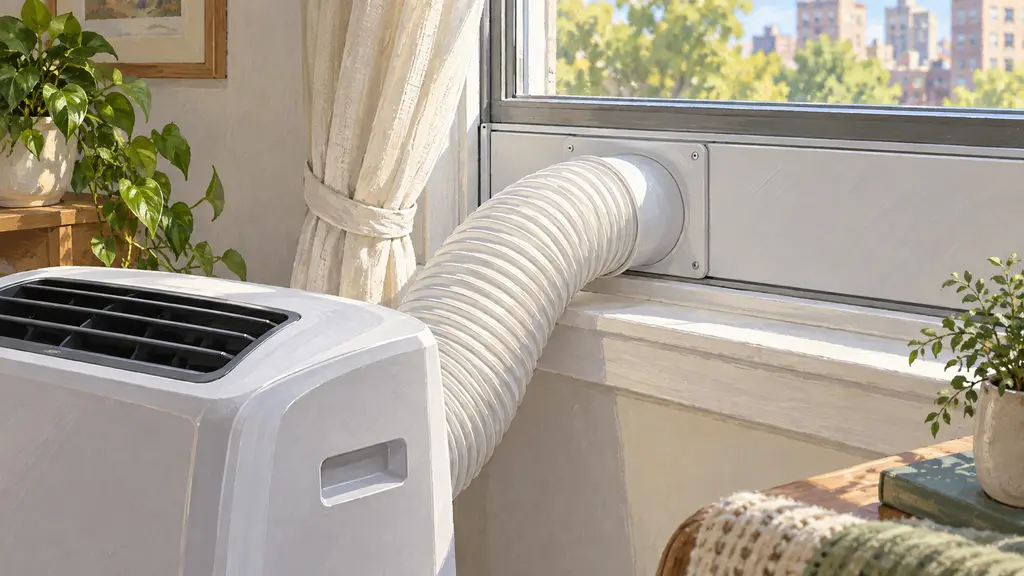
- Check the window installation kit first. The panel should fill the entire window frame around the hose with no side gaps. The cardboard or foam insert some units ship with often isn’t enough long-term in UAE heat.
- Add a generic window vent seal kit if you need one. A foam panel cut to your window’s size, with a dedicated collar for the hose, closes the side gaps far more tightly than a temporary insert and cuts down on hot air working its way back in.
- Keep the room door closed while it runs. An open door lets the unit pull uncooled air from the rest of the home instead of the room’s own air, which worsens the negative pressure rather than relieving it.
- Keep the hose short and straight. Kinks and excess length reduce how efficiently hot air gets pushed out and add load to the unit.
- Confirm the BTU rating actually matches your room. Sealing the gap won’t help much if the unit was undersized to begin with; our guide on what BTU a portable AC needs walks through matching capacity to room size correctly.
Single hose or dual hose?
The difference between the two explains why “weak cooling” complaints vary so much from one unit to another:
| Type | Where makeup air comes from | Negative pressure risk | Best for |
|---|---|---|---|
| Single-hose | From inside the room itself | High if the hose seal is loose | Most homes, with a well-sealed window |
| Dual-hose | Directly from outside the room | Very low | Buyers who want maximum efficiency and don’t mind a higher price |
| Evaporative cooler | No exhaust hose at all | Not applicable | Dry climates, rooms with no window to fit a hose |
Dual-hose units solve the negative-pressure problem at the root because they never draw their makeup air from the room, but they’re less common and pricier in the current Amazon.ae lineup. For most homes, sealing a single-hose unit’s gap properly stays the faster, cheaper fix.
When to consider a hose-free alternative entirely
Decide whether you need lower room temperature or airflow around you. Evaporative cooling needs dry air and ventilation; compressor AC needs a suitable outdoor exhaust path.
Bottom line
“My portable AC isn’t cooling enough” in UAE heat usually traces back to negative pressure in single-hose units, not a weak machine: the unit pulls room air to push out, and hot air rushes back in through any gap around the window or door. Seal that gap with a proper vent kit, keep the door closed while it runs, and confirm the BTU rating actually matches your room, and you’ll feel a real difference before you ever need to consider a bigger unit. If you’re still deciding between a true AC and an evaporative cooler, read portable AC vs evaporative cooler, and for sizing see the BTU guide linked above. For the full buying criteria, our guide on how to choose a portable AC covers hose length, drainage, and noise too, and for price ranges see portable AC prices in the UAE, or head back to portable ACs for the full hub.
Sources
- Britannica, “Air conditioning”, background on portable air conditioning systems and exhaust hose design: https://www.britannica.com/technology/air-conditioning
- Britannica, “Wet-bulb temperature and evaporative cooling”, how evaporative cooling works and its limits in humid conditions: https://www.britannica.com/science/wet-bulb-temperature
For the appliance-type decision, read portable AC versus evaporative cooler.
Related guides: our guide to the best portable AC in the UAE.
This analysis is based on published information from Britannica (Air conditioning), Britannica (Wet-bulb temperature and evaporative cooling).
Frequently asked questions
Why isn't my portable AC cooling my room enough in summer heat?
In most cases the unit itself isn't the real problem, negative pressure is. Single-hose portable ACs pull room air to push out heat through the exhaust hose, which slightly lowers the air pressure inside the room. That pulls hot, humid air back in through any gap around the window hose or under the door. Add an undersized BTU rating for the room and the unit runs constantly without ever quite catching up.
What is negative pressure in a portable air conditioner?
A single-hose portable AC draws the makeup air it needs to cool its condenser from inside the room itself, then pushes that air, now hot, out through the window hose. This leaves the room at slightly lower pressure than the space around it, so the difference pulls hot outside air in through any gap that isn't sealed, however small. Part of the unit's cooling effort then goes toward re-cooling that fresh hot air instead of lowering the room's temperature further.
How do I stop hot air leaking in around my portable AC's hose?
Start by checking the window kit that came with the unit, it should fill the window frame completely around the hose with no side gaps. A generic window vent seal kit, a foam panel cut to your window with a dedicated hose collar, seals those gaps far better than the flimsy cardboard or foam insert some units ship with, and cuts down on hot air returning to the room. Keep the room door closed while it runs, and keep the hose short and straight since kinks reduce exhaust efficiency.
Does a dual-hose portable AC actually fix this?
In theory, largely yes, because a dual-hose unit draws its makeup air from outside the room instead of from inside it, so almost no negative pressure builds up. Dual-hose units are less common and pricier in the current Amazon.ae lineup, though, so for most homes sealing the single-hose gap properly is still the faster, cheaper fix than waiting for a different model.
Is wrong BTU sizing actually why my portable AC feels weak?
Often, yes, and it's a completely separate issue from negative pressure that stacks on top of it. A unit sized smaller than your room will struggle in UAE heat no matter how well you seal the window hose, while a correctly sized unit with a properly sealed hose delivers the cooling you'd actually expect. Check our guide to matching BTU to your room size before judging the unit itself.