
 Egypt
Egypt  Saudi Arabia
  USA
USA How to Prevent Mold in an Apartment (and Stop It Coming Back)
We may earn a commission from purchases through our links, at no extra cost to you. How we choose · Disclosure.
Mold in humid apartments is usually caused by high relative humidity, weak ventilation, and condensation that builds up without being wiped away, not by a lack of cleaning. The real fix is lowering humidity and improving airflow in exposed spots like bathrooms, closets, and window corners, not just wiping the visible patch every time it returns.
The quick answer
Mold grows wherever humidity stays high and airflow is weak, and in UAE apartments the most common spots are bathrooms, closets against exterior walls, and condensation-prone window corners. The fix combines better ventilation, regularly wiping condensation, and lowering the room’s relative humidity with a dehumidifier when needed. Moisture-absorber bags are a cheap, useful addition for small enclosed spaces, but they don’t replace ventilation or a proper unit in a genuinely damp room.
Key points
- Mold needs moisture, a surface, and weak ventilation to grow, and removing any one of these three conditions stops it from coming back (mold background from US EPA).
- Closed windows for the whole AC season in the UAE raise indoor humidity, especially near the coast, creating ideal conditions for mold.
- Condensation on a window or cold wall, if not wiped regularly, turns into a permanently damp environment that encourages mold growth over time.
- Closets and wardrobes against an exterior wall or with no airflow are more mold-prone than the rest of the room, because the air inside them never really turns over.
- Cleaning the visible patch doesn’t fix the cause, so as long as humidity stays high, mold will return to the same spot.
Why mold shows up in UAE apartments specifically
High coastal humidity in the UAE keeps outdoor air damp for most of the year, and when the AC runs with windows closed for months, that moisture can get trapped indoors rather than vented out. The result is indoor relative humidity that’s higher than many people assume, even with the AC running constantly. For a deeper look at what’s driving that, see why is my house so humid in the UAE. Add in the naturally weak ventilation of bathrooms and closed closets, and you get the ideal conditions for mold: moisture, a surface, and stagnant air.
Most mold-prone spots in a home
| Spot | Common cause | Best fix |
|---|---|---|
| Bathroom | Shower steam with no effective exhaust fan | Run the exhaust fan during and a few minutes after showering |
| Closet or wardrobe against an exterior wall | Stagnant air, almost no ventilation | Leave a small gap between clothes and the wall for airflow |
| Window corner or cold wall | Recurring condensation that never gets wiped | Wipe condensation daily as soon as it appears |
| Under the sink or behind heavy furniture | Trapped moisture, no air movement | Pull furniture slightly away from the wall and check the spot periodically |
| Laundry room | Damp clothes or towels piling up | Dry clothes promptly, don’t pile them up wet |
Practical steps to prevent mold before it appears
Follow these steps consistently, not just after spotting a mold patch:
- Improve ventilation in the bathroom and kitchen. Run the exhaust fan during and a few minutes after showering or cooking, and open a window whenever you can.
- Wipe condensation as soon as it appears on windows or cold walls, instead of letting it dry on its own and reappear daily.
- Leave airflow space behind large furniture and closets against exterior walls, since stagnant air behind them quietly raises local humidity.
- Dry wet clothes and towels quickly and don’t leave them piled up in a hamper or a closed laundry room for long.
- Watch the room’s overall humidity level, and if it feels permanently damp and heavy despite ventilation and cleaning, that’s a sign the room needs a proper dehumidifier, not just preventive habits.
The real fix when the problem keeps coming back
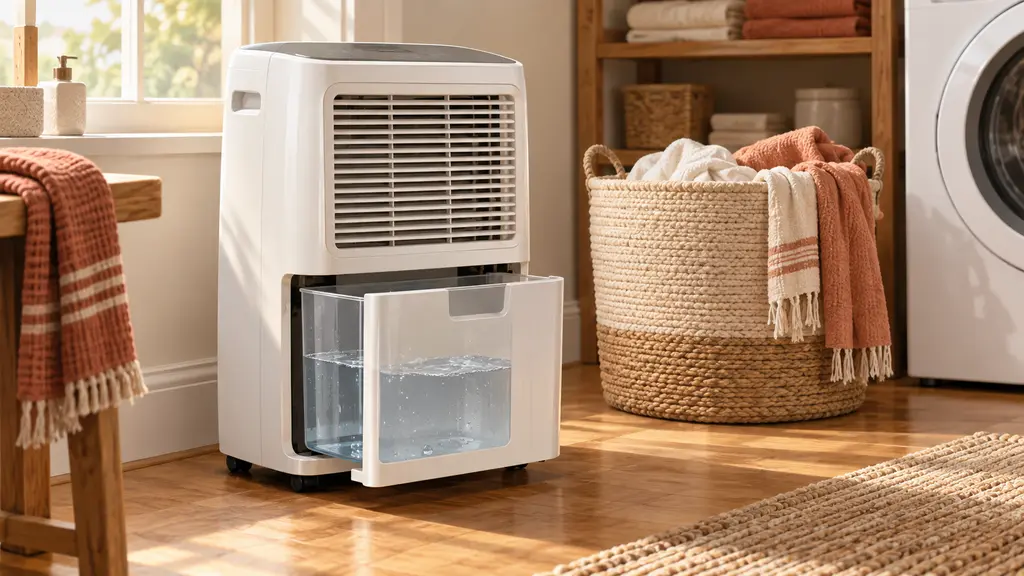
Ventilation and cleaning prevent a lot of mold cases, but if relative humidity in a room stays high despite these habits, the real tool is a compressor dehumidifier that pulls water vapor straight out of the air and removes the basic condition mold needs to grow. A practical example that balances price and real capacity: the Pro Breeze 20L/Day Dehumidifier (≈ 849 AED), which pulls a meaningful 20 liters of moisture a day and carries thousands of positive reviews on Amazon.ae, earning it the top spot in our guide to the best dehumidifier in the UAE.
For small, enclosed spaces specifically, like a clothes closet or the shelf under a sink where there’s no power outlet or no need for real capacity, moisture-absorber bags or packs are a practical, cheap addition that soak up some of the surrounding moisture with zero power needed. They aren’t a substitute for a proper dehumidifier in a full room with real, active humidity, but they’re a reasonable preventive step in a small, poorly ventilated space.
The bottom line
Fix mold in an apartment at the root, not just the surface: improve ventilation in bathrooms and closets, wipe condensation as soon as it appears, and dry clothes and towels quickly. If relative humidity stays high despite these habits, a compressor dehumidifier like the Pro Breeze 20L/Day is the fix that addresses the cause directly, and moisture-absorber bags are a cheap addition suited only to closets and small spaces. To find out if your issue is actually humidity or dust, see dehumidifier vs air purifier, and for sizing criteria read our guide on how to choose a dehumidifier or browse the full dehumidifiers category.
Sources
- US EPA, “Mold, moisture and your home”, background on mold and the conditions it needs to grow (moisture, a surface, weak ventilation): https://www.epa.gov/mold/brief-guide-mold-moisture-and-your-home
- Britannica, “Condensation”, background on condensation and its link to indoor relative humidity: https://www.britannica.com/science/condensation-phase-change
This analysis is based on published information from US EPA (Mold, moisture and your home), Britannica (Condensation).
Frequently asked questions
Why does mold keep appearing in my apartment despite regular cleaning?
Because cleaning removes the visible mold but not its cause, which is high humidity and weak ventilation. As long as relative humidity stays elevated in the room, often from closed windows all AC season or condensation that never gets wiped, mold will keep coming back no matter how often you clean the surface.
What are the most mold-prone spots in UAE apartments?
Poorly ventilated bathrooms, closets and wardrobes against an exterior wall or with no airflow, and window corners where condensation collects. These spots trap more moisture than the rest of the room and usually lack the air movement that would dry the surface quickly.
Is a dehumidifier alone enough to prevent mold?
It helps a great deal because it lowers the room's relative humidity, removing the basic condition mold needs to grow, but it isn't a substitute for good ventilation, regularly wiping condensation, and drying wet clothes or towels quickly. The strongest approach combines both.
Do moisture-absorber bags prevent mold in a closet?
They help as a cheap, practical addition in small, enclosed spaces like a closet or under a sink, since they absorb some surrounding moisture with no power needed. But they aren't a substitute for ventilation or a proper dehumidifier in a room with real, active humidity, since their capacity is far smaller than a compressor unit's.