
 Egypt
Egypt  Saudi Arabia
  USA
USA Steam Sterilizer vs Boiling: Which Fits Your Routine?
We may earn a commission from purchases through our links, at no extra cost to you. How we choose · Disclosure.
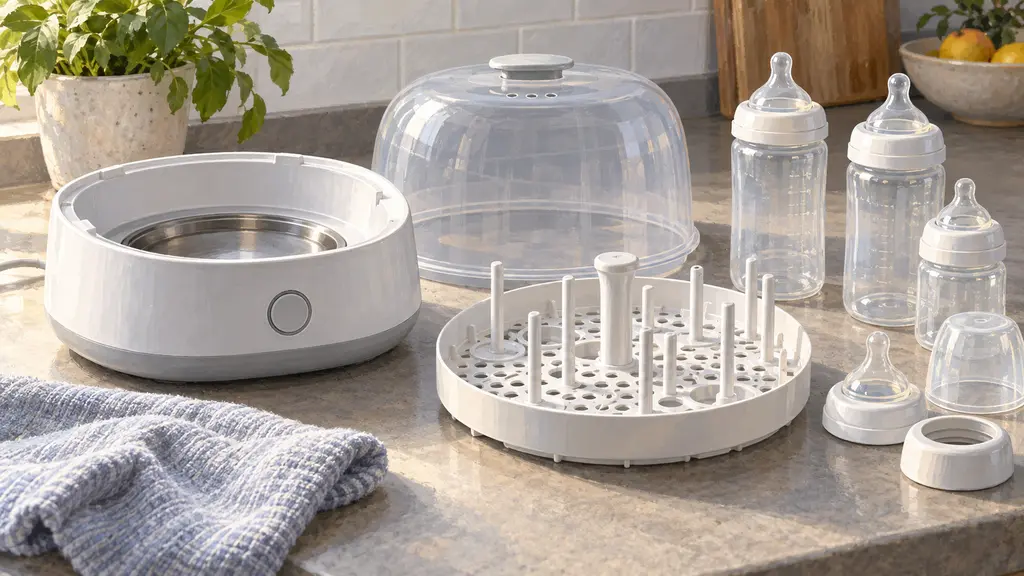
If you’ve been boiling bottles on the stove since day one and you’re wondering whether an electric steam sterilizer is worth adding to the kitchen, you’re weighing two genuinely different trade-offs: zero extra cost and no new appliance versus upfront spend and counter space in exchange for a routine that runs itself. Neither is the “correct” choice, they solve the same problem differently, so let’s untangle which one actually fits your day before you shop the best bottle sterilizer in the UAE.
The quick answer
Boiling wins on zero extra cost and no new equipment. An electric steam sterilizer wins on hands-off convenience, and some models add automatic drying. If you sterilize once a day, don’t mind hands-on time, and would rather not spend on another appliance, stick with boiling. If you’re sterilizing multiple times a day or juggling a newborn’s schedule, a sterilizer that runs itself while you do something else pays off quickly in time saved.
We’re not medical professionals, and nothing in this article is health or safety advice. Always follow your pediatrician’s guidance and the manufacturer’s instructions for sterilizing frequency and method.
Key takeaways
- Boiling costs nothing extra but takes hands-on attention. You need a pot you likely already own, but you’re watching it, timing it, and handling hot bottles and small parts like nipples and rings with tongs each time.
- An electric sterilizer costs more upfront but runs itself. Prices in this lineup range from about 151 AED for the Chicco 2-in-1 SterilNatural up to about 679 AED for the Baby Brezza 10 Minute SuperQuick, and once you press start, you can walk away.
- Some machines add automatic drying, boiling never does. The Philips Avent Premium and the Baby Brezza SuperQuick dry bottles in the same cycle. Boiling and steam-only machines both leave bottles wet, needing air-drying or a towel afterward.
- Frequency changes the math. Sterilizing once a day makes boiling’s small time cost manageable. Sterilizing several times a day is where a machine’s hands-off convenience starts to matter a lot more.
- Capacity matters for bigger households. A pot handles as many bottles as fit, roughly, while a machine like the Baby Brezza SuperQuick is built around a specific batch size (8 bottles), useful for twins or a household going through more bottles between cycles.
Boiling: the zero-cost, hands-on method
Boiling bottles on the stove uses equipment almost every kitchen already has: a pot and water. There’s no upfront cost, no counter space given up to a new appliance, and no learning curve beyond following your pediatrician’s or the manufacturer’s guidance on timing. That simplicity is real, and it’s why many parents start here before ever considering a dedicated sterilizer.
The trade-off shows up in your time and attention, not your wallet. You need to watch the pot, time the process, and carefully remove hot bottles, nipples, and rings without burning yourself or losing small parts in the water. If you’re sterilizing once a day, that’s a manageable few minutes of hands-on effort. If you’re doing it multiple times daily, especially in the newborn stage, that hands-on time adds up across the day in a way a machine’s press-and-walk-away cycle doesn’t.
Electric steam sterilizers: press start and walk away
An electric steam sterilizer, whether a simple steam-only unit like the Grownsy (≈ 229 AED) or the Chicco 2-in-1 SterilNatural (≈ 198 AED), or a combo unit like the Philips Avent Premium (≈ 457 AED) that also dries, automates the process: load the bottles, press a button, and the machine handles timing and heat on its own. That frees you up to do something else, feed the baby, get dressed, sleep, while the cycle runs.
What you’re paying for that convenience is the upfront cost of the appliance and the counter space it takes up. Steam-only machines skip the drying step, so you’re still air-drying or towel-drying bottles afterward, same as with boiling. A combo unit like the Philips Avent Premium or the higher-capacity Baby Brezza 10 Minute SuperQuick (≈ 679 AED, built for 8 bottles at once) finishes the whole job, sterilizing and drying, in one cycle, which is where the time savings really compound if you’re sterilizing often.
Quick comparison: which one for what?
| Factor | Boiling | Electric steam sterilizer |
|---|---|---|
| Upfront cost | None, uses a pot you already own | ≈ 151 - 679 AED depending on model |
| Hands-on time per cycle | Higher, watching and timing the pot | Lower, press start and walk away |
| Drying | Never automatic, always needs air or towel drying | Steam-only models: same as boiling. Combo models (Philips Avent Premium, Baby Brezza SuperQuick): automatic |
| Capacity | Roughly whatever fits your pot | Fixed batch size per model, up to 8 bottles on the Baby Brezza SuperQuick |
| Best for | Sterilizing once a day, no interest in a new appliance | Sterilizing multiple times a day, or wanting a hands-off routine |
The simple rule: low frequency and no interest in a new appliance → boiling. Frequent sterilizing or a busy daily schedule → electric steam sterilizer. If you want the full buying criteria across sterilizers, warmers, food makers, and monitors, the guide on how to choose baby appliances walks through capacity, drying, and the other appliance families too.
So which one should you actually use?
If you’re sterilizing once a day and you’re comfortable with a few minutes of hands-on time at the stove, boiling is a perfectly reasonable choice, it costs nothing extra and it’s a method that’s worked for generations of parents. A practical upgrade if your routine gets busier: the Philips Avent Premium bottle steriliser and dryer, which combines steam sterilizing with automatic drying so you’re not left towel-drying bottles after every cycle. We didn’t pick it because it’s the most feature-packed unit on the market, we picked it because it’s a genuinely reliable combo sterilizer backed by thousands of buyers on Amazon.ae, which is what earns it the top spot in our guide to the best bottle sterilizer in the UAE. You’ll find its current price and the Amazon.ae link in the card below.
Once sterilizing multiple times a day becomes your reality, whether that’s a newborn’s feeding schedule or twins going through bottles faster than you expected, that’s the signal to move from boiling to a dedicated electric sterilizer. There’s no need to buy the machine on day one just in case you’ll want it later.
Read your needs in a minute
- Ask yourself: how many times a day do you actually sterilize, once, or several?
- If it’s once a day, boiling’s zero extra cost likely outweighs the small time savings a machine offers.
- If it’s several times a day, an electric steam sterilizer’s hands-off cycle starts saving real time and effort across the day.
- If drying matters to you, boiling and steam-only machines both leave bottles wet, look at a combo unit like the Philips Avent Premium if you want drying handled automatically.
- See baby appliance prices in the UAE to check what each tier actually costs before you decide, and remember all prices are approximate and change.
For everything in this category in one place, browse our baby appliances section.
This analysis is based on published information from Amazon.ae.
Frequently asked questions
Is an electric steam sterilizer better than boiling bottles?
Neither is objectively better, they trade off differently. Boiling needs no extra appliance, just a pot you likely already own, but it demands hands-on attention: watching the pot, timing it, and handling hot bottles with tongs. An electric steam sterilizer like the Philips Avent Premium costs more upfront, roughly 151 to 679 AED depending on the model, but runs on its own once you press start, and some models add automatic drying. If counter space and budget allow, a sterilizer saves time on a routine you'll repeat many times a day.
How long does it take to sterilize bottles by boiling versus using a machine?
Boiling times and machine cycle times both vary, and the exact recommended boiling duration should come from your pediatrician's guidance or the bottle manufacturer's instructions, we're not medical professionals and won't state a specific boiling time here. Electric sterilizers list their own cycle times on the Amazon.ae product page, for example the Baby Brezza 10 Minute SuperQuick is built around a fast cycle for a full 8-bottle load. In practice, a machine cycle usually needs less of your hands-on attention even when the total time is similar, since you're not standing over a stove.
Can I sterilize bottles without buying any equipment at all?
Yes, boiling on the stove in a pot you already own is the no-equipment option, and it's a long-standing method many parents use. What you're trading for the zero extra cost is more manual effort each time: filling the pot, timing it, and safely removing hot bottles and small parts like nipples and rings without losing or damaging them in the boil.
Do I need a sterilizer with a built-in dryer, or is a steam-only or boiling routine fine?
A steam-only sterilizer or a boiling routine both leave bottles wet afterward, needing air-drying or a towel-dry before the next use. A combo unit like the Philips Avent Premium or the Baby Brezza SuperQuick finishes drying automatically in the same cycle. If you sterilize once a day and don't mind bottles air-drying overnight, skipping the dryer step saves money without much added hassle.
How many times a day should I sterilize bottles?
We're not medical professionals, so always follow your pediatrician's guidance and the bottle and formula manufacturer's instructions on sterilizing frequency, since recommendations can vary by baby's age and feeding setup. What we can say practically: if you're sterilizing several times a day, the hands-on time of boiling adds up fast, which is when an electric sterilizer starts to look like a real time-saver rather than a nice-to-have.