
 Egypt
Egypt  Saudi Arabia
  USA
USA Wifi vs Non-Wifi Baby Monitor: Which One Do You Need?
We may earn a commission from purchases through our links, at no extra cost to you. How we choose · Disclosure.
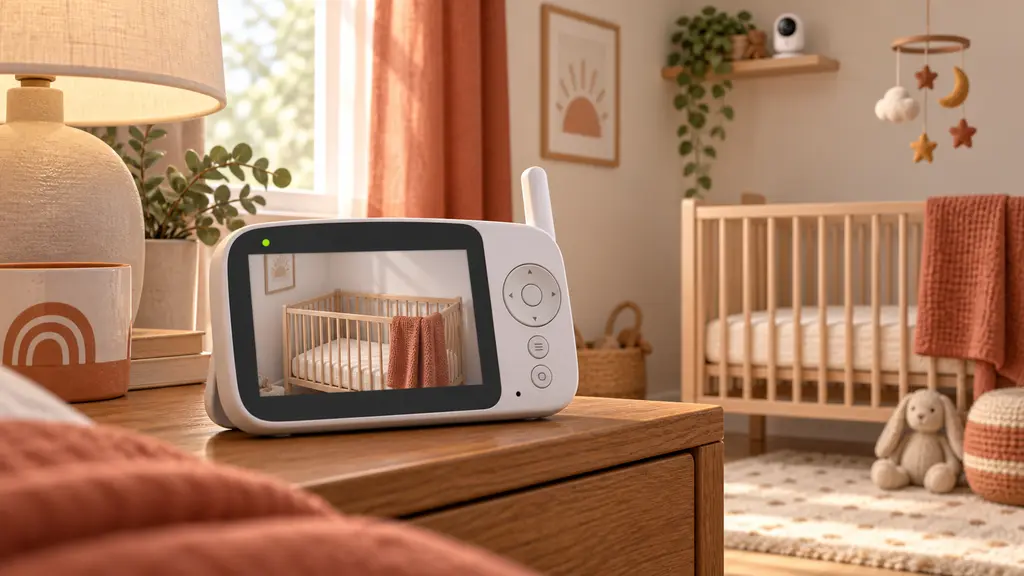
When choosing a baby monitor, most parents face one real decision: a non-wifi monitor that runs on a direct radio link between two units inside the home, or a wifi monitor that lets you watch from your phone from anywhere with an internet connection. Neither one is objectively “better”, each solves a different problem, and this guide breaks down the actual difference before you buy.
The quick answer
A non-wifi monitor runs on a direct radio connection between two units, so it’s more private by design, simpler, and doesn’t depend on the internet, but it only works within roughly your home’s range. A wifi monitor lets you watch from your phone from anywhere with an internet connection, and usually adds multiple cameras plus motion and sound alerts, but it depends on your home network and carries an extra privacy consideration because it’s connected to the internet. If you want simplicity and privacy and don’t need to check in from outside the house, go non-wifi. If you need peace of mind from another floor of a large villa or while you’re out, a wifi monitor is worth the price gap.
Key takeaways
- A non-wifi monitor uses a dedicated radio frequency between the baby unit and the parent unit, with no internet or home network involved at all (baby monitor background from American Academy of Pediatrics).
- A wifi monitor connects to your home network and usually a phone app, letting you watch from anywhere you have an internet connection, not just within direct radio range.
- The internet connection on wifi models opens an extra privacy consideration: a strong password and regular firmware updates matter, unlike a non-wifi monitor that simply can’t be reached remotely.
- A non-wifi monitor keeps working even if your home internet goes down, as long as both units are powered and within signal range.
- The right pick depends on your home’s size and how much you actually need remote viewing, not on one type being universally better.
How a non-wifi monitor works
A non-wifi monitor, sometimes called an analog or radio monitor, is made of two units: one placed near the baby with a microphone and often a camera, and one carried by a parent that receives audio or video over a dedicated radio frequency directly between the two. None of that connection passes through the internet or your home network, which means inherently stronger privacy, since no one can reach the feed remotely over a network.
The trade-off is that range is limited to the radio signal, usually within the bounds of a regular apartment or home, and you can’t view the baby beyond that range no matter how strong the signal is. Most of these units support only one camera, and their extra features are simpler than wifi equivalents.
How a wifi monitor works
A wifi monitor connects to your home’s internet and usually a dedicated phone app, so you can watch from anywhere you have an internet connection, whether you’re in the kitchen or across town. Most of these units add features a non-wifi monitor doesn’t have: multiple cameras managed from one app, motion and sound alerts, sharper night vision, and two-way talk.
The trade-off is that the unit depends entirely on your home network staying stable, and its internet connection opens a real privacy consideration: you need a strong, unique password for the device and the app, and regular firmware updates, just like any connected smart home device.
Quick comparison: which one, and why?
| Factor | Non-wifi (radio) | Wifi |
|---|---|---|
| Internet connection | Not required at all | Required for the app and remote viewing |
| Remote viewing | Not available, only within signal range | Available from your phone from anywhere with internet |
| Privacy consideration | Direct link between two units, no remote network access | Needs a strong password and regular firmware updates |
| Reliance on home network | None at all | Fully dependent for remote features |
| Common extra features | Simplicity, usually one camera | Multiple cameras, motion and sound alerts, two-way talk |
| Best for | A small apartment or house, privacy and simplicity first | A large multi-floor villa, or real need for remote viewing |
The simple rule: small space and privacy and simplicity first, go non-wifi. Large space or a genuine need for remote viewing, go wifi.
So which type should you actually buy?
If you live in an apartment or a reasonably sized home and you’re usually near the baby’s room anyway, a non-wifi monitor covers the real need at a simpler price and with inherently stronger privacy, no passwords or firmware updates to think about. If you live in a large villa, or you need to check on your baby from another room or while you’re briefly out of the house, a wifi monitor with a trusted phone app is worth the price gap, as long as you set a strong password and keep the firmware updated.
For the full buying criteria, from range to camera count to alert features, our guide to the best baby monitor in the UAE breaks down the actual picks by budget.
Before you buy: other gear the nursery needs
A baby monitor usually isn’t the only purchase when setting up a baby’s room. If you’re still hand-sterilizing bottles or considering an electric sterilizer to save daily time, our guide to the best bottle sterilizer in the UAE breaks down the picks by price and capacity, topped by the Philips Avent Premium bottle steriliser and dryer, which finishes sterilizing and drying in one step and is backed by thousands of buyers on Amazon.ae.
Bottom line
There’s no universally “best” baby monitor, the decision comes down to your home’s size and how much you genuinely need remote viewing. Go non-wifi if simplicity and privacy are your priority and your space is limited, and go wifi if you actually need to check in from beyond direct radio range, provided you set a strong password and keep firmware updated. For actual picks of each type, see our guide to the best baby monitor, and if you’re still deciding on other nursery gear, read is a baby food maker worth it?. For everything in this category in one place, browse our baby appliances section or the guide on how to choose baby appliances.
Sources
- American Academy of Pediatrics, “Baby monitor types and range”, background on baby monitor types from direct radio links to networked devices: https://www.healthychildren.org/English/ages-stages/prenatal/decisions-to-make/Pages/Monitoring-the-Situation.aspx
This analysis is based on published information from American Academy of Pediatrics (Baby monitor types and range).
Frequently asked questions
Is a wifi baby monitor less secure than a non-wifi one?
A non-wifi monitor runs on a direct radio link between two units only, so it never touches the internet and can't be reached remotely over a network. A wifi monitor connects to your home network and often a cloud service so you can watch from your phone, and that connection is what raises the privacy consideration: a strong, unique password and regular firmware updates matter. The difference isn't build quality, it's whether an internet connection exists at all.
Can I watch my baby monitor from outside the house?
Only with a wifi monitor paired with a phone app, since remote viewing needs an internet connection on both ends. A non-wifi monitor is built to work within the direct radio range between the two units, usually within your home, and doesn't support viewing beyond that range no matter how strong the signal is.
Does a non-wifi baby monitor need home internet to work?
No. A non-wifi monitor relies on a direct radio link between the baby unit and the parent unit, with no connection to your home network or the internet at all. Even if your home internet goes down completely, the monitor keeps working as long as both units are powered and within signal range.
Which is better for a small apartment versus a large villa?
For a small apartment easily covered by the radio range, a non-wifi monitor usually does the job and adds simplicity and inherent privacy. For a larger villa with multiple floors, or if you need to check on your baby from another room or outside the house, a wifi monitor with a phone app gives you far more flexibility, especially models supporting multiple cameras.
Does a wifi baby monitor need a monthly subscription?
This depends on the model and the manufacturer. Some monitors work entirely through a free app as long as the baby unit is on your home network, while others tie features like cloud video recording to an optional paid subscription. Check the specific listing on Amazon.ae to see whether the model you're considering requires one.