
 Egypt
Egypt  Saudi Arabia
  USA
USA Why Does a Water Dispenser Smell and How to Fix It
We may earn a commission from purchases through our links, at no extra cost to you. How we choose · Disclosure.
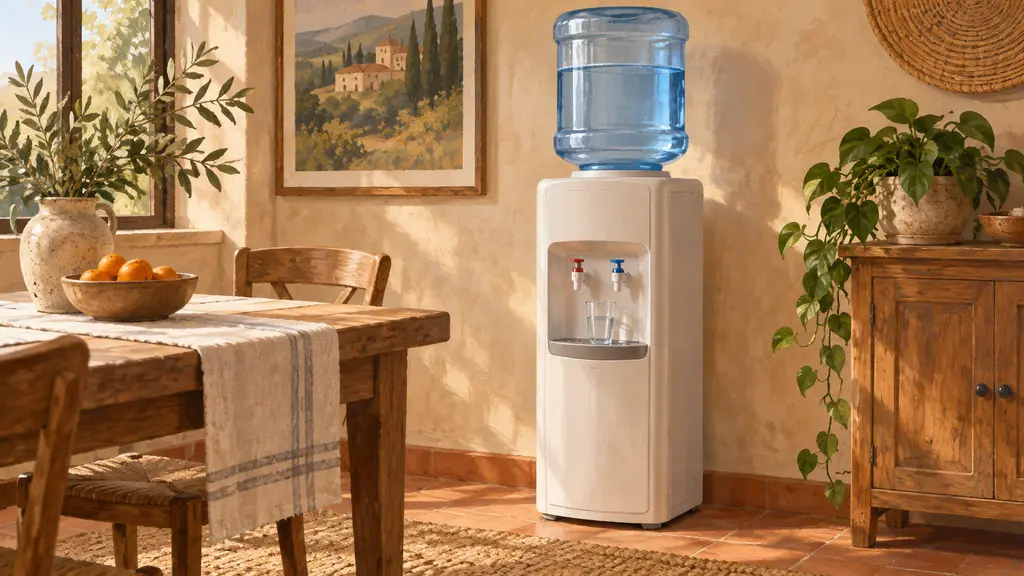
If your water dispenser smells bad even though it works normally, the cause in most cases isn’t a fault in the machine, it’s light mold around the bottle cap area, water sitting still for a long time in the internal tank, or a bottle left near-empty on the unit for several days. Fixing the smell starts with finding the actual source, not spraying an air freshener that covers it up temporarily.
The quick answer
Check the bottle cap area and its seal first for mold, replace any near-empty bottle right away, then sanitize the internal tank with a diluted white vinegar solution every one to two months. If the smell persists after that, the source is likely stagnant water built up deep inside the tank or internal pipes, and dedicated water tank sanitizing tablets work with more force than vinegar alone.
Never mix vinegar with bleach or any chlorine-based cleaner - the combination releases toxic gases. Use one cleaner at a time and rinse thoroughly between products.
Key points
- The smell usually has nothing to do with a mechanical fault, it’s mold or stagnant water that normal daily use doesn’t reach (general background on water coolers from ENERGY STAR).
- The bottle cap area and its seal are the spot most prone to mold buildup, especially in a humid climate.
- A bottle left near-empty for several days creates a damp environment suitable for mold growth (general background on mold from US EPA).
- Stagnant water in the internal tank is a common source of a faint, persistent smell, even if the outer taps look clean.
- White vinegar is enough for most cases, and dedicated sanitizing tablets are an extra option for stubborn cases only.
Where does the smell actually come from?
A water dispenser is essentially a tank where water sits between uses, moving from a 5-gallon bottle to the taps through internal tubing. If water sits still in that tank for a long time, or if a bottle is left near-empty on the unit for several days, the resulting damp environment is suitable for light mold to grow specifically around the bottle cap area and its seal, the spot most prone to it in the whole unit. The UAE’s humid climate raises that chance a bit compared to a drier climate.
Cause, telltale sign, and fix
| Cause | Telltale sign | Fix |
|---|---|---|
| Mold around the bottle cap area | A moldy smell appears when opening the cap or swapping the bottle | Wipe the cap and its seal with a cloth dampened in mild soap weekly |
| Water sitting still in the internal tank for a long time | A faint, persistent smell despite clean outer taps | Sanitize the tank with a diluted white vinegar solution every one to two months |
| A bottle left near-empty for several days on the unit | Smell appears specifically as the bottle nears empty | Replace the bottle as soon as it’s close to empty, don’t leave it for days |
| Moisture residue in the drip tray | Smell comes specifically from the base of the unit | Empty the tray and wash it every day or two |
Removing the smell, step by step
- Check the bottle cap area and its seal first, since that’s the spot most prone to light mold buildup.
- Replace any near-empty bottle right away, and don’t leave it on the unit for days once it’s close to empty.
- Empty the drip tray and wash it, since moisture residue there is a common source of smell from the base of the unit.
- Sanitize the internal tank with a diluted white vinegar solution (a quarter cup of vinegar with a liter of warm water), draining it into a bowl rather than drinking it.
- Rinse with two full tanks of clean water before fitting a fresh drinking bottle.
- If the smell persists, move to dedicated water tank sanitizing tablets, since the source is likely built up deeper than vinegar alone can reach.
Do you need dedicated tank sanitizing tablets?
Diluted white vinegar is enough for most cases if you repeat it regularly every one to two months. But dedicated water dispenser tank sanitizing tablets, dissolved in a full tank of water and left to sit before a complete drain, are a stronger option for tanks that have sat unused for a while, or homes with a slow bottle turnover that give stagnant water more chance to build up. They aren’t necessary if you sanitize regularly with vinegar and keep routine cleaning consistent, but they’re a practical add-on for stubborn cases or after a long time away from home.
A dispenser whose design reduces the smell problem from the start
Part of the long-term fix is choosing a unit where the bottle cap area and drip tray are easy to reach in the first place, since that makes the weekly wipe faster and reduces the chance of moisture buildup. The Midea Top-Loading Water Dispenser is a practical example: its cap area and removable drip tray are easy to empty and wash. You’ll find full details in our guide to the best water dispenser in the UAE.
See the Midea Top-Loading Water Dispenser price on Amazon.ae ↗
When to stop and call a technician
- The smell or odd taste persists after the tank is sanitized and rinsed with two full tanks of clean water.
- Mold remains around the bottle cap area or seal after cleaning with mild soap.
- The smell returns quickly with a fresh bottle and a clean drip tray.
- Dedicated sanitizing tablets do not clear buildup deeper in the tank or pipes.
Stop using the water dispenser and have it checked by a qualified technician before using it again.
Bottom line
A bad water dispenser smell mainly comes from mold around the bottle cap area or stagnant water in the internal tank, not a fault in the machine. Check the cap area and drip tray first, don’t leave a bottle near-empty for days, sanitize the tank monthly with a vinegar solution, and only reach for commercial sanitizing tablets for stubborn cases. For the full routine cleaning schedule step by step, read how to clean a water dispenser. And if the unit has stopped working entirely rather than just smelling, see water dispenser not working: what to check. For the full buying criteria, check how to choose a water dispenser or browse the full water dispensers section.
Sources
- ENERGY STAR, “Water coolers”,” general background on water dispensers and their internal parts: https://www.energystar.gov/products/water_coolers
- US EPA, “Mold, moisture and your home”,” general background on mold and the damp conditions it needs to grow: https://www.epa.gov/mold/brief-guide-mold-moisture-and-your-home
This analysis is based on published information from ENERGY STAR (Water coolers), US EPA (Mold, moisture and your home).
Frequently asked questions
Why does my water dispenser smell bad even though it works normally?
The smell usually has nothing to do with a fault in the machine, but with light mold around the bottle cap area and its seal, water sitting still for a long time in the internal tank, or a bottle left near-empty on the unit for several days. The unit runs mechanically as it should, but these causes aren't reached by normal daily use.
Is white vinegar enough to get rid of a water dispenser smell?
In most cases, yes. Sanitizing the internal tank with a diluted white vinegar solution every one to two months dissolves light buildup and removes the main source of the smell. If the smell persists after two vinegar rounds, mold or buildup may be deeper than that, and dedicated water tank sanitizing tablets work with more force.
Does leaving the bottle near-empty actually cause the smell?
Yes, indirectly. A near-empty bottle leaves a damp gap where water vapor and stagnant air linger longer around the bottle neck, which is a suitable environment for light mold to grow if this happens repeatedly instead of replacing the bottle as soon as it's close to empty.
How often should I sanitize my water dispenser to prevent odor?
Wipe the bottle cap area and its seal weekly with a damp cloth, and fully sanitize the internal tank every one to two months with a diluted white vinegar solution. Homes with a slow bottle turnover need more frequent sanitizing than homes that swap the bottle weekly.
Do I need dedicated sanitizing tablets, or is vinegar enough?
Diluted white vinegar is enough for most cases if you repeat it regularly every one to two months. Dedicated water dispenser tank sanitizing tablets are a stronger extra option for tanks that have sat unused for a while or homes with a slow bottle turnover, but they aren't necessary if the smell is mild and routine cleaning is consistent.