
 Egypt
Egypt  Saudi Arabia
  USA
USA What Is a Dehumidifier and How Does It Work?
We may earn a commission from purchases through our links, at no extra cost to you. How we choose · Disclosure.
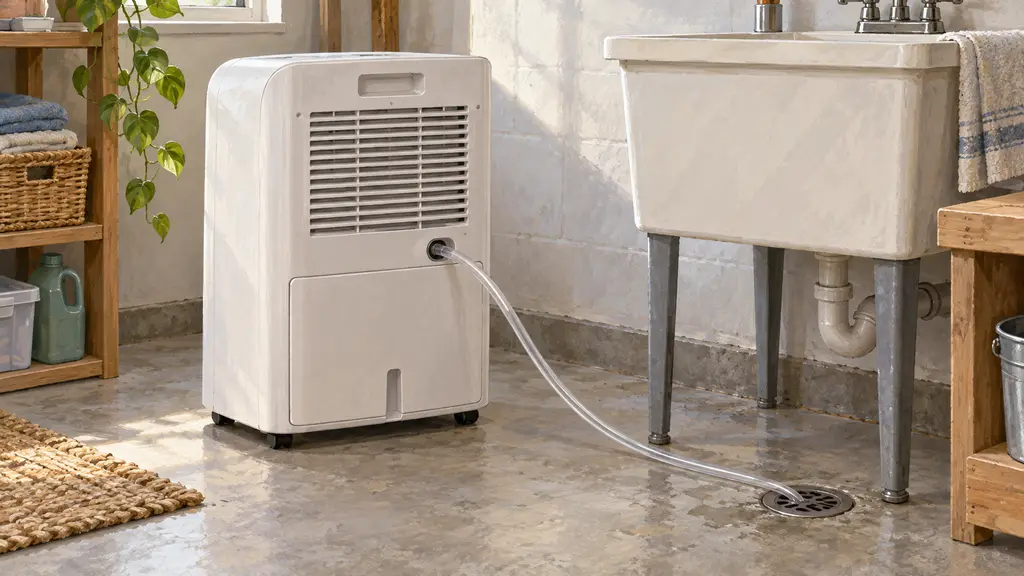
A dehumidifier is a device built to pull water vapor out of the air and lower the relative humidity in a room to a comfortable, healthy level. It works in one of two main ways: an active compressor unit that pulls air across a cold coil where the water condenses, or a power-free passive absorber that draws in moisture with an absorbent material. In the UAE’s humid coastal climate, most homes actually need one to avoid the mold, odors, and condensation that AC alone doesn’t fix.
The quick answer
A dehumidifier removes water vapor from the air in one of two ways: an active compressor unit that cools the air so the moisture condenses, suited to a full room, or a power-free passive absorber suited only to a closet or car. Both lower relative humidity, but the actual amount removed daily differs enormously. If your room feels damp, musty, or shows condensation on the glass, you likely need a compressor unit, not just a small passive absorber.
Key points
- A dehumidifier is neither a cooling device nor an air purifier. Its only job is pulling out water vapor, not lowering temperature or filtering dust (dehumidifier definition from ENERGY STAR).
- A compressor unit pulls air across a cold coil, condensing the water vapor into liquid water that collects in a tank, which is why this type is rated in liters per day.
- A passive absorber pulls in moisture with an absorbent material, with no motor and no power, and its capacity is far below a compressor unit’s.
- The UAE’s coastal climate drives humidity up for most of the year, and AC alone often isn’t enough to control it because its primary job is temperature, not humidity.
- Mold, musty odors, and condensation on windows are clear signals that relative humidity is high and needs direct action (background on mold from US EPA).
How a dehumidifier actually works
Most home dehumidifiers run on compressor technology: a fan pulls room air across a cold coil, cooling the air below its dew point, which condenses the water vapor in it into droplets that collect in a removable tank. The drier air is then released back into the room, and the cycle repeats until relative humidity reaches the target level. This is why a unit like the Pro Breeze 20L/Day is rated by liter count, a direct measure of how much water it actually pulls out of your air over 24 hours.
The other type, the passive absorber, has no motor and no power at all. It contains only an absorbent material that draws water vapor directly from the air around it and turns it into liquid that collects in a container below. There’s no active airflow and no real pulling power, so its capacity is far more limited than a compressor unit’s, but it needs no power outlet at all, which is what makes it a fit for a closet, car, or storage space without electricity.
Compressor vs passive absorber: the real difference
| Factor | Compressor unit | Passive absorber |
|---|---|---|
| Mechanism | Cools air to condense water vapor | Draws in moisture with an absorbent material |
| Needs power | Yes | No |
| Capacity | Large, enough for a full room | Very limited, enough for a small enclosed space |
| Best for | A damp bedroom or living room | Closet, car, boat, storage space |
| Example from our picks | Pro Breeze 20L/Day | Pro Breeze Osmo Refillable Moisture Absorber |
The simple rule: a genuinely damp room needs a compressor unit, while a small enclosed space with no power is fine with a passive absorber. Confusing the two is common, and it usually leads to buying a unit that doesn’t match the job.
Does your UAE home actually need one?
Coastal humidity in Dubai, Abu Dhabi, and Sharjah runs high for most of the year, and running the AC with windows closed for long stretches can trap moisture indoors instead of clearing it. Clear signs your home needs direct action: a musty smell in a closet or room, repeated condensation on glass or mirrors in the morning, or a heavy, damp feeling in the air even with the AC running. If you want to understand what’s driving that dampness in more detail before you buy, our guide to why is my house so humid in the UAE walks through the usual causes and the free fixes first.
It’s also worth not confusing a humidity problem with a dust problem, they’re genuinely different and are solved by two different devices, as our guide to dehumidifier vs air purifier explains.
A practical example of a reliable compressor unit
If you’ve decided your room genuinely needs a compressor unit, the Pro Breeze 20L/Day Dehumidifier is a practical example that balances price and real capacity: it pulls a meaningful 20 liters of moisture a day, enough for a bedroom or living room, and carries thousands of positive reviews on Amazon.ae, based on specs and buyer review consensus. Its one trade-off is that it’s louder and pricier than a small passive absorber, but it removes far more moisture in real terms, which is what earns it the top spot in our guide to the best dehumidifier in the UAE.
See the Pro Breeze 20L/Day Dehumidifier price on Amazon.ae ↗
Bottom line
A dehumidifier pulls water vapor out of the air in one of two ways: an active compressor unit suited to a full room, or a power-free passive absorber suited only to a closet or car. In the UAE’s humid climate, most homes genuinely need a compressor unit, not just a small absorber. If you’re still deciding whether the purchase is worth the cost, read is a dehumidifier worth it?. For the full buying criteria, read our guide on how to choose a dehumidifier, or browse our dehumidifiers section.
Sources
- ENERGY STAR, “Dehumidifiers”, definition of the dehumidifier and its main operating mechanisms (compressor and passive absorber): https://www.energystar.gov/products/dehumidifiers
- US EPA, “Mold, moisture and your home”, background on mold and the damp conditions it needs to grow: https://www.epa.gov/mold/brief-guide-mold-moisture-and-your-home
This analysis is based on published information from ENERGY STAR (Dehumidifiers), US EPA (Mold, moisture and your home).
Frequently asked questions
Does a dehumidifier also cool the room like an AC?
No. A dehumidifier only lowers relative humidity, it doesn't meaningfully change air temperature. An AC cools the air and removes some humidity as a side effect, but a dehumidifier is built specifically to control humidity regardless of temperature, and the two work alongside each other rather than replacing one another.
What's the difference between a compressor and a passive absorber?
A compressor unit pulls air across a cold coil to condense the water vapor in it, it's active, needs power, and removes large amounts daily, suited to a full room. A passive absorber pulls moisture into an absorbent material with no power and no motor at all, and its capacity is far smaller, suited only to a closet, car, or small enclosed space.
Does a dehumidifier remove dust or odors too?
It reduces musty odors indirectly, because it fixes the moisture and mold that cause them. But it doesn't filter dust, pollen, or airborne particles, that's a job for an air purifier, not a dehumidifier.
How do I know if my home actually needs a dehumidifier?
If a room feels damp or heavy, you're seeing repeated condensation on windows in the morning, or you smell mustiness in a closet or corner, those are clear signs of high relative humidity that need a dedicated unit, especially in coastal parts of the UAE where AC alone often isn't enough.
Does a dehumidifier use a lot of electricity?
Its power draw is moderate compared to cooling appliances, since it cycles on and off once humidity reaches the target level rather than running continuously. The usual trade-off is noise and price, not excessive power use.