
 Egypt
Egypt  UAE
UAE  USA
USA Air Purifiers and Saudi Dust: What They Can and Cannot Catch
We may earn a commission from purchases through our links, at no extra cost to you. How we choose · Disclosure.
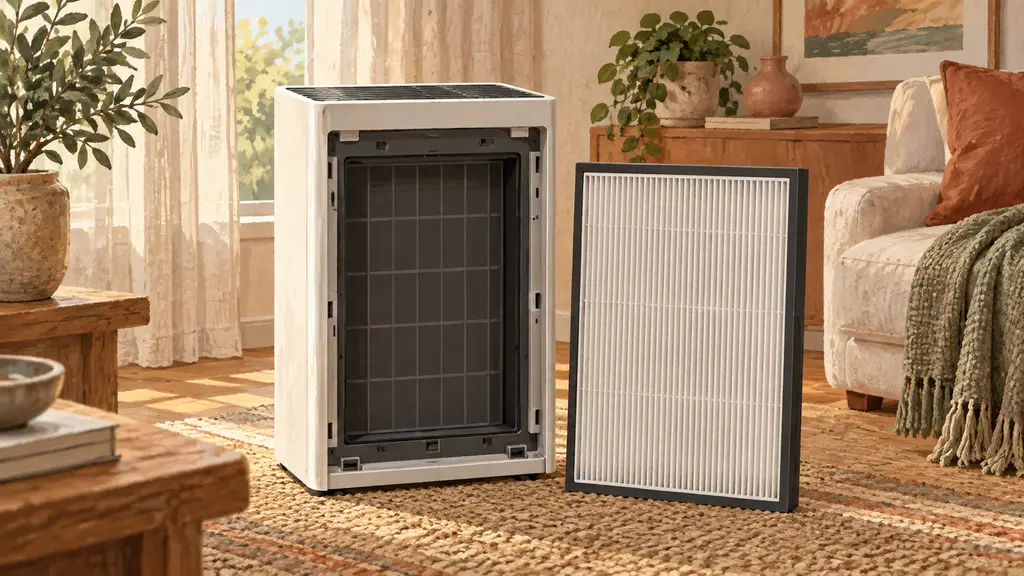
If you’ve run an air purifier through a Saudi dust storm and still found a thin layer on the coffee table the next morning, you’re not imagining it, and the purifier isn’t broken. It’s doing exactly what it’s built to do, it just isn’t built to do the other job. This is one of the first questions people ask before buying from the best air purifier in Saudi Arabia lineup, so let’s untangle the two so you know what to actually expect.
The quick answer
A HEPA-class air purifier catches fine dust and particulates while they’re still floating in the air, it does not stop dust that has already settled on surfaces. Running one noticeably improves what you’re breathing indoors, especially with windows shut for AC season, but it won’t replace wiping shelves or vacuuming the floor. Think of it as cleaning the air, not the room.
Key takeaways
- A genuine HEPA-class filter is rated to capture a very high percentage of fine airborne particles, the dust and particulates that stay suspended in the air rather than dropping immediately (HEPA definition from US EPA).
- Settled dust is a separate problem. Once dust lands on a shelf, a table, or the floor, an air purifier has no effect on it, that dust stays there until you clean it by hand.
- Air purifiers reduce how much new dust settles over time, because they’re pulling particulates out of circulation before they land, but they don’t undo dust that’s already down.
- Coverage sizing matters more than most people think. A purifier rated for a bedroom won’t keep up with an open-plan living area, and running the wrong size for the space is a common reason people feel like “it’s not working.”
- Closed-window AC season actually helps the purifier’s job, since less fresh (and fresh dust-carrying) air is exchanging with the outside, so indoor air stays cleaner for longer between storms.
What a HEPA-class filter actually catches
A genuine HEPA-class filter works by pulling air through a dense mesh that traps very fine particles as the air passes through it, which is why coverage and airflow matter so much, the filter can only catch what actually flows through the unit. That includes the fine dust that gets kicked up during a storm, pollen, and other airborne allergens, the exact particles that make the air feel heavy or trigger sneezing indoors. This is the part of the dust problem an air purifier is genuinely built for, and it’s a real, measurable improvement in indoor air quality while the unit runs.
What it doesn’t touch: dust already on your shelves
Here’s the part that trips people up. An air purifier only filters the air that’s pulled through it, it has no mechanism that reaches dust already resting on a flat surface. If a dust storm coated your windowsills and shelves before the purifier had a chance to catch it, or if dust settled overnight while the unit cycled at a low setting, that layer is staying put until you wipe it, vacuum it, or dust it by hand. No air purifier, regardless of price or brand, changes this. If your goal is a dust-free shelf, that’s a cleaning routine, not an appliance, and we’ve laid that routine out step by step in how to clean your house after a dust storm.
Why Saudi dust storms and AC season make this confusing
During a dust storm, particulates get in through door gaps and daily foot traffic even with windows shut, so the air inside temporarily gets dustier no matter what’s running. A purifier reduces how much of that stays airborne and keeps circulating, but it can’t instantly clear a room the moment a storm passes. Once AC season settles in and windows stay closed for weeks at a time, indoor air actually has fewer chances to pick up fresh outdoor dust, so a purifier’s ongoing filtration has more time to work in your favor between storms. The purifier’s job is steady, continuous reduction of airborne dust, not an instant fix during an active storm.
Matching purifier size to the actual dust problem
Since a purifier can only filter the air that reaches it, an undersized unit in a big open-plan space will genuinely struggle to keep up during and after a storm, which reinforces the feeling that “it’s not working.” A medium-room HEPA-class unit, like the LEVOIT Smart Wi-Fi Air Purifier, is a solid, honest pick for a bedroom or living room at around ≈ 448 SAR, and it’ll noticeably cut down on airborne dust and allergens in that space. For an open-plan area or a bigger majlis, you’d want to step up to a larger-coverage unit rather than expecting a medium-room model to keep up. We break this down fully, along with the other buying criteria, in our guide to the best air purifier in Saudi Arabia.
See the LEVOIT Smart Wi-Fi Air Purifier price on Amazon.sa ↗
So what should you actually do?
Run the purifier continuously through dust season rather than switching it on only during an active storm, since steady filtration is what keeps airborne particulate levels down over time. Keep doing your normal surface cleaning, wiping shelves and vacuuming, since that’s the only thing that removes settled dust. And make sure the unit you’re running is actually sized for the room it’s in, an undersized purifier in a big space will always feel like it’s falling behind. If you’re shopping for the right size and filter type, our guide to choosing an air purifier in Saudi Arabia walks through coverage sizing and HEPA-class filtration in detail, and if price is the deciding factor, see air purifier prices in Saudi Arabia.
Sources
- US EPA, “What is a HEPA filter”, definition of high-efficiency particulate air filtration and what it’s rated to capture: https://www.epa.gov/indoor-air-quality-iaq/what-hepa-filter
For everything in this category in one place, browse our air purifiers section.
This analysis is based on published information from US EPA (What is a HEPA filter).
Frequently asked questions
Do air purifiers actually help with dust?
Yes, for the dust that's still floating in the air. A genuine HEPA-class air purifier is very effective at capturing fine airborne particulates while it runs, which is the dust you're actually breathing in. It doesn't stop dust that has already settled on shelves, floors, and furniture, that part is still a cleaning job.
Why is there still dust on my furniture even with an air purifier running?
Because a purifier only filters air that passes through it, it doesn't reach dust that has already landed on a flat surface. Settled dust stays put until you wipe or vacuum it, no purifier changes that. Running a purifier reduces how much new dust stays airborne and eventually settles, but it won't clean what's already sitting on your shelves.
Can an air purifier handle a Saudi dust storm?
It helps noticeably with the air quality inside your home during a storm, especially if windows are shut for AC season, but it can't fully offset dust that gets in through door gaps and daily traffic in and out of the house. Run it continuously during and after a storm, and expect to still do a normal wipe-down once the storm passes.
What size air purifier do I need for a dusty apartment?
Match the purifier's rated coverage to the room it's in, not to the whole apartment at once. A medium-room HEPA-class unit is enough for a bedroom or living room, while an open-plan living and dining area needs a larger-coverage unit. Oversizing wastes money, and undersizing leaves the air hazy on high-dust days.