
 Egypt
Egypt  UAE
UAE  USA
USA Air Purifier During a Dust Storm: Running It and Changing the Filter
We may earn a commission from purchases through our links, at no extra cost to you. How we choose · Disclosure.
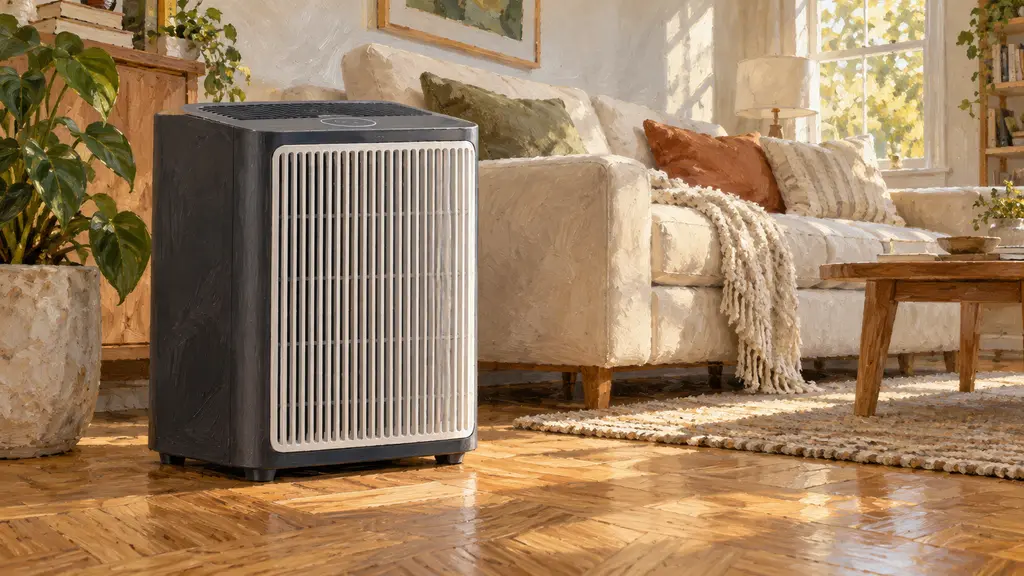
A Saudi dust storm pushes a huge load of fine particulates into the air within a few hours, so an air purifier’s filter fills up far faster than it would during normal daily use. The fix isn’t a special mode or a different way of running the unit, it’s running it continuously through the storm while watching for the signs of a full filter, and being ready to replace it earlier than the usual schedule if the air stops feeling clean even on the highest speed.
The quick answer
Run the air purifier continuously through the dust storm and for a day or two afterward, not just during the peak of the storm. Watch for signs the filter is full: weaker airflow, louder noise, or a dusty smell despite it running, because these mean the filter needs replacing earlier than its normal schedule. A single strong dust storm can use up roughly as much filter life as two weeks of normal use.
Key points
- A dust storm sharply and temporarily raises the concentration of fine particulates in the air, so the filter works under a much heavier load for just a few hours.
- Leaving the unit running continuously beats switching it on and off, because bringing down the concentration of airborne particles takes sustained runtime, not intermittent bursts.
- Weaker airflow or louder-than-usual noise is usually the first sign that the filter has actually started to fill up (HEPA definition from US EPA).
- A single strong dust storm can use up as much of a HEPA filter’s life as two weeks of normal daily use in calmer air (dust storm background from US National Weather Service (NWS)).
- A genuine HEPA filter that’s full can’t be washed or cleaned back to full efficiency, so replacement is the only real fix.
Why the filter fills up faster during a dust storm
A HEPA filter works by pulling air through a dense mesh that traps fine particles as they pass through, and how fast that happens depends directly on how many particles are in every liter of air moving through the unit. On a normal day that load is relatively low, so dust builds up on the filter at a slow pace spread over weeks. During a dust storm, the concentration of airborne particulates spikes sharply, so the filter traps in a few hours a load of dust that would normally take two full weeks to accumulate. That’s not a malfunction, it means the filter is genuinely doing its job, and doing it harder than usual, which is exactly what uses up its working life faster.
How to run the unit during a storm: practical steps
- Turn the unit on the moment the storm starts, not once the air inside already feels heavy, because early filtration cuts down how much dust settles on surfaces in the first place.
- Pick the highest speed the space can handle (bedroom or living room) through the peak of the storm, even if it’s noisier than usual, since this is the time for maximum performance, not quiet operation.
- Leave interior doors slightly ajar if you can, so filtered air can spread rather than staying trapped in one room while the rest of the house breathes dustier air.
- Check the filter or the unit’s indicator daily during a long storm, not weekly as you would during normal use.
- Keep it running for a day or two after the storm passes, because dust that got in through door gaps and daily foot traffic stays airborne for a while after the storm itself has stopped outside.
Signs the filter needs replacing now
| Sign | What it means |
|---|---|
| Weaker airflow despite the highest speed | The filter is partly blocked and isn’t passing air at its normal rate |
| Louder noise than usual | The fan is working harder to pull air through a less permeable mesh |
| A dusty or stale smell from the unit | The filter is full enough that it’s become a smell source rather than an effective filter |
| The filter-change indicator lights up earlier than usual | The smart model’s runtime counter climbed quickly because of the storm |
If you see any of these signs after a strong storm, the filter needs checking right away, not waiting for its normal replacement schedule.
A replacement filter: a practical add-on for dust season
After a strong dust storm, or a run of storms over a few weeks, having a spare HEPA filter on hand saves you a day or two without real filtration while you wait for a new one to arrive once your stock runs out. Check the exact filter code that matches your specific model in the unit’s manual before buying, since filters aren’t standardized across brands, and sometimes not even across models from the same brand. This isn’t a substitute for owning a good purifier in the first place, it’s practical prep for a long dust season.
The unit that actually keeps up with dust season
If you don’t own an air purifier yet and are considering one before the next dust season, a genuine HEPA-class unit sized for your room is the foundation everything above is built on, since a great running routine is wasted on a unit whose filter isn’t true HEPA to begin with. A practical example from our shortlist: the LEVOIT Smart Wi-Fi Air Purifier at roughly ≈ 448 SAR, sized right for a medium bedroom or living room, with smart app control that makes it easy to monitor remotely during a long storm. You’ll find the full details and other picks by room size in our guide to the best air purifier in Saudi Arabia.
See the LEVOIT Smart Wi-Fi Air Purifier price on Amazon.sa ↗
Bottom line
A dust storm doesn’t need a different unit, it needs continuous running on the highest speed and closer attention to the signs a filter is full: weaker airflow, louder noise, and a dusty smell despite it running. A single strong storm can use up as much filter life as two weeks of normal use, so replacing it early beats waiting for the usual schedule. To learn more about what a purifier actually cleans versus what stays a manual cleaning job, read do air purifiers help with dust, and if you’re comparing filtration technologies, see HEPA vs ionizer air purifier and do water-based air purifiers actually work. For a quick, no-fuss pick, see the best air purifier in Saudi Arabia, and for the full buying criteria, read our guide on how to choose an air purifier. For the full lineup, browse air purifiers in Saudi Arabia.
Sources
- US EPA, “What is a HEPA filter”, definition of high-efficiency particulate air filtration and what it’s rated to capture: https://www.epa.gov/indoor-air-quality-iaq/what-hepa-filter
- US National Weather Service (NWS), “Dust storms and haboobs”, background on dust storms and the spike in airborne particulate concentration they cause: https://www.weather.gov/safety/wind-dust-storm
This analysis is based on published information from US EPA (What is a HEPA filter), US National Weather Service (NWS) (Dust storms and haboobs).
Frequently asked questions
Should I leave my air purifier running through a whole dust storm?
Yes. The unit needs continuous runtime to bring down the concentration of airborne particles, and switching it on and off restarts that process each time. Run it on the highest speed the room can handle from the moment the storm starts, and keep it running for a day or two after the storm passes.
How do I know an air purifier's filter is full during dust season?
Three signs stand out: weaker airflow even on the highest speed, louder noise because the fan is working harder to pull air through a partly blocked filter, and a dusty or stale smell coming from the unit itself. Any of these after a strong storm means the filter needs checking right away.
Do dust storms actually shorten a HEPA filter's life?
Yes, noticeably. A single strong dust storm pushes a much higher particle load through the filter in just a few hours than normal daily use does, which uses up roughly as much of its working life as two weeks of running in calmer air.
Should I clean the filter or replace it after a strong dust storm?
A genuine HEPA filter that's full can't be washed or cleaned back to its original capture efficiency, wiping off surface dust doesn't restore the inner mesh. If it's showing signs of being full, replacement is the only real fix, not cleaning.
Does an air purifier need a special setting during dust season?
It doesn't need a different mode from its normal ones, but it does need continuous running on the highest speed the space can handle, and closer attention to filter-full signs than usual. If your model has an auto mode that ramps up speed based on detected particle levels, this is when it earns its keep.