
 Egypt
 UAE
 USA
How to Clean a Microwave and How Often You Should Do It
Clean permitted microwave surfaces and check odors or operating faults using the model manual, with primary-source limits on door damage and arcing.
We may earn a commission from purchases through our links, at no extra cost to you. Full disclosure.
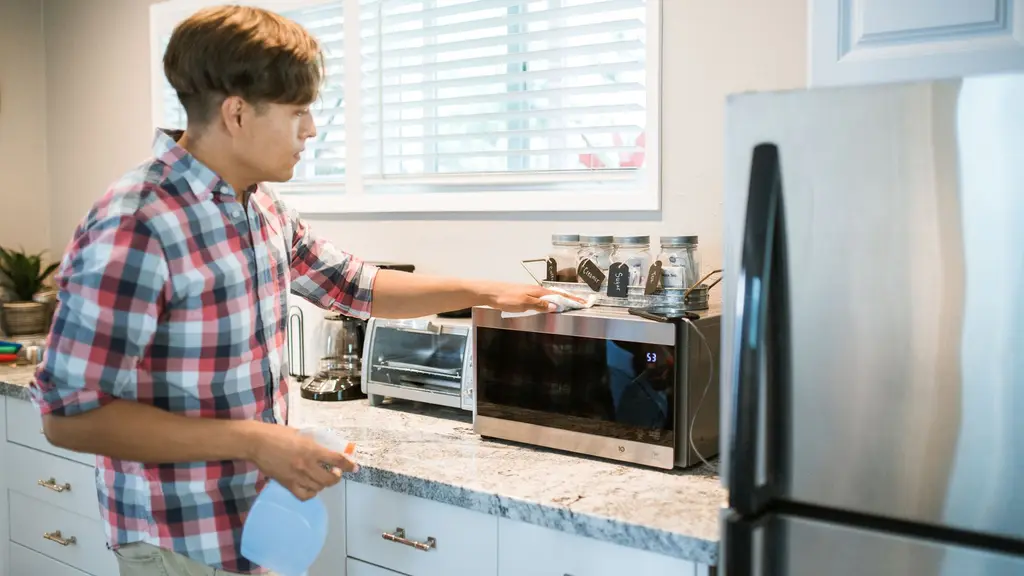
Let the microwave stop and cool before cleaning. Use the exact model’s permitted cleaner and wiping method for the cavity, accessible door surfaces and removable tray. Keep liquid out of vents and electrical parts, and do not remove the casing.
Cavity, tray and stubborn residue
Remove the tray only as directed once it is safe to handle. Check washing and dishwasher permission for that part; do not assume every glass tray has the same care instructions. Use permitted soft tools rather than steel wool, a knife or an abrasive pad.
For stuck residue, use the model’s approved method. Do not improvise a full-power three-to-five-minute heated liquid routine or handle a steaming bowl immediately. A reusable steamer does not establish a safe runtime for the microwave: both sets of instructions must permit the procedure. Never mix vinegar with bleach or chlorine cleaners because the mixture releases toxic chlorine gas.
Why Does a Microwave Smell and How Do You Get Rid of It?
Check accessible cavity and door surfaces and the tray edges for remaining food residue. Clean only the surfaces identified in the manual. Do not remove a door seal or reach through a vent.
A persistent unexplained smell after permitted care needs service advice. Do not diagnose every smell as grease or use an odor absorber to mask it. Burning, arcing, smoke or visible damage needs stopping under the guidance below.
Microwave Not Working: What to Check Before Replacing It
Start with the exact model manual, not a diagnosis of internal components from one symptom. A failure to start, heat or turn the tray may need professional assessment; it does not automatically justify a new appliance.
Visible checks only
Check settings and operating instructions in the manual. If the plug and socket are dry, undamaged and cool, confirm that the plug is fully seated and check whether the breaker has tripped. If it trips again, or the plug or socket is hot or scorched, stop and contact a qualified electrician or authorized service. With the microwave stopped and unplugged if safe, visually check the tray and support-ring seating and any obvious door obstruction. Do not force the door closed or reach behind the appliance housing.
The FDA advises following manufacturer instructions. Do not open the housing, test door interlocks or bypass them. Internal components are not an owner check.
When to stop and call a technician
- Sparks, arcing, smoke or a sharp burning smell during operation.
- A damaged or misaligned door or seal, or operation with the door open.
- Visible cavity damage or a fault whose cause is not clear from the manual and visible checks.
Stop using the appliance and unplug it if safe. Do not retry it empty as a test. Whirlpool directs immediate stopping for arcing. Consult the exact manual and authorized service if the cause is unclear, sparking persists or there is damage. We do not substitute a test procedure from another model.
What to tell the service agent
| Symptom | Record without further operation to test the fault |
|---|---|
| No response | Model, selected setting and any displayed message |
| Runs without heating | Selected mode and what you observed |
| Tray does not turn | Tray seating and visible damage, without assuming a new tray fixes it |
| Sparks or door damage | Stop using it and describe the observation to authorized service |
Keep the model number, warranty and any photograph of visible damage you can take without dismantling anything. We cannot infer a magnetron failure from no heating or promise a door repair will be cheap and quick.
Replacement tray, repair or new microwave?
A replacement tray is not a universal remedy for a rotation fault. Match the exact part number and appliance through the manual or service agent; diameter alone does not establish compatibility.
If service recommends replacement, or you choose it after comparing a repair quote and warranty, see the model shortlist and budget options. Toshiba MW3-AG20PE offers grill and combined operation, not convection, consistent with Toshiba’s model page. That recommendation is not a diagnosis of your appliance.
Check microwave dimensions before buying a replacement, and find other topics in our category hub.
How do I clean the inside of a microwave easily?
Switch off, disconnect safely and let the microwave cool. Wipe permitted interior surfaces with the cleaner and method specified in its manual, keeping liquid out of openings and electrical parts.
How often should I clean a microwave?
Follow the exact manual and remove food residue from permitted surfaces once the appliance has cooled. Do not use a universal weekly high-power steam cycle as a substitute for those instructions.
Can I use vinegar to clean a microwave?
Use vinegar only if the manual permits that solution and procedure. Do not heat an improvised bowl of vinegar or lemon water for a generic number of minutes or mix cleaners.
Are the microwave’s turntable and glass tray dishwasher-safe?
Check each removable part in the exact manual. Permission for the glass tray does not automatically cover its ring or other components; let hot parts cool before permitted cleaning.
How do I remove a stubborn burnt stain from inside a microwave?
Use only the nonabrasive method approved for the interior surface. Do not scrape, remove protective covers or keep reheating a stain. Stop for damaged surfaces, sparks or a damaged door and ask service.
Why does my microwave smell bad even though I clean it?
After cooling and safe disconnection, inspect and clean the permitted cavity and door surfaces as the manual directs. Persistent odor after that care needs manufacturer advice; repeated steam or high-heat cycles are not a diagnosis.
How do I get rid of a fish or spicy food smell from the microwave?
After cooling and safe disconnection, inspect and clean the permitted cavity and door surfaces as the manual directs. Persistent odor after that care needs manufacturer advice; repeated steam or high-heat cycles are not a diagnosis.
Does baking soda remove microwave odor?
Do not assume a baking-soda paste or an overnight absorber is approved for every microwave. Use only the model’s permitted cleaner and method, especially on coated surfaces and door seals.
Should I leave the microwave door open after using it?
Follow the manufacturer’s ventilation and door-position instructions. An open door does not replace cleaning, and a damaged or poorly closing door requires stopping use and service.
Does the microwave door seal need separate cleaning from the rest of the unit?
Include accessible door and sealing surfaces in the manual’s permitted cleaning routine. Do not pry off seals or scratch them; stop using a microwave with a damaged door or seal.
What can I check when the microwave will not work?
Consult the exact manual and settings. With the appliance stopped and unplugged if safe, visually check tray seating and any obvious door obstruction. Do not open the housing or test door interlocks.
It runs but does not heat. Is the magnetron faulty?
That symptom alone cannot identify the component. Check the manual settings, then ask authorized service to investigate if the fault remains. Do not inspect internal parts yourself.
Will a replacement tray fix a turntable fault?
Not necessarily. Establish the cause and match the exact part and appliance model first. Size alone does not establish replacement tray or roller-ring compatibility.
What should I do about sparks or a damaged door?
Stop using the appliance. Do not retry it empty. Do not use it with a damaged or misaligned door or seal, or if it operates with the door open. Consult the manual and authorized service for an unclear cause, persistent sparking or damage.
When is replacement better than repair?
Compare an actual service quote and warranty terms with the replacement cost and your needs. We cannot infer repair cost from a symptom or promise replacement is always cheaper.
About this guide
- Editing
- Mizaan Home editorial team
- Text revised
Research based on published specifications, without hands-on testing. How we choose
Prices are checked per product; the oldest check on this page:
This analysis is based on published information from US FDA (Microwave ovens), Whirlpool (Microwave arcing or sparking).
Frequently asked questions
How do I clean the inside of a microwave easily?
Switch off, disconnect safely and let the microwave cool. Wipe permitted interior surfaces with the cleaner and method specified in its manual, keeping liquid out of openings and electrical parts.
How often should I clean a microwave?
Follow the exact manual and remove food residue from permitted surfaces once the appliance has cooled. Do not use a universal weekly high-power steam cycle as a substitute for those instructions.
Can I use vinegar to clean a microwave?
Use vinegar only if the manual permits that solution and procedure. Do not heat an improvised bowl of vinegar or lemon water for a generic number of minutes or mix cleaners.
Are the microwave's turntable and glass tray dishwasher-safe?
Check each removable part in the exact manual. Permission for the glass tray does not automatically cover its ring or other components; let hot parts cool before permitted cleaning.
How do I remove a stubborn burnt stain from inside a microwave?
Use only the nonabrasive method approved for the interior surface. Do not scrape, remove protective covers or keep reheating a stain. Stop for damaged surfaces, sparks or a damaged door and ask service.