
 Egypt
Egypt  UAE
UAE  Saudi Arabia
 Immersion Blender vs Countertop Blender: Which One Do You Need?
We may earn a commission from purchases through our links, at no extra cost to you. How we choose · Disclosure.
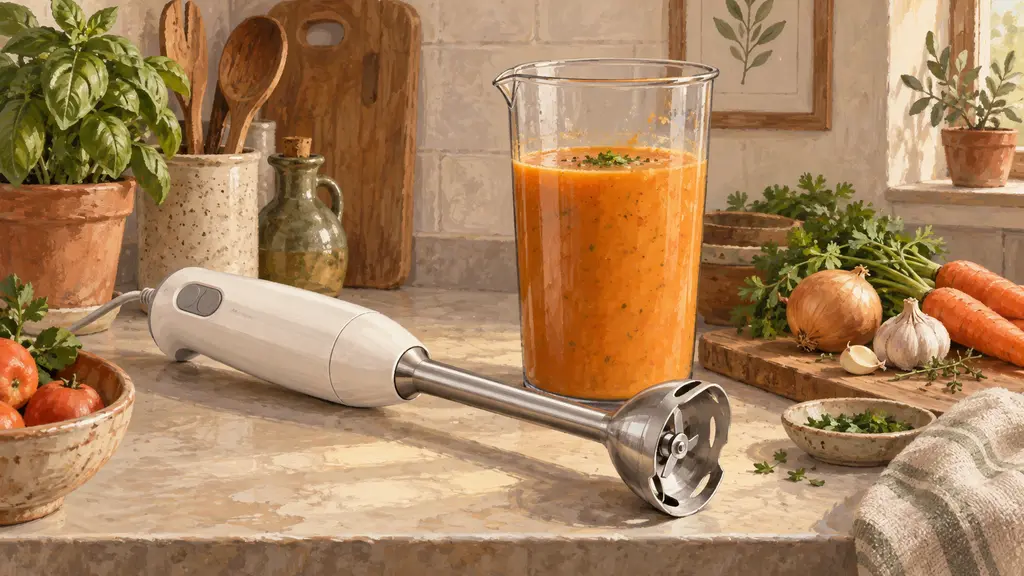
An immersion blender (also called a stick or hand blender) is a compact wand you dip directly into a pot or cup, built for pureeing soups and small jobs right where they are. A countertop blender is a full jar on a base, built for smoothies, crushed ice, and bigger batches. The real question isn’t which is objectively better, it’s which one matches the jobs you actually do and the storage space you actually have.
The quick answer
If you mostly puree soups, sauces, and small single-pot jobs and want something that stores in a drawer, an immersion blender is the better fit. If smoothies, crushed ice, and bigger batches are your daily routine, a countertop blender does that job better and is the more versatile appliance for most kitchens. Many households eventually own both, since they solve different problems rather than competing for the same one.
Key takeaways
- An immersion blender is a handheld wand with a blade at the tip, designed to be lowered directly into a pot, pitcher, or cup rather than requiring you to transfer food into a separate jar (immersion blender from Britannica).
- A countertop blender uses a fixed jar on a motorized base, which gives it the power and stability to crush ice and blend bigger batches in one go (blender from Britannica).
- Storage space is a real factor, not an afterthought: an immersion blender fits in a drawer, a countertop blender needs counter or cabinet room for the base and jar.
- Cleanup differs too: an immersion blender means rinsing one wand, a countertop blender means washing a jar, lid, and blade base.
- Power and batch size favor the countertop blender for smoothies and ice, while the immersion blender wins on one-pot convenience.
What an immersion blender does well
An immersion blender’s whole design advantage is that you bring the blade to the food instead of the other way around. Puree a pot of soup right on the stove without transferring hot liquid into a jar, blend a single smoothie straight in its cup, or whip a quick sauce in whatever container you already have out. It’s also the easier tool to store, since most models are a slim wand plus maybe a whisk or chopper attachment, all of which fit in a drawer instead of taking up counter space. The trade-off is capacity and raw power: an immersion blender isn’t built to crush a full batch of ice or handle the toughest grinding jobs the way a motorized base can.
What a countertop blender does well
A countertop blender’s motor sits in a stable base under a fixed jar, which gives it the torque to crush ice, blend frozen fruit, and process bigger batches in one go, jobs that push a handheld wand past its comfort zone. A model like the Ninja Professional Plus Blender with Auto-iQ handles smoothies, crushed ice, and sauces with one touch, and its jar capacity covers a family-size batch that an immersion blender’s cup-at-a-time format can’t match. The trade-off is footprint: a countertop blender takes up counter or cabinet space for the base and jar, and it’s one more thing to wash after each use.
Quick comparison: immersion vs countertop
| Aspect | Immersion blender | Countertop blender |
|---|---|---|
| Best for | Soups, sauces, single-pot jobs | Smoothies, crushed ice, bigger batches |
| Power for ice and frozen fruit | Limited | Built for it |
| Storage | Fits in a drawer | Needs counter or cabinet space |
| Cleanup | Rinse one wand | Wash jar, lid, and blade base |
| Typical price | Lower | Higher, more capability |
So which one should you buy first?
If you’re starting from zero and can only buy one, a countertop blender covers more daily jobs for most households: smoothies, crushed ice, sauces, and soups you can still puree in the jar in batches. That’s why a countertop model like the Ninja Professional Plus Blender with Auto-iQ tops our guide to the best blender in the USA, and it’s a practical single-appliance answer if you need to choose just one. An immersion blender earns its own drawer space as a second tool once you find yourself repeatedly wanting to puree soup right in the pot or blend a single serving without pulling out the full jar, not as a replacement for the countertop blender’s daily range. If you’re also weighing whether to blend whole fruit or extract juice instead, see our blender vs juicer comparison, which runs on the same logic: pick the tool that matches how you actually use your kitchen, not the one that looks most capable on the shelf.
Bottom line
For most kitchens, a countertop blender is the more versatile first purchase, since it covers smoothies, crushed ice, and bigger batches that an immersion blender can’t match, and our top pick is the Ninja Professional Plus Blender with Auto-iQ. Add an immersion blender later if you regularly puree soup in the pot or want a smaller tool for single servings, and see our how to clean a blender guide for keeping either type fresh. For the full buying criteria across every blender type, see our guide to choosing a blender, check current blender prices in the USA, or browse our blenders section.
Sources
- Britannica, “Blender”, definition and design of the handheld immersion blender: https://www.britannica.com/dictionary/blender
This analysis is based on published information from Britannica (Blender).
Frequently asked questions
What's the difference between an immersion blender and a countertop blender?
An immersion blender is a handheld wand you lower directly into a pot, pitcher, or cup, so you never transfer food into a separate jar. A countertop blender uses a fixed jar on a motorized base, which gives it the power and stability to crush ice and handle bigger batches in one go. One brings the blade to the food, the other brings the food to the blade.
Can an immersion blender replace a countertop blender?
For some households, yes, especially if soups, sauces, and small single-serving jobs are most of what you blend. But an immersion blender isn't built to crush a full batch of ice or process large quantities the way a countertop blender's motor and jar can, so if smoothies and bigger batches are a daily habit, a countertop blender is the more capable choice.
Is an immersion blender good enough for smoothies?
It can handle a single smoothie in its own cup reasonably well, but it struggles more than a countertop blender with crushed ice and frozen fruit, since it lacks the torque and stable jar of a motorized base. If smoothies with ice are a daily routine, a countertop blender does that specific job better.
Which one takes up less storage space?
An immersion blender wins easily here. It's usually a slim wand, sometimes with a whisk or chopper attachment, that fits flat in a drawer. A countertop blender needs counter space when in use and cabinet room for the base and jar when it isn't, which matters more in a small kitchen.