
 Egypt
Egypt  UAE
UAE  Saudi Arabia
 Is There a Downside to Air Purifiers?
We may earn a commission from purchases through our links, at no extra cost to you. How we choose · Disclosure.
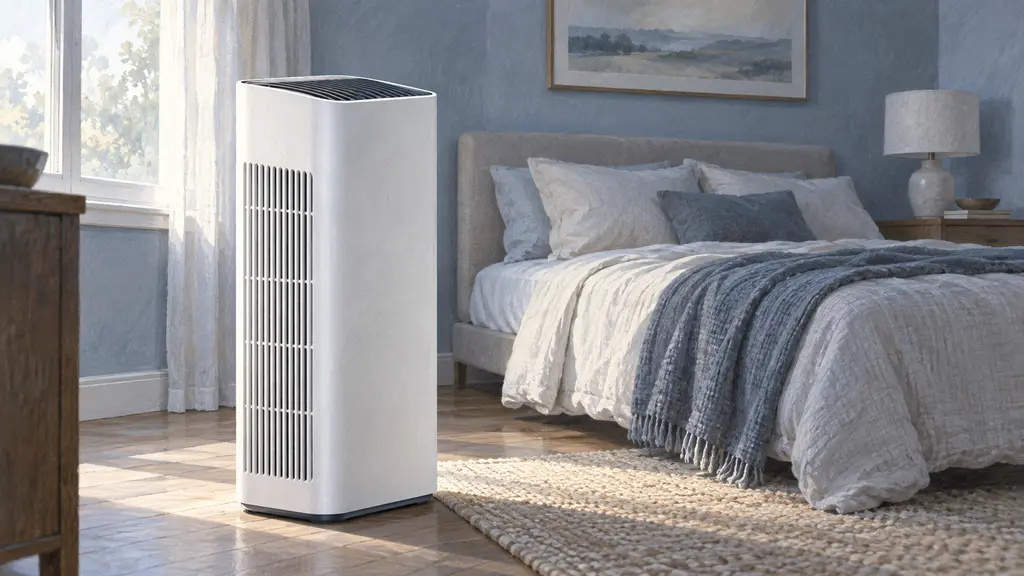
Yes, air purifiers have real downsides worth knowing before you buy: noise on higher fan speeds, an ongoing cost for filter replacements, and, specifically for ionizer-style models, ozone output that some listings don’t clearly disclose. None of these rule a purifier out, but a true HEPA unit without an ionizer sidesteps the ozone concern entirely.
The quick answer
Yes, air purifiers have real downsides: noise on higher fan speeds, an ongoing cost for filter replacements, and, for ionizer-style models specifically, ozone output that some models don’t clearly disclose. None of these rule a purifier out, but they’re worth knowing before you buy. A true HEPA unit without an ionizer function, like the LEVOIT Core 200S-P, sidesteps the ozone concern entirely.
Key takeaways
- Noise is the most common complaint, higher fan speeds are audible on virtually any model, so check reviews specifically for “quiet” mentions if it’s going in a bedroom.
- Filter cost is ongoing, not one-time. Budget for periodic replacements over the life of the unit as part of the real cost of ownership.
- Ionizer-style purifiers generate ozone as a byproduct (ozone background from US EPA), while a true HEPA filter alone does not, it works by physically trapping particles as air passes through the mesh (HEPA definition from US EPA).
- Sizing mistakes make every downside worse. An undersized unit running on high constantly to keep up is both louder and works harder than a correctly sized one running at a moderate speed.
- Every one of these downsides is avoidable at the buying stage, by choosing true HEPA over ionizer, checking noise reviews, and matching coverage to your actual room.
Noise: the most common complaint
On its highest fan speed, virtually any air purifier is audible, and some models are meaningfully louder than others at the same speed. This matters most for a unit going in a bedroom or a room where you’re on video calls. Before buying, check reviews specifically for mentions of a quiet mode, a sleep setting, or complaints about fan noise, since the spec sheet alone rarely tells the full story here.
Ongoing cost: it’s not just the sticker price
The purchase price is one number, but over the life of the unit you’ll also pay for periodic filter replacements, typically every few months depending on the model and how heavily you run it. It’s not usually a large cost compared to running a fan or an HVAC system, but it’s a real, recurring line item, not a one-time purchase, so it’s worth factoring into whether a given model is actually the better deal once you look past the sticker price.
Ozone: the downside that’s specific to ionizer models
Some air purifiers include an ionizer function alongside, or instead of, a true HEPA filter. Ionizers work differently: they charge particles in the air so they clump together and settle out, and ozone is a byproduct of that process. Ozone itself can be an irritant at high enough concentration, which is the actual downside people are pointing to when they raise ozone concerns about air purifiers. A true HEPA filter, on its own, works by physically trapping particles as air is pulled through a dense mesh, it doesn’t generate ozone as part of that process. If ozone output concerns you, choosing a true-HEPA unit without an ionizer function, or one where the ionizer is a switch you can simply leave off, sidesteps the issue entirely rather than relying on you to manage it.
How to avoid these downsides when buying
- Choose true HEPA over ionizer-only if ozone is a concern, or make sure any ionizer function can be switched off.
- Check reviews for noise, not just the spec sheet, especially for a bedroom or a quiet room.
- Size the unit correctly to your room. An undersized purifier running on high nonstop is both louder and working harder than it should.
- Budget for filter replacement as ongoing upkeep, not as a surprise cost later.
The pick that avoids the ozone concern
The LEVOIT Core 200S-P (≈ $75) is a true HEPA unit with no ionizer function, so the ozone question doesn’t apply to it at all, and it carries thousands of positive reviews on Amazon.com that consistently describe it as reasonably quiet for its size. It’s the top pick in the best air purifier in the USA, sized correctly for a bedroom or small living room so it isn’t straining on its highest speed just to keep up.
See the LEVOIT Core 200S-P price on Amazon ↗
Bottom line
Air purifiers do have real downsides: fan noise on higher speeds, an ongoing filter cost, and ozone output specifically from ionizer-style models. None of them are dealbreakers, and all of them are avoidable at the buying stage by choosing true HEPA over ionizer-only, checking reviews for noise, and sizing the unit correctly to your room. If you’re still weighing whether the benefits outweigh these downsides, read is an air purifier worth it, and for how long a well-chosen unit should hold up, see how long does an air purifier last. For the full buying criteria, see our guide to choosing an air purifier, and if you’re still shopping, check out the best air purifier in the USA or browse air purifiers in the USA.
Sources
- US EPA, “What is a HEPA filter”, definition of high-efficiency particulate air filtration and how it traps particles without a chemical byproduct: https://www.epa.gov/indoor-air-quality-iaq/what-hepa-filter
- US EPA, “Ozone generators sold as air cleaners”, background on ozone and its formation as a byproduct of ionization processes: https://www.epa.gov/indoor-air-quality-iaq/ozone-generators-are-sold-air-cleaners
This analysis is based on published information from US EPA (What is a HEPA filter), US EPA (Ozone generators sold as air cleaners).
Frequently asked questions
Do air purifiers produce ozone?
A true HEPA filter on its own does not produce ozone, it works by physically trapping particles as air passes through the mesh. Some purifiers add an ionizer function, which does generate ozone as a byproduct. If ozone concerns you, choose a true-HEPA model without an ionizer, or one where the ionizer is a switch you can leave off.
Are air purifiers noisy?
On the highest fan speed, most air purifiers are audible, some noticeably more than others. If it's going in a bedroom, check buyer reviews specifically for mentions of quiet operation or a dedicated sleep mode before you buy, rather than assuming from the spec sheet alone.
Is there an ongoing cost besides the purchase price?
Yes, filter replacement is a recurring cost over the life of the unit, typically every few months depending on the model and how heavily you run it. It's not a large cost compared to running a fan, but it's a real line item to budget for, not a one-time purchase.
Is a true HEPA air purifier safer than an ionizer air purifier?
For most households, yes. A true HEPA filter removes particles mechanically with no ozone byproduct, while an ionizer generates ozone as part of how it works. If avoiding ozone entirely matters to you, a true-HEPA-only model sidesteps the question rather than relying on you to remember to switch an ionizer off.