
 Egypt
Egypt  Saudi Arabia
  USA
USA Water Dispenser Not Working: What to Check First
We may earn a commission from purchases through our links, at no extra cost to you. How we choose · Disclosure.
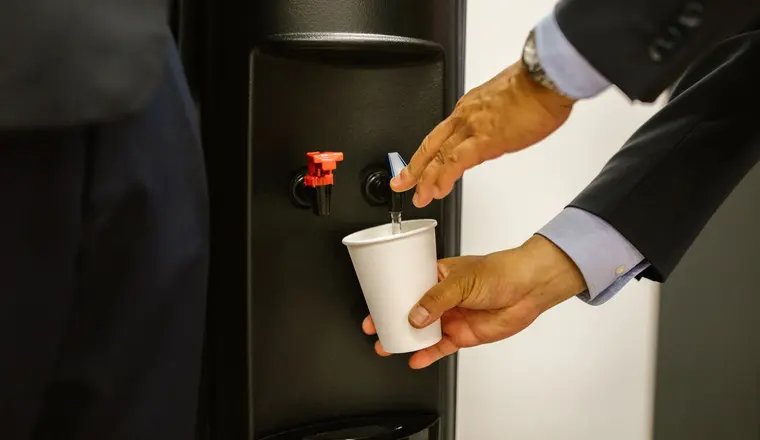
If your water dispenser has stopped working, or it isn’t cooling or heating the way it used to, the cause is usually one of a few simple things you can check in minutes: no power reaching the unit, a bottle that isn’t seated correctly, a compressor that’s still cooling the water down, or the safety lock button on the hot tap. Before you consider a costly repair or a new dispenser, check these first.
The quick answer
Most water dispenser problems come down to no power, a poorly seated bottle, or a compressor that hasn’t finished its cooling cycle yet, not a real internal fault. Check the plug, the wall switch, and the bottle first, and give the dispenser two to three hours after first power-on before judging it fully broken. If no hot water comes out, check the safety lock button on the hot tap before assuming the heating element has failed.
Key takeaways
- No power is the most common reason a dispenser doesn’t work at all, and in the UAE it’s common for the wall socket’s own switch to be off, not the appliance itself.
- A poorly seated or empty bottle blocks water flow, and air bubbles after installing a fresh bottle need a few minutes to settle before flow steadies.
- The cooling compressor needs two to three hours after first power-on to reach its coldest temperature, which is normal and not a fault.
- Missing hot water specifically is usually caused by the safety lock button on the tap, a safety feature designed to prevent accidental use, not a failed heating element.
- An odd taste or smell in the water is usually mineral scale or algae inside the internal tank, not a problem with the water source itself.
Why does a water dispenser stop working?
A household water dispenser combines a cooling tank run by a small compressor or solid-state cooling, with an electric heating element for the hot tap (general background on water coolers from ENERGY STAR). So when a dispenser stops working, the first question is whether power isn’t reaching the whole unit, or whether just one of the two taps isn’t responding. If the unit doesn’t work at all, the cause is usually power or the bottle, not the internal parts. If the unit runs but only one tap isn’t responding, the cause is most likely specific to that tap.
Quick checks before anything else
- Confirm power is actually reaching the unit: check the plug, the wall socket’s own switch if it has one (common in the UAE, separate from the appliance), and make sure the circuit breaker hasn’t tripped.
- Check the bottle: make sure it’s seated straight on the internal spike, that it isn’t empty, and give it a few minutes after installing so air bubbles clear and the flow steadies.
- Give the compressor time: if the dispenser was just plugged in or recently came back from a long power outage, wait two to three hours before judging the cooling.
- Check the safety lock button on the hot tap: most dispensers need a double press or a held press on this button to prevent accidental use, especially around children.
- Check ventilation behind the unit: the compressor needs enough clearance to breathe, so a dispenser pushed flush against a wall or furniture may not cool efficiently.
Why won’t a water dispenser cool or heat?
Not cooling after waiting long enough (two to three hours) usually points to the thermostat setting, not enough ventilation behind the unit, or, on older units, a compressor that’s starting to lose efficiency. Missing hot water is most often actually caused by the safety lock not being pressed correctly, not a fault in the heating element itself. If you’ve confirmed the lock and the hot tap is still completely cold, the electric heating element has likely failed, which is an electrical repair that needs a qualified technician or a decision about a new unit depending on the dispenser’s age.
When to repair the dispenser, and when to consider replacing it
If the basic checks (power, the bottle, cooling time) solve the problem, there’s no need to spend anything more. But if the dispenser is old, the compressor keeps humming with no actual cooling, or the heating element has fully failed despite confirming the safety lock, the cost of repairing these electrical faults can come close to the price of a new full-size unit. In that case, comparing the repair cost against a new dispenser’s price is worth two minutes before committing to either.
Symptom, likely cause, and first fix
| Symptom | Likely cause | First fix |
|---|---|---|
| No power at all | Plug or wall switch off, or a tripped breaker | Check the plug, the wall switch, and the breaker |
| No water flow | Bottle poorly seated or empty | Reseat or replace the bottle, and give it a few minutes |
| No cold water after waiting | Thermostat setting or insufficient ventilation behind the unit | Check the setting and clear space for airflow |
| No hot water | Safety lock button not used correctly | Press the lock button correctly before the tap |
| Leaking from the base | Bottle not seated straight or a full drip tray | Reseat the bottle and empty the tray regularly |
| Odd taste or smell | Mineral scale or algae inside the tank | Clean the internal tank and taps |
While you’re deciding on repair or replacement
If you’ve landed on the decision that your current dispenser needs full replacement rather than a costly repair, the Midea Top-Loading Water Dispenser (3 taps, hot/cold) is worth a look: it’s the cheapest of the full-size dispensers we found on Amazon.ae, backed by hundreds of buyer reviews, which is what puts it at the top of our guide to the best water dispenser in the UAE. You’ll find its current price and Amazon.ae link in the card below.
When to stop and call a technician
- The unit has no power after the plug, wall switch, and circuit breaker are confirmed.
- Cold water is still missing after two to three hours with the thermostat set and rear ventilation clear.
- The hot tap remains completely cold after the safety lock is used correctly.
- A leak from the base persists after the bottle is reseated and the drip tray is emptied.
Stop using the water dispenser and have it checked by a qualified technician before using it again.
Bottom line
Most water dispenser problems, from not turning on to missing hot or cold water, come down to simple causes: power, bottle seating, the compressor’s normal cooling time, or the safety lock button. Check these first before assuming a full fault, and weigh the repair cost against a new unit if the dispenser is old and keeps developing issues. If an odd smell or taste is specifically the problem, see how to clean a water dispenser. If you’re still deciding between dispenser types in the first place, read how to choose a water dispenser, and to see price ranges before buying, check water dispenser prices in the UAE. For everything in this category in one place, browse the water dispensers hub.
Sources
- ENERGY STAR, “Water coolers”, general background on water dispensers and how their cooling and heating work: https://www.energystar.gov/products/water_coolers
This analysis is based on published information from ENERGY STAR (Water coolers).
Frequently asked questions
Why won't my water dispenser cool down after I turn it on?
The internal compressor usually needs two to three hours after first power-on or after a long outage to reach its coldest temperature, and that's normal, not a fault. If you've waited that long and the water still isn't cold, check the thermostat setting and make sure there's enough clearance behind the unit for ventilation, since a compressor pressed against a wall or furniture may not cool efficiently.
Why isn't hot water coming out of my dispenser?
Most dispensers fit a safety lock button specifically on the hot tap to prevent it being triggered accidentally around children, and it needs a double press or a held press together with the tap lever. That's the most common reason hot water doesn't come out, not a failed heating element. If you've confirmed you're using the lock correctly and the tap is still completely cold, the electric heating element has likely failed and needs a qualified technician.
Why is my water dispenser leaking from the bottom?
The most common cause is a bottle that isn't seated straight on the internal spike, which lets a small amount leak into the drip tray under the unit until it overflows. Reseat the bottle straight and make sure it settles properly, and empty the drip tray regularly. If leaking continues with a properly seated bottle and an empty tray, the problem is likely internal, in the tank or seals, and needs a technician to check.
Is a water dispenser problem worth repairing or should I replace the unit?
If the basic checks (power, bottle seating, cooling time) solve the problem, there's nothing more to spend. But if the dispenser is old and the compressor keeps humming without actually cooling, or the heating element has fully failed despite confirming the safety lock, the cost of repairing these electrical faults can come close to the price of a new full-size unit, which is worth a quick comparison before committing to either option.
Why does the water from my dispenser taste or smell off?
This usually has nothing to do with power or cooling. It's typically mineral scale or algae building up inside the internal tank and tap tubing over time, especially if the tank hasn't been cleaned regularly. The fix is cleaning the internal tank and taps, not an electrical repair.