
 Egypt
Egypt  UAE
UAE  USA
USA How to Avoid Constantly Emptying a Portable AC's Water Tank
We may earn a commission from purchases through our links, at no extra cost to you. How we choose · Disclosure.
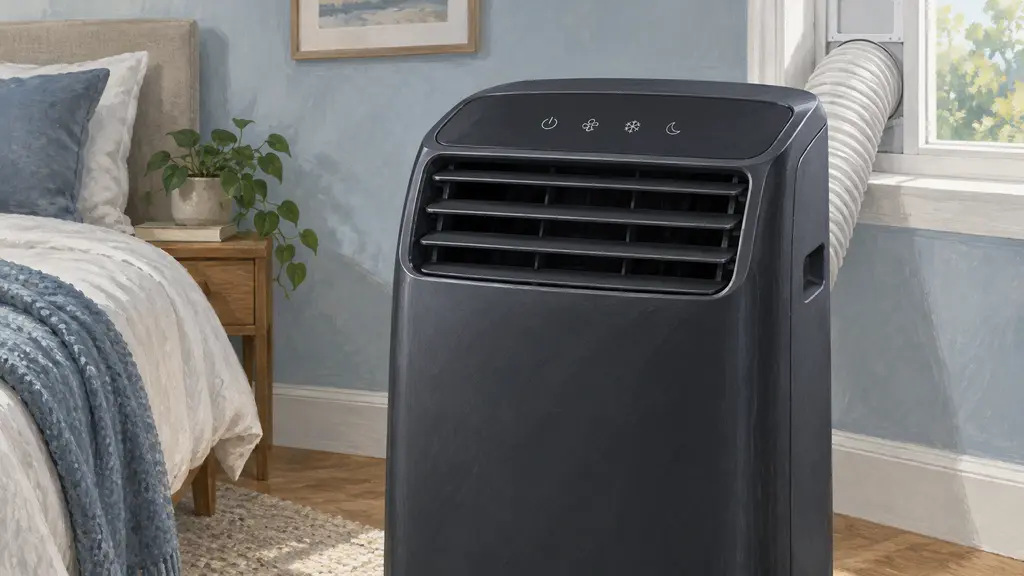
A portable air conditioner collects condensate in an internal tank that fills up within a few hours of steady running, then shuts the unit off or sounds an alert until you empty it. The real fix isn’t remembering to empty the tank every time, it’s connecting a continuous gravity drain hose to the unit’s dedicated drain port and routing it to a floor drain, a sink, or a bucket set lower than the unit, so the water runs out on its own instead of collecting.
The quick answer
To stop emptying a portable AC’s tank by hand, connect a continuous drain hose to the gravity drain port usually found on the back or bottom of the unit, and route it to a floor drain, sink, or a bucket set low enough for gravity to do the work. If there’s no nearby drain low enough, a small condensate pump solves this by pumping the water up and out instead. If you’d rather avoid the problem altogether, a window-mounted AC already drains its condensate outside automatically, with no tank to empty at all.
Key takeaways
- A portable AC pulls moisture out of the air as it cools it, and that water has to go somewhere: some evaporates through the exhaust hose, and the rest collects in an internal tank (background on air conditioning and dehumidification from Britannica).
- Most units have a dedicated continuous gravity drain port, usually a small rubber-capped outlet on the back or bottom, meant for a standard drain hose instead of relying on the internal tank.
- Ambient humidity decides how fast the tank fills, a room in a humid coastal climate collects water far faster than one in dry inland air, so expect more frequent emptying in humid regions.
- A condensate pump is the practical fix when there’s no nearby floor drain, since it pushes the water upward instead of relying on gravity alone (background on dehumidifiers and drain systems from ENERGY STAR).
- A window-mounted AC doesn’t face this problem at all, because it’s installed with a slight backward tilt that lets condensate drip outside automatically, with no tank that needs emptying.
Why the tank fills up in the first place
A portable AC works on the same principle as any compressor-based cooling unit: it pulls warm, humid air from the room, passes it over cold coils, and as it does, water vapor in the air condenses into liquid water, the same way droplets form on a cold glass on a hot day. Some of this water gets re-sprayed onto the condenser to evaporate out through the exhaust hose, but the rest, sometimes a significant amount in humid conditions, collects in an internal tank at the bottom of the unit. Once that tank fills, a float switch automatically shuts the unit off or triggers a sound or light alert, and the AC won’t run again until you empty it.
The real fix: a continuous gravity drain line
Most modern portable ACs ship with a second drain port made specifically for this, separate from the emergency-drain outlet:
- Check the back or underside of the unit for a small port with a rubber cap, usually labeled “continuous drain” or marked with a water-drop icon.
- Attach the drain hose to this port, making sure the connection is sealed to prevent leaking at the fitting.
- Route the other end of the hose somewhere lower than the unit: a bathroom floor drain, a nearby sink, or even a large bucket if the room sits low enough relative to the drain point.
- Run the unit and test the drain for a few minutes to confirm water is actually flowing out the hose end and not leaking at the connection.
Once this line is working, you’ll never need to remember to empty a tank again, because the water leaves as it’s produced.
A practical alternative: a condensate pump
If your room is on an upper floor or there’s no floor drain nearby that sits low enough, gravity alone won’t cut it. The fix here is a small pump made specifically for condensate, connected to the same drain port, that pushes the water out under pressure rather than gravity, so you can route it upward through a window or into a sink above the unit’s level. This needs a bit more upfront setup than a simple gravity hose, but it solves the problem in rooms the first option doesn’t fit.
A practical add-on worth considering
If your current unit doesn’t have an obvious continuous drain port, or you’d rather have a ready-made solution instead of rigging one yourself, a continuous drain hose kit, the hose plus the adapter for your unit’s port, is a cheap add-on that solves this for good on most units. Just confirm the adapter matches your model’s drain port diameter before buying, since sizes vary slightly between manufacturers.
Quick comparison: ways to deal with condensate
| Method | Effort required | Best for |
|---|---|---|
| Manually emptying the tank | Repeated attention every few hours | Short or occasional use only |
| Continuous gravity drain hose | One-time setup, then no upkeep | A room near a floor drain or a low point |
| Condensate pump | Slightly more upfront setup | Rooms with no nearby floor drain, or upper floors |
| Window AC with automatic outdoor drain | No tank, no hose to manage daily | Anyone who wants to skip the issue entirely and has a suitable window opening |
If you’re still weighing this before you buy
If all of this sounds like extra hassle you’d rather avoid from the start, it’s worth knowing that window-mounted air conditioners don’t face this problem at all: they’re installed with a slight backward tilt that lets condensate drip outside automatically, with no internal tank and no drain hose to manage yourself. The Super General 1.5-Ton 18,000 BTU Window AC, our top pick in the best portable AC in Saudi Arabia, is a direct example: real refrigerant cooling with automatic drainage and zero manual intervention, in exchange for needing a suitable window opening instead of rolling on casters. You’ll find its current price and the Amazon.sa link in the card below.
Bottom line
A portable AC’s water tank isn’t a design flaw, it’s a natural side effect of pulling humidity out of the air, and the real fix is a continuous gravity drain line or a small condensate pump instead of relying on yourself to remember to empty it daily. If your room has no nearby floor drain, a pump solves it by pushing the water up instead of relying on gravity. And if you’d rather skip the issue entirely from the start, a window-mounted AC like the Super General drains automatically outside. If you’re still working out the right size for your room, our what size portable AC do you need guide covers that in detail, and if you’re torn between a true AC and evaporative cooling, read portable AC vs evaporative cooler. For the full buying criteria, see how to choose a portable AC, or browse portable ACs for the full hub.
Sources
- Britannica, “Air conditioning”, background on how air conditioning works and dehumidification as a side effect of cooling: https://www.britannica.com/technology/air-conditioning
- ENERGY STAR, “Dehumidifiers”, background on dehumidifying appliances, collection tanks, and continuous drain systems: https://www.energystar.gov/products/dehumidifiers
This analysis is based on published information from Britannica (Air conditioning), ENERGY STAR (Dehumidifiers).
Frequently asked questions
Why does a portable AC's water tank fill up so fast?
Because the unit pulls moisture out of the air as it cools it, and that water collects in an internal tank instead of fully evaporating through the exhaust hose. The more humid the surrounding air, the more water collects and the faster the tank fills, so a room in a humid coastal climate needs emptying far more often than one in dry inland air.
Do all portable ACs have a continuous drain port?
Most modern models have a dedicated continuous gravity drain port separate from the emergency-drain outlet, but this isn't guaranteed on every unit. Check your specific model's manual before buying any hose or adapter, and confirm the port diameter, since it varies slightly between manufacturers.
What do I do if there's no floor drain near the room?
Use a small condensate pump made for this purpose, connected to the same drain port, which pushes the water out under pressure instead of relying on gravity, letting you route it upward through a window or into a sink above the unit's level. This is common in upper-floor apartments or interior rooms far from any drain.
Does connecting a continuous drain hose reduce the AC's cooling power?
No, a continuous drain line doesn't touch the cooling cycle itself, it just changes where the condensate goes, from collecting in an internal tank to flowing straight out through the hose. Cooling performance stays exactly the same, the only difference is you no longer need to empty a tank yourself.