
 Egypt
Egypt  UAE
UAE  USA
USA Is a Used Portable AC Worth Buying?
We may earn a commission from purchases through our links, at no extra cost to you. How we choose · Disclosure.
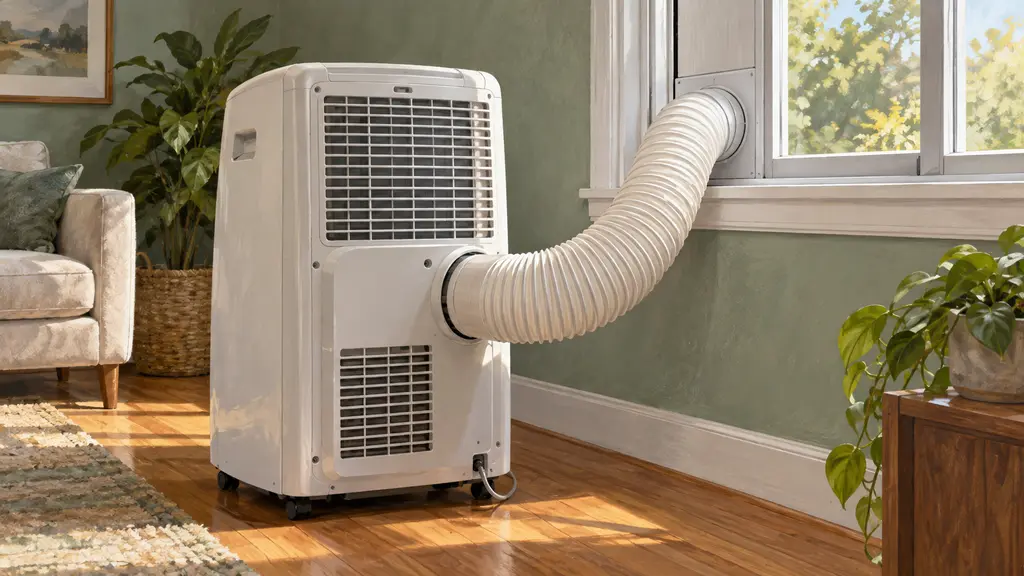
In most cases, buying a used true portable air conditioner, one with a refrigerant compressor, is a risk that isn’t worth the apparent savings: a failing compressor or a refrigerant leak often doesn’t show up in a quick inspection, and a manufacturer warranty usually doesn’t transfer with a resold unit. If budget is the deciding factor, a used evaporative cooler or misting fan is a far lower-risk buy, since its mechanism is much simpler than a refrigerant compressor.
The quick answer
We generally don’t recommend buying a used true portable air conditioner (with a refrigerant compressor) from classifieds sites, because a failing compressor or a refrigerant leak often doesn’t show up in a quick check, and the warranty usually doesn’t transfer with the unit. If you’re set on buying used anyway, run the unit for at least 15 to 20 minutes before paying, and ask for proof of its history. If budget is the main constraint, a used evaporative cooler or misting fan is a far lower-risk buy than a used true AC.
Key takeaways
- The compressor is the heart of a true air conditioner, and its failures don’t always show up in a quick check, a unit can run fine at power-on and still fail under real load hours later (background on vapor-compression refrigeration from Britannica).
- A refrigerant leak is a slow death, not a sudden failure: the unit cools close to normally at first, then gradually weakens over weeks, which makes it hard to catch in a short viewing.
- A warranty usually doesn’t transfer with a resale, so any fault after purchase becomes a full cost on you, not the manufacturer or distributor (general background on air conditioning from Britannica).
- Mechanically simpler units are lower risk used: an evaporative cooler or misting fan runs on a simple fan and water pump, so the odds of a hidden fault are far lower than with a refrigerant compressor.
- The price gap between used and new may not justify the risk, especially when the new unit comes with a full warranty and a documented review history.
Why a used unit carries more risk than the apparent savings suggest
When you buy a used true portable AC, you’re really buying a compressor and a sealed refrigerant loop you can’t see and can’t test in two minutes. The compressor might sound completely normal at a quick power-on, but real failures typically show up under continuous load over hours, not at the moment of demonstration in front of the seller. A refrigerant leak is worse: the unit cools close to normally at first, then gradually loses efficiency over weeks or months with no obvious sign during a quick inspection. And when either of these happens after you’ve bought it, you have no manufacturer warranty to cover the repair, since warranties are usually tied to the original owner or expire soon after the original purchase.
Step by step: how to inspect a used portable AC before buying
If you decide to go ahead anyway, these steps reduce the risk, even if they don’t eliminate it:
- Run the unit for at least 15 to 20 minutes on site, don’t settle for a few seconds of power-on. Watch whether the air coming out of the vent actually gets colder over time or stays roughly the same.
- Listen to the compressor itself, not just the fan. A compressor cycles on and off at regular intervals, so an irregular or unusually loud sound is a warning sign.
- Ask for the manufacture date sticker, usually on the back of the unit or near the spec plate, and compare it to the age the seller claims.
- Ask for the original receipt or warranty card if it exists, which gives you a sense of actual usage history and any prior servicing.
- Check the exhaust hose and drain port for cracks or leaks, and smell the unit while it runs for any burnt or electrical odor.
When a used unit is actually a reasonable buy
The risk is meaningfully lower with mechanically simpler appliances. An evaporative cooler or misting fan runs on a small fan and water pump, with no compressor and no sealed refrigerant loop, so there are far fewer hidden failure points, and replacing either if it fails costs much less than replacing a compressor. If you’re considering used to save on budget, this is the lower-risk direction, not a used true AC.
Quick comparison: used versus new
| Factor | Used AC | New AC |
|---|---|---|
| Warranty | Usually expired or non-transferable | Full manufacturer or distributor warranty |
| Compressor failure risk | High, and not visible in a quick check | Low, usually covered by warranty |
| Usage and service history | Uncertain in most cases | Known from the moment of purchase |
| Upfront price | Lower on the surface | Higher, but with warranty coverage |
| Support and spare parts availability | Depends on how old the model is | Usually available through the local distributor |
Why we recommend buying new in most cases
If the real comparison is a modest price saving against the risk of a full compressor failure with no warranty, the balance usually tips toward the new unit. The Super General 1.5-Ton 18,000 BTU Window AC, our top pick in the best portable AC in Saudi Arabia, comes with a full warranty and hundreds of documented positive reviews on Amazon.sa, a track record no used unit from a classifieds listing can offer. You’ll find its current price and the Amazon.sa link in the card below.
Bottom line
Buying a used true portable AC is a real risk, because compressor failures and refrigerant leaks don’t always show up in a quick check, and a warranty usually doesn’t come with a resale. If you go ahead anyway, run the unit for at least twenty minutes and ask for proof of its history before paying. And if budget is your main constraint, a used evaporative cooler or misting fan is a much lower-risk buy than a used true AC. Before deciding what size you actually need, new or used, see what size portable AC do you need, and if you’re still weighing a true AC against an evaporative cooler, read portable AC vs evaporative cooler. For the full buying criteria, see how to choose a portable AC, or browse portable ACs.
Sources
- Britannica, “Refrigeration”, background on how a compressor cools and where failures typically occur: https://www.britannica.com/technology/refrigeration
- Britannica, “Air conditioning”, general background on air conditioning and its core components: https://www.britannica.com/technology/air-conditioning
This analysis is based on published information from Britannica (Refrigeration), Britannica (Air conditioning).
Frequently asked questions
How do I make sure a used portable AC's compressor is actually sound before buying?
Run the unit for at least 15 to 20 minutes on site, and watch whether the air coming out of the vent actually gets colder over time or stays the same. Also listen to the compressor itself, not just the fan, its on-off cycling should sound regular with no strange or loud noises. No quick check guarantees the compressor is fully sound, but these steps catch the obvious failures.
Is the lack of a warranty reason enough to skip a used AC?
Not by itself, but it changes the risk math significantly. Without a warranty, any compressor failure or refrigerant leak after purchase becomes a full repair cost on you, and compressor repairs often run close to the price of a new unit. If you accept that risk clearly and the price genuinely reflects it, buying used can still make sense, but ignoring the missing warranty entirely is a common mistake.
Is buying a used evaporative cooler or misting fan less risky than a used true AC?
Yes, meaningfully so. An evaporative cooler or misting fan relies on a simple fan and water pump, with no compressor and no sealed refrigerant loop, so there are far fewer hidden failure points, and replacing any part costs much less than replacing a compressor. If budget is your main constraint, this is the lower-risk direction compared to a used true AC.
What signs of a refrigerant leak should I look for during inspection?
The clearest sign is a unit that cools close to normally for the first few minutes and then gradually weakens, which is hard to catch in a short viewing. Other signs worth noting: a faint hissing sound near the compressor or connections, or the seller mentioning the unit occasionally 'needs a gas top-up,' a phrase that usually points to an ongoing leak rather than a one-time fix.