
 UAE
UAE  Saudi Arabia
  USA
USA How to choose a food processor in Egypt (2026)
We may earn a commission from purchases through our links, at no extra cost to you. How we choose · Disclosure.
Prices are checked per product; the oldest check on this page:
Our picks
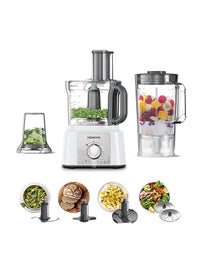
Kenwood Food Processor FDP65.400WH (3L bowl, 1000W, 7 tools)
Kenwood
Approx. price at publication: 5,119 EGP (as of September 2026)
Advantages
- Roomy 3L bowl for a family, plus a separate 1.5L blender jug and a mill
- 7 slicing, grating, and kneading tools cover most kitchen jobs
- 1000W handles dough and heavier tasks
- Kenwood is widely available in Egypt
Limitations and cautions
- A bit pricier than small budget processors
- The large tool set takes up storage space
Price checked: 2026-09-06
Want the short version? The 3 or 4 things that matter most when buying a food processor in Egypt are: bowl capacity (enough for your family size so you’re not working in batches), motor power and how well it handles heavy jobs like dough, the attachments you’ll actually use (slicing and grating discs and a dough blade, not just a big number of tools), and finally ease of cleaning plus a local warranty and agent. Focus on the jobs you’ll really do, not the feature list, and remember all prices are approximate and change, so confirm before you buy.
How we choose
We work on a research-and-synthesis model, with no hands-on testing. We compare official manufacturer specs, read the consensus of buyer reviews on local stores, and check current prices in Egypt at publication. This guide has a slightly different goal: rather than rank a list, we explain the criteria you can use to judge any food processor yourself and pick the best one for your kitchen. Our full method is on the how we choose page.
Capacity and bowl size
Bowl capacity is the first thing to look at, because it decides how much you can process at once. For a small family (2 to 3), a 1.5 to 2 liter bowl is enough. For a family of 3 to 5, go for 2 to 3 liters. And if you cook in batches or host, 3 liters or more is your comfort zone. Note that some models come with a large main bowl plus a smaller separate blending jug, which is handy because you use the right size for each job.
The common mistake: people pick a small bowl to save money, then discover they’re working in two or three batches per recipe, which wastes time and adds washing up. Also, the number on the box is sometimes the maximum capacity, while the practical liquid capacity is lower, so plan around realistic use.
Power and the motor
Power is measured in watts (W) and gives you a sense of the motor’s capability, but not on its own. What matters more is motor design and its ability to hold torque under heavy load, especially with dough and hard vegetables like carrots and potatoes. For everyday use (slicing, chopping, grating), a motor between 600W and 800W is plenty. If you knead bread or pastry regularly, step up to 1000W or more with a sturdy body and a stable base.
The common mistake: assuming a higher wattage number automatically means higher performance. It doesn’t: a well-designed motor with sharp blades and discs can outperform one with higher watts but weaker build. Look at the kinds of jobs the brand rates the machine for, not just the number.
Attachments and trade-offs
A food processor stands apart from a blender thanks to its attachments: a slicing disc, coarse and fine grating discs, a chopping blade (S-blade), a dough blade, and sometimes a citrus juicer or a spice mill. But more attachments aren’t always better: tools you won’t use take up storage space and add to the price. Make a list of the jobs you actually do in your kitchen, then find the model that covers them without the extras.
The core trade-off here: a model with many tools and high flexibility tends to be bigger, pricier, and needs organizing in the cupboard, while a simple model with fewer tools is cheaper and easier to store but limited. Choose based on how varied your cooking is, not on what you “might” need someday.
Ease of cleaning
Cleaning is the number-one reason food processors end up sitting in the cupboard unused. Look at how many parts come off and get washed after each use, and whether they’re dishwasher safe. Models with a simple design and fewer parts are far easier to wash daily. A smooth surface and a wide-mouth bowl also make rinsing easier.
The common mistake: focusing on performance at purchase and ignoring cleaning, then the machine becomes a chore every time. If your time is limited, lean toward the easiest-to-clean model even if it has a few fewer attachments, because that’s the one you’ll actually use.
Warranty and local agent
In Egypt, the availability of a local agent, warranty, and spare parts makes a big difference long term, especially in a device with a motor and plastic parts that may need replacing. We publish nothing about any brand’s service network in Egypt, because we have not verified one ourselves. Ask the seller which agent and warranty cover the exact model. Ask about the warranty length, whether it covers the motor, and where the nearest service center is.
The common mistake: buying a cheap imported model with no local agent, then failing to find a simple spare part (like a bowl or blade) when it breaks, so the whole machine goes to waste. A warranty isn’t a luxury, it’s insurance on your investment.
Price vs value
Price matters, but real value is the relationship between what you pay and what you get: power suited to your jobs, attachments you’ll actually use, sturdy build, and a local warranty. The cheapest model isn’t always the best deal if it lasts a year and dies, and the priciest isn’t always necessary if half its features go untouched. Set a realistic budget, then pick the best balance within it.
The common mistake: comparing on price alone. Compare on total value: factor in the expected lifespan, warranty availability, and the jobs it’ll save you, then decide.
Read any food processor in a minute
A quick checklist to judge any model in front of you, step by step:
- Capacity: Does the bowl suit your family size (2 to 3 liters for most homes) without working in batches?
- Power: Is the motor right for your jobs? 600 to 800W for everyday use, 1000W or more for heavy dough.
- Attachments: Are the included tools the ones you’ll actually use, not just a high count?
- Cleaning: How many parts get washed after each use? Are they dishwasher safe?
- Warranty: Is there a local agent, warranty, and available spare parts in Egypt?
- Value: Is the price balanced against the build and the features you’ll truly use?
If the model clears these points, it’s a solid choice for your kitchen.
Our quick pick
If you don’t want to compare and just want a ready option that fits most Egyptian kitchens, the Kenwood FDP65.400WH is a practical pick: a roomy 3L bowl, a separate 1.5L blender jug and a mill, 7 slicing, grating, and kneading tools, and 1000W that handles heavier jobs, with the brand and an agent widely available in Egypt. Its approximate price is ≈ 5,119 EGP at the time of writing, and it of course changes.
See the Kenwood FDP65.400 price on Amazon.eg ↗
Bottom line
Choosing the right food processor isn’t a complicated equation: set the capacity your family needs, make sure the power suits your jobs (not just a higher wattage number), pick the attachments you’ll actually use, lean toward the easiest to clean, confirm the warranty and local agent, then compare on value rather than price alone. To see our full picks, check the best food processor in Egypt. For price ranges by tier, see food processor prices in Egypt. And if you’re still not sure what a food processor even does, read what a food processor does.
This analysis is based on published information from Amazon.eg.
Frequently asked questions
What's the difference between a food processor and a blender?
A blender handles liquids, juices, and smoothies with one blade in a tall jug. A food processor is broader: it slices, grates, chops, kneads, and mixes vegetables, meat, and dough using discs and tools in a wide bowl. If your main job is food prep rather than drinks, a food processor is the better fit.
What bowl capacity suits an average family?
For a family of 3 to 5, a bowl between 2 and 3 liters covers most daily jobs without hogging counter space. If you cook in large batches or host often, go for 3 liters or more. A small bowl is cheaper but you'll end up working in batches.
Does a higher wattage number mean better performance?
Not always. Watts give you a sense of motor power, but motor design, blade and disc quality, and how well the machine handles heavy dough matter more. A well-built 800W can outperform a 1000W with weak blades, so look at the actual jobs you'll do, not just the number.
Is there a local warranty and agent for food processors in Egypt?
We publish nothing about any brand's agent or service network in Egypt, because we have not verified one ourselves. What the listings state is the warranty type, which is what affects your options if a part fails. Always confirm the warranty details and nearest service center with the seller before buying, since details change.