
 UAE
UAE  Saudi Arabia
  USA
USA Portable cooling in Egypt: ACs and air coolers
True portable options are scarce in the Egyptian Amazon market; the assortment is mostly one portable AC, evaporative air coolers, and split ACs. Let us be honest: an evaporative cooler is not an AC, and how well it works depends on the humidity. We spell out the difference alongside the specs and prices.
Our current picks run from 4,500 EGP to 20,025 EGP.
Price bands in the price guide
See the full price guideReady to buy?Top picks
See the full comparison-
 Ocean 12,000 BTU Portable Air Conditioner Our pick: true portable AC ≈ 19,990 EGP Check price on Amazon.eg
 -
 Fresh FA-M60W Smart Air Cooler (72L) Evaporative alternative, not an AC ≈ 4,500 EGP Check price on Amazon.eg
 -
 Tornado 1.5HP Super-Jet Split Air Conditioner Best cooling if you can install a split unit ≈ 20,025 EGP Check price on Amazon.eg
Approximate prices at publication · as of August 2026.
Buying guides
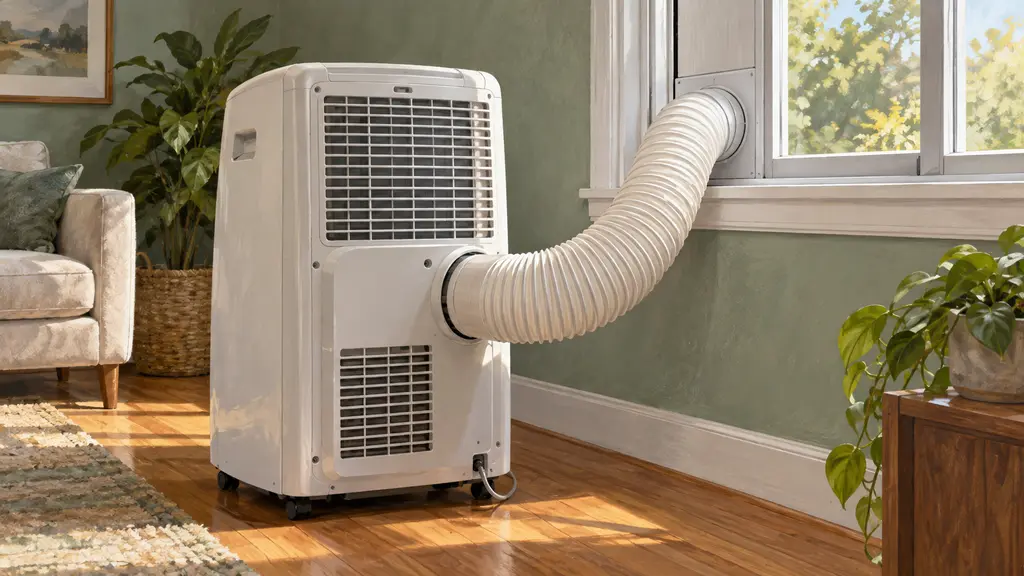 Best of The Best Portable AC in Egypt (2026)
 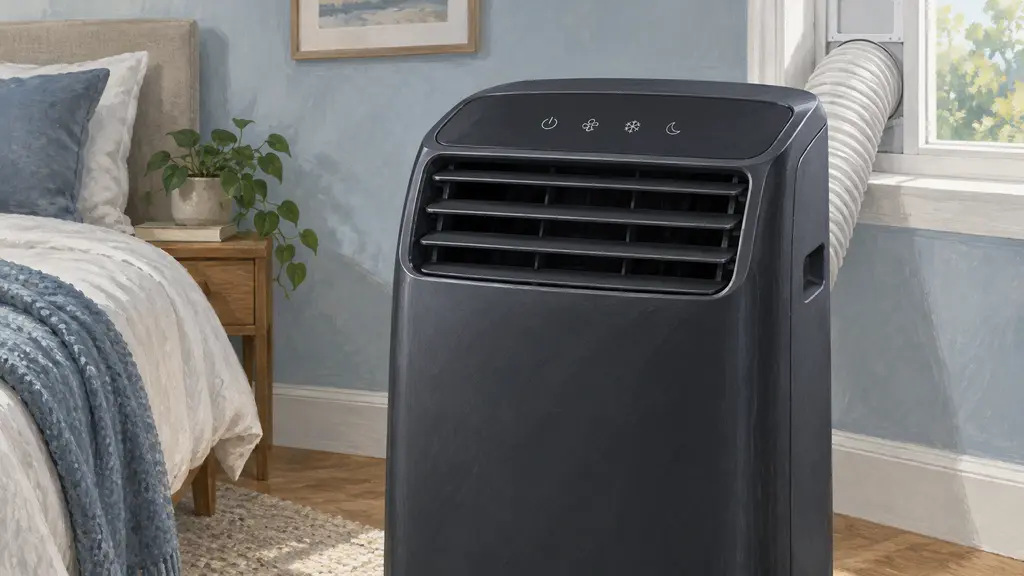 How to choose How to Choose a Portable AC in Egypt (2026)
 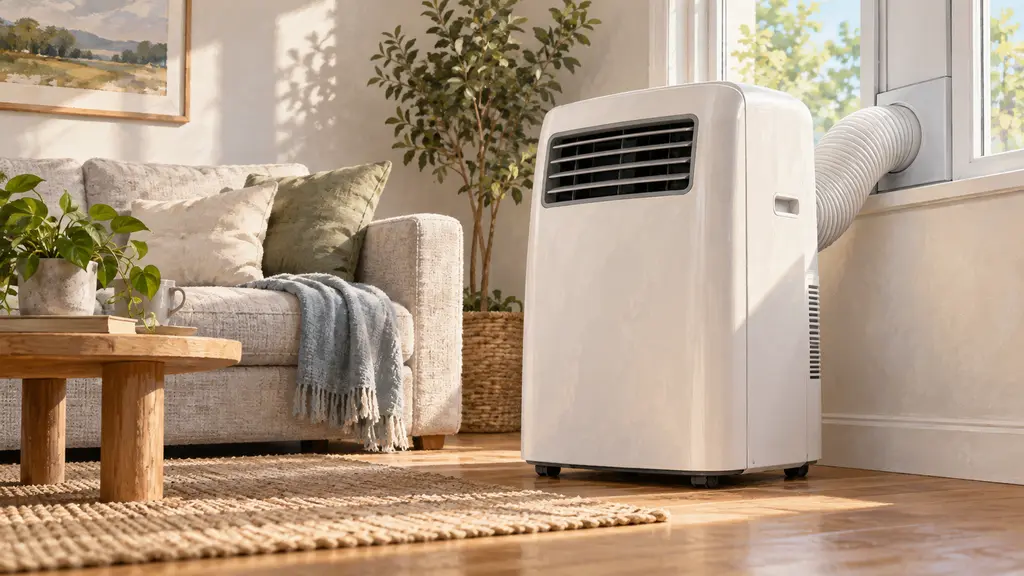 Prices Portable AC Prices in Egypt (2026): By Type and Tier
 Complete reading library
Buying guides and picks2
- Best Small Portable AC for a Bedroom or Studio
For a small bedroom or studio, a true portable AC at 12,000 BTU is not overkill, and it's our only in-stock pick on Amazon.eg. Here's why, plus a warning about desk cooler fans.
- How Many BTU Does a Portable AC Need for Your Room?
A simple guide to sizing the cooling power your portable AC needs by room area, why a portable unit needs more BTU than a split AC for the same room, plus a rough sizing table.
Detailed comparisons3
- Portable AC vs Desert Cooler: The Real Difference
Portable AC vs desert cooler is not a power difference, it's a completely different technology. Here's how to spot which one an ad is really selling, and which fits your climate.
- Portable AC vs Evaporative Cooler: The Difference and Which to Pick
Compare compressor portable ACs that cool and dehumidify with evaporative coolers that add moisture. Choose for your local climate and budget in Egypt.
- Does a Portable AC Cool as Well as a Split AC?
A portable AC usually cools less than a split AC of similar price, because the compressor sits in the room with you. When a portable still makes sense, and when to pick a split.
Usage and guides1
- Portable AC Without Emptying the Water Tank Constantly
Most portable ACs collect condensate in a tank you empty, but many have a continuous drain port that removes the chore. How to check if yours supports it and hook it up.
Troubleshooting1
- Portable AC Exhaust Hose Too Short or Cracked? Here's the Fix
A short or cracked portable AC exhaust hose leaking warm air back into the room? Here's how to diagnose it, the real repair steps, and when an extension kit beats a new unit.
Understanding specs2
- Is There a Portable AC That Heats and Cools in Winter?
Hot-and-cold portable ACs exist, but most heat with a simple resistance element rather than a true reverse-cycle heat pump. Here's the difference, and why our pick is cooling-only.
- Is There a Portable AC Without an Exhaust Hose?
No true portable AC works without an exhaust hose; the heat has to vent somewhere. Hose-free products are usually evaporative coolers, not ACs. How to fit the hose in a rental.
This guide contains affiliate links: we may earn a commission when you buy through them, at no extra cost to you. Our picks are based on research, not payment. How we choose · Full disclosure.