
 UAE
UAE  Saudi Arabia
  USA
USA Air Fryer Not Working? What to Check Before Replacing It
We may earn a commission from purchases through our links, at no extra cost to you. How we choose · Disclosure.
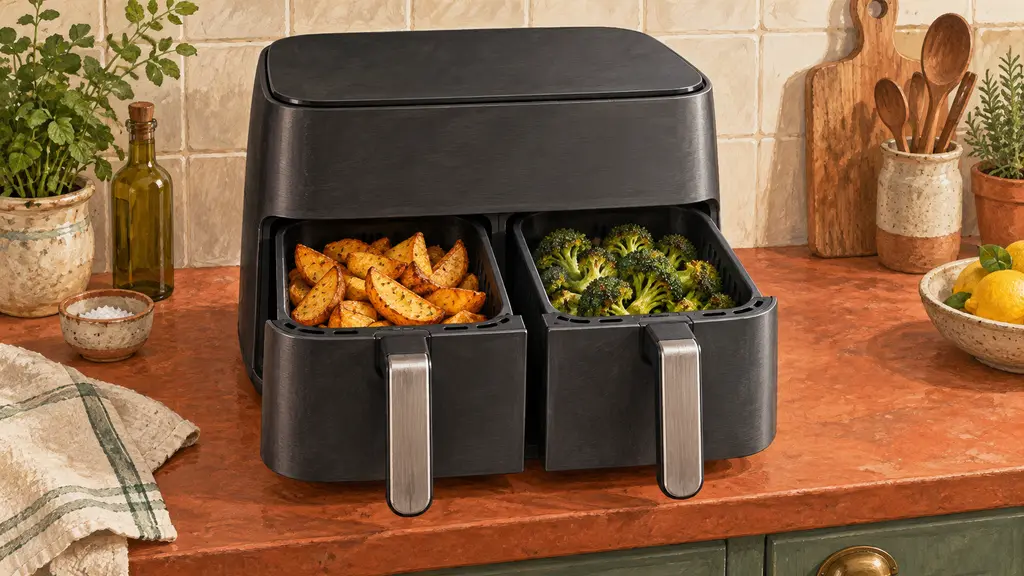
If your air fryer suddenly stops working, check three simple things before deciding it’s broken: the power source (outlet and breaker), the cord for damage, and whether the basket is fully inserted and latched, since most models have a safety switch that requires exactly that. If all three check out and the unit still won’t turn on or heat, the fault is likely internal and needs a technician.
The quick answer
Before deciding your air fryer is broken, check the outlet and circuit breaker, the condition of the cord, and whether the basket is fully latched (the safety switch). If the unit powers on but doesn’t heat, the cause is usually a burned-out heating element or a tripped thermal fuse, which needs a technician rather than a home fix. Any burning smell, heavy smoke, or spark means unplug immediately and don’t attempt a repair yourself.
Key takeaways
- Most air fryers have a safety switch in the basket that only allows heating when the basket is fully inserted and latched, so an improperly seated basket is the most common false alarm.
- A circuit breaker trips under an excessive load on the circuit, especially if other appliances are running on the same line (circuit breaker background from Britannica).
- A burned-out heating element or a tripped thermal fuse is a common cause when the unit powers on (the light is on) but produces no heat.
- A burning or melting-plastic smell, or heavy smoke, is a warning sign worth an immediate unplug, not a repair attempt.
- Repair is worth trying if the unit is under warranty or the issue is minor, while replacing it is the better deal if the cost gets close to half the price of a new unit.
The first 3 things to check before anything else
Before assuming your air fryer is completely dead, work through these in order:
- The power source: try the same outlet with another working device, like a phone charger or a lamp, to confirm the outlet itself isn’t the problem. Check the breaker panel and make sure the circuit hasn’t tripped.
- The cord and plug: visually inspect them for cuts or scorch marks, and make sure the plug sits firmly in the outlet without wobbling.
- The basket safety switch: most air fryers are designed to run only when the basket is fully inserted and properly latched, which is a safety feature, not a defect. Pull the basket out and reseat it with a firm, deliberate push, confirming it clicks into place before trying to run the unit again.
The large majority of “my air fryer isn’t working” cases trace back to one of these three, not an actual internal fault.
If it powers on but doesn’t heat
If the power light or digital display is on, power is reaching the unit, but the air fryer produces no heat or the food doesn’t cook. In this case, the most likely cause is that the heating element itself has burned out, or an internal thermal fuse has tripped as a safety measure to prevent overheating. These usually aren’t home-fixable issues, since they require opening the unit and working around an electrical circuit, and the best path is an authorized brand service center or a technician who specializes in small appliances.
Symptom, likely cause, and what to do
| Symptom | Likely cause | What to do |
|---|---|---|
| No response at all, no light | Bad outlet, tripped breaker, or damaged cord | Try another outlet and check the breaker and cord |
| Light is on but it doesn’t heat | Burned-out heating element or thermal fuse | Take it to an authorized service center |
| Powers on then shuts off within seconds | Basket safety switch not fully latched | Pull the basket out and reseat it with a firm push |
| Display shows a persistent error code | Internal fault per the model’s manual | Check the manual or the brand’s support line |
| Burning smell or heavy smoke | Immediate electrical hazard | Unplug immediately, don’t attempt a DIY fix |
Warning signs: unplug immediately, don’t attempt a DIY fix
Some signs mean the priority isn’t diagnosing the fault, it’s your safety:
- A clear burning smell or a melting-plastic smell.
- Heavy black or gray smoke, not just light steam.
- An odd crackling sound or a spark from the unit or the outlet.
- A cord with exposed metal or a visible cut.
If you notice any of these, unplug the air fryer right away and step back from it, and don’t attempt to open it or fix it yourself. The electrical side needs a qualified technician, and the risk isn’t worth taking.
Repair or replace? A practical rule
The decision usually comes down to three factors: whether the unit is still under warranty, the cost of repair versus a new unit, and its age. If the expected repair cost is more than half the price of a new air fryer, or the unit is out of warranty and has already shown more than one fault, replacing it is usually the better deal over the medium term, especially since a new unit comes with a full warranty from day one. If it’s still under warranty or the fault is minor, like a safety switch needing a reset, try the repair first.
If you do decide to replace it, look for a brand with wide reach, agents, and locally available spare parts, which makes any future service far easier than repeating the same situation.
An air fryer with local support behind it
If you’re replacing yours, the Philips Essential XL HD9270 (6.2L, 2000W) is a practical example: its generous capacity means you likely won’t need another upgrade soon. It tops our guide to the best air fryer in Egypt. You’ll find its current price and the Noon link in the card below.
Bottom line
Before deciding your air fryer is broken, check the outlet and breaker, the condition of the cord, and the basket’s safety switch, since most “not working” cases trace back to one of these. If it powers on but doesn’t heat, the fault is usually the heating element or a thermal fuse, and that needs a technician. Any burning smell, heavy smoke, or spark means unplug immediately and don’t attempt a repair yourself. Decide between repair and replacement by weighing the cost against a new unit’s price and your warranty status. If your air fryer was smoking before it failed, see why does my air fryer smoke, and if you want to keep a new one running longer, read how long does an air fryer last. If you’re shopping for a replacement, browse our guide on how to choose an air fryer or our air fryers section.
Sources
- University of Nebraska-Lincoln Extension, “How air fryers work”,” the components of an air fryer and how the heating element and fan work: https://food.unl.edu/free-resources/newsletters/food-safety-tips-electric-air-fryers/
- Britannica, “Circuit breaker”,” background on circuit breakers and why they trip under excess load: https://www.britannica.com/technology/circuit-breaker
This analysis is based on published information from University of Nebraska-Lincoln Extension (How air fryers work), Britannica (Circuit breaker).
Frequently asked questions
What's the first thing to check if my air fryer won't turn on?
Check the power source first: try the same outlet with another working device, and check whether the circuit breaker has tripped. Then inspect the cord and plug for visible damage, and make sure the basket is fully inserted and latched, since most air fryers have a safety switch that only allows heating when the basket is properly closed.
My air fryer powers on but doesn't heat, what's the cause?
Most often the heating element itself has burned out, or an internal thermal fuse has tripped as a safety measure. This usually isn't a DIY home fix and needs a qualified technician or an authorized brand service center.
Should I repair it or replace it?
A practical rule: if the expected repair cost is more than half the price of a new unit, or the unit is out of warranty and has already shown more than one fault, replacing it is usually the better deal over the medium term. If it's still under warranty or the issue is something simple like a safety switch needing a reset, try the repair first.
Are there warning signs that mean I should stop using it immediately?
Yes: a burning or melting-plastic smell, heavy smoke, a spark, or exposed wiring. Any of these means unplug the unit right away and don't attempt a DIY fix, especially on the electrical side.