

Coffee grinders in Egypt: electric and manual

A quick blade grinder or a burr grinder with finer control? We compare type, grind settings, capacity, cleaning access, and local prices so you can choose the right grinder for your coffee and budget.

Our current picks run from 1,683 EGP to 2,999 EGP.

Price bands in the price guide

See the full price guide

Ready to buy?Top picks

See the full comparison
  1. De'longhi kg210 electric coffee grinder, stainless steel, black De'longhi kg210 electric coffee grinder, stainless steel, black Electric step-up ≈ 2,999 EGP Check price on Amazon.eg
  2. Moulinex AR110830 Universal Coffee Spice Nut Grinder Black for All Types of Cereals 180W Moulinex AR110830 Universal Coffee Spice Nut Grinder Black for All Types of Cereals 180W Best value ≈ 1,683 EGP Check price on Amazon.eg

Approximate prices at publication · as of August 2026.

Not sure yet? Try our tools: Set your budget and get a lineup

Buying guides
Complete reading library

Detailed comparisons1

Compare the main types

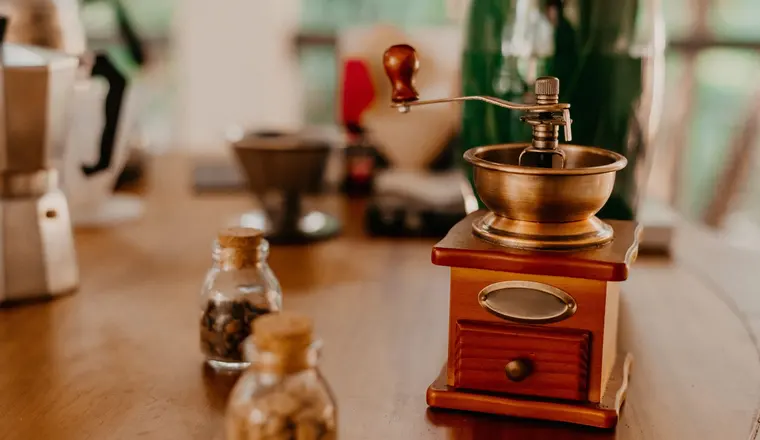
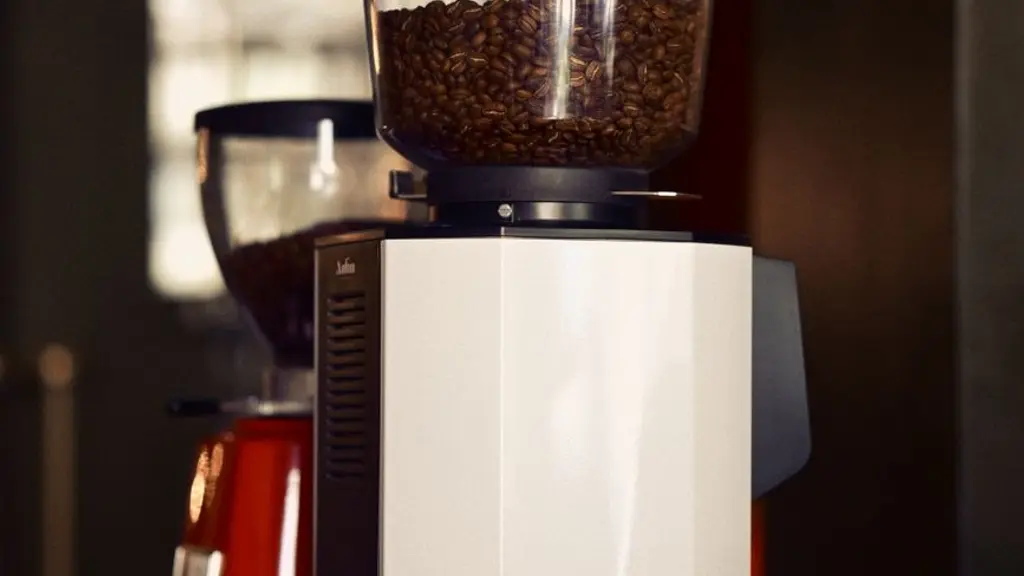
Start from the cup you actually brew every day, not from the highest power rating or the biggest hopper. A blade grinder chops the beans with a fast-spinning blade, and the grind gets finer the longer you run it, but beans close to the blade come out finer than beans further away, so the particles are not all the same size. That is a simple, quick, cheaper answer for Turkish coffee, which needs a grind close to powder, as long as you work in small batches with pulses and check the fineness by eye instead of relying on a fixed number of seconds for every bean. A burr grinder passes the beans between two grinding surfaces with an adjustable gap, so returning to the same setting is far easier, and that is what you are paying for if you brew espresso (which reacts to a very small grind change: too coarse and the water runs through fast, too fine and the flow slows down) or filter and French press (which need coarser settings without fine powder mixed among the larger particles adding bitterness and sediment). Within burr grinders there is a second split: manual is cheaper mechanically and gives good control but takes time and effort with a small capacity (around 24g suits one or two cups), while electric is faster and easier for a repeated routine and larger volumes with a hopper that cuts refills, though it is bulkier on the counter. And the word "burr" alone is no guarantee: check whether the setting range actually reaches the grind your brew method needs, and whether the scale is clear enough to return to the same point.

Common buying mistakes

  • Choosing the type on price before deciding the brew method, when Turkish, espresso, filter, and French press call for completely different grind sizes, and the method is what settles blade versus burr.
  • Settling for the number of settings printed on the box without looking at the range itself: whether the scale is clear enough to return to the same point, and whether the adjustment is external or needs the bean container removed. If the listing states neither the number of steps nor the grinding mechanism, treat that as missing information rather than an assumption from the brand name.
  • Ignoring cleaning and spare parts: coffee residue and oils build up around the blades or burrs, the burr itself wears with long use, and you should not assume a replacement is available simply because the brand is well known.

Frequently asked questions

Does a blade grinder work for Turkish coffee?

Yes, you can reach a fine grind suitable for Turkish coffee using small batches, longer run time, and shaking the container between pulses. The trade-off is that particle size is not as consistent as a burr grinder, so check the fineness on each batch, and if you change the bean or the quantity do not assume the same number of seconds gives the same result.

Why does espresso need a burr grinder?

Espresso reacts to a small change in grind size: too coarse and the water runs through fast, too fine and the flow slows down. A burr gives clearer adjustment and better repeatability than blades, so you can dial in the flow instead of relying on an approximate run time. Confirm that the grinder's range is aimed at espresso rather than settling for the phrase multi-purpose.

Manual or electric?

A manual burr grinder can give good control at a lower cost, but it is slower, lower in capacity, and takes effort, with around 24g suiting only one or two cups. Electric is easier for larger volumes and a repeated routine, and a large hopper cuts refills but takes counter space. The internal type (blade or burr) matters more than simply having a motor.

This guide contains affiliate links: we may earn a commission when you buy through them, at no extra cost to you. Our picks are based on research, not payment. How we choose · Full disclosure.