
 UAE
UAE  Saudi Arabia
  USA
USA How to Choose a Blender for Smoothies and Juices
We may earn a commission from purchases through our links, at no extra cost to you. How we choose · Disclosure.
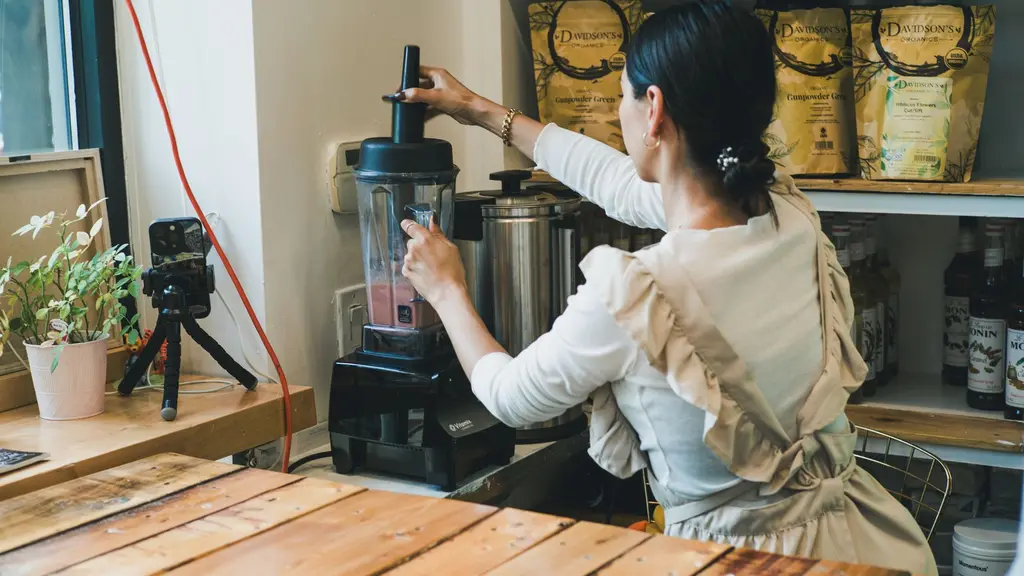
Choosing a blender for smoothies and juices looks easy until you’re standing in front of the shelf with ten models, each one printing a bigger watt number than the last. The real question isn’t “which is the most powerful?” It’s “which one makes a smooth smoothie with no chunks, and crushes ice and frozen fruit without straining?” Let’s walk through it step by step and reach a clear decision.
The quick answer
For smoothies and juices, the right power is between 500 and 700 watts for most homes, but more important than the number is the blade design and a real ice-crush function. If you grind frozen fruit and ice regularly, aim for 700 watts or more. Choose a single-serve cup if your smoothie is personal, or a 1.5 to 2 liter jug if you make family-size batches.
Key takeaways
- A blender is built mainly for liquids: juices, smoothies, soups, and sauces, working with a rotating blade that creates a vortex pulling ingredients down (blender definition from Britannica).
- Power is a rough guide, not the whole story: blade design, jug shape, and motor speed matter a lot, and a well-designed 500W blender can outperform a 700W one with weak blades.
- Crushing ice and frozen fruit needs a model built for it: look for an Ice Crush function or a Pulse button, not just a big watt number.
- Jug material matters over the long run: plastic is lighter and cheaper but scratches, while glass is more durable and stays clear.
- A blender is not a replacement for an immersion blender, which works directly inside the pot for soups and sauces (immersion blender definition from Britannica).
Power vs blade design: which matters more?
The direct answer: both matter, but blade design weighs more than the watt number alone. A powerful motor gives the blade speed, but if the blades are few or poorly angled, the smoothie comes out with chunks. A good blade assembly (4 or 6 blades at varied angles) creates a vortex that constantly pulls fruit from top to bottom, so it grinds evenly.
In practice: for smoothies with soft fruit and milk or juice, any blender from 500 watts up with a decent blade will do. If you add nuts, dates, or frozen fruit, step up to 700 watts or more so the motor doesn’t strain and the texture stays smooth. Don’t pick on watts alone, read the watt myth in blender vs mixer to see why the number on its own is misleading.
Crushing ice and frozen fruit: what to look for
If cold smoothies and frozen mango juice are your habit, this is the most important point. Not every blender crushes ice well, and the difference isn’t only in the watts:
| Feature | Why it matters for ice and frozen mixes |
|---|---|
| Stated Ice Crush function | The model is designed and calibrated for ice, not risking the motor |
| Pulse button | Breaks ice in short bursts without overheating the motor |
| Strong multi-blade assembly | Cuts ice into small, even pieces instead of spinning around it |
| 700 watts or more | Gives enough torque to finish the crush without stalling |
The practical tip: before you buy, confirm that “ice crushing” is stated explicitly in the specs, not just a big watt number. And if you blend a lot of frozen items, add some liquid (milk, juice, or water) so the blade has something to pull and form a vortex.
Single-serve cup or full jug?
This is the point that decides the shape of your daily use:
- The single-serve cup: you blend a smoothie in the same cup you’ll drink from, fit a lid, and go. Practical for one person, faster to clean, and lighter for small spaces. Its drawback is limited volume and no soups or large batches.
- The full jug (1.5 to 2 liters): makes family-size batches and blends juices, smoothies, soups, and sauces. Bigger, heavier, and needs more cleaning, but it’s versatile.
- Hybrid models: come with a large jug plus attachments (a grinder, a take-and-go smoothie bottle), combining the convenience of a single-serve cup with jug capacity.
If you’re still unsure which type fits your kitchen, the guide to choosing a blender walks you through it step by step.
Jug material: plastic or glass?
For everyday cold smoothies, a plastic jug is perfectly fine: light, cheap, and won’t shatter if dropped. Its downside is that it scratches over time and absorbs fruit colors (like carrot and berry) and odors. A glass jug is heavier and a bit pricier, but it stays clear, handles warm drinks better, and doesn’t absorb smells. If your use is varied and you want long-term durability, glass is the better value over the long run despite the higher price.
The practical pick for smoothies
If smooth smoothies and juices are your priority specifically, the Moulinex Super Smoothie Maker LM207128 is a sensible choice: 700 watts grinds fruit and nuts finer than lower-power models, a roomy 2L jug serves the family, and two attachments add flexibility. The expected trade-off is that the jug is plastic rather than glass and it costs a bit more than best-value options, but if smoothies are your daily routine it’s a fitting deal. It’s the same pick we chose for smoothies in our guide to the best blender in Egypt. You’ll find its current price and the Noon link in the card below.
Read any smoothie blender in a minute
- Define your main use first: a personal smoothie means a single-serve cup, family batches mean a 1.5 to 2 liter jug.
- If you’ll crush ice and frozen fruit, look for an Ice Crush function and a Pulse button, plus 700 watts or more.
- Look at the blade design (multiple blades at varied angles), not the watt number alone, and check blender vs mixer so you don’t confuse the appliances.
- Choose the jug material by your use: plastic for cold daily blends, glass for durability and variety.
- Browse our blenders section, and for the full details head back to the guide on choosing the right blender for your home.
Sources
- Britannica, “Blender”, definition of the electric blender and how it works with a rotating blade for liquids and smoothies: https://www.britannica.com/dictionary/blender
This analysis is based on published information from Britannica (Blender).
Frequently asked questions
How many watts are enough for a smoothie blender?
For everyday smoothies with soft fruit and milk, a blender between 500 and 700 watts is plenty. If you'll grind frozen fruit or crush ice regularly, aim for 700 watts or more with a stated ice-crush function, because the blade and design matter more than the number alone.
Should I choose a single-serve cup or a full jug?
If your smoothie is personal and you drink it on the go, a single-serve cup is practical: you blend and drink in the same cup. If you make family-size batches or soups and sauces too, a full jug (1.5 to 2 liters) suits better. Some models combine both with a jug plus attachments.
Can a blender crush ice and frozen fruit?
Most can, but not all do it equally well. Look for an Ice Crush function or a Pulse button and a strong, multi-blade assembly. Higher power helps, but the key is that the model is designed for ice, because ice strains the motor and weaker blades.
Glass or plastic jug for smoothies?
Plastic is lighter, cheaper, and won't shatter if dropped, but it scratches and absorbs fruit colors and odors over time. Glass is heavier and a bit pricier but stays clear and handles warm mixes better. For cold daily smoothies plastic is fine; for long, varied use glass is more durable.