
 UAE
UAE  Saudi Arabia
  USA
USA Best Gas Water Heater for Low Water Pressure (Egypt)
We may earn a commission from purchases through our links, at no extra cost to you. How we choose · Disclosure.
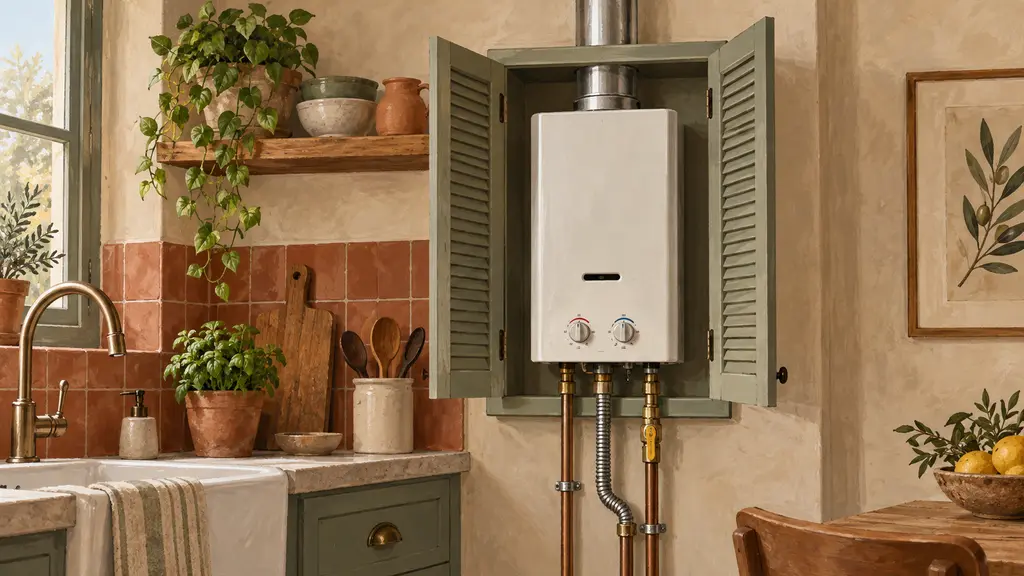
If your gas water heater refuses to ignite or only gives you lukewarm water, and your flat is on a high floor or the water pressure has always been weak, the cause is usually not a fault in the heater itself: tankless gas heaters work through a flow sensor that needs a minimum amount of water pressure to trigger the burner, and if pressure stays below that threshold, the heater simply won’t fire. The first fix is boosting pressure with a booster pump if the issue is your building’s plumbing, and if pressure can’t be fixed, an electric storage heater like the Fresh Relax 50L solves the problem at the root because it doesn’t rely on flow rate to work at all.
The quick answer
Tankless gas heaters need a minimum water flow rate for their sensor to trigger the burner, so weak pressure makes them cut out or never ignite at all. Try boosting pressure with a booster pump or cleaning the heater’s filter first, and if the problem persists and your building’s pressure is permanently weak, the most reliable fix is an electric storage heater, since it fills and heats without ever needing high flow.
Key takeaways
- A tankless gas heater relies on a flow sensor, either a diaphragm or a small turbine, that detects the tap has opened and signals the gas valve to fire the burner (background on tankless water heating from ENERGY STAR).
- If pressure stays under the threshold the sensor needs, the burner won’t ignite, or it fires briefly and cuts out, which is what gives you lukewarm or interrupted hot water.
- High floors and weak building plumbing are the most common causes, along with a clogged heater filter or old, narrowed pipes making things worse.
- An electric storage heater doesn’t need high flow to operate, because it fills at normal mains pressure and heats the water inside it with an electric element.
- A booster pump is a good partial fix if the issue is plumbing alone, but it’s extra equipment needing its own power and upkeep, not a permanent fix like switching heater type.
Why does a gas heater need water pressure in the first place?
A tankless gas heater (one with no tank) works on a simple principle: water passes through a small pipe inside it, and a flow sensor, either a mechanical diaphragm or a small spinning turbine, detects that water has started moving. Only then does the gas valve open and the burner ignite to heat the water as it flows through. The catch is that this sensor is designed to work only once flow passes a certain minimum, and if the water pressure feeding it is weak, flow never reaches that threshold, so the sensor never registers movement and the burner either never fires at all or ignites and cuts out again if pressure fluctuates.
That’s why you’ll sometimes see a gas heater work fine on one bathroom and cut out on another farther away or on a higher floor. That’s usually not a fault in the heater, it’s a sign that the water pressure reaching it isn’t enough.
Try these fixes first before replacing the heater
Not every case of low pressure means you have to remove or replace the heater. These steps are cheap and simple and can solve the problem without buying a new unit:
- Clean the heater’s filter and the nearby pipes: sediment and rust narrow the water path and reduce actual flow even if mains pressure is fine.
- Check for old, narrow pipes: corroded or constricted pipes reduce the pressure reaching the heater even if the building’s rooftop tank or pump is working properly.
- Compare timing: if pressure drops specifically during peak hours (morning or evening) when everyone in the building is using water at once, the issue is the building’s plumbing, not the heater.
- Install a booster pump dedicated to the heater if inspection confirms the pressure feeding it is genuinely under the required threshold, which raises pressure just in that line without touching the flat’s whole plumbing.
If you’ve tried these steps and your water pressure is permanently weak (not a clog or rust issue), there’s usually no lasting fix short of switching to a different heater type.
When should you give up on gas and switch to electric?
If the building itself has weak pressure (no adequate rooftop tank or booster pump, or you’re at the end of the distribution line), the problem isn’t the heater or the filter, it’s the amount of water actually reaching you. In that case, a booster pump can be a temporary fix, but the more reliable long-term solution is an electric storage heater, because it simply doesn’t need high flow to operate: it fills at normal mains pressure like any tap, then heats the water inside it with an electric element that’s completely independent of water pressure.
Comparison: who’s affected by weak pressure and who isn’t?
| Type | Needs high pressure? | How it behaves under weak pressure | Best for |
|---|---|---|---|
| Tankless gas heater | Yes, minimum flow required | Cuts out or never ignites at all | Buildings with strong, stable pressure |
| Tankless electric heater | Yes, needs flow to trigger its element | Roughly the same issue as gas | Buildings with strong pressure needing continuous hot water |
| Electric storage heater | No, just fills at normal pressure | Works normally even with weak pressure | Buildings with permanently weak pressure |
The simple rule: if the problem is the pressure itself rather than the heater, any tankless unit (gas or electric) will run into roughly the same issue, and the practical fix is a storage heater.
The fix that isn’t affected by water pressure at all
If you’ve tried boosting pressure and a booster pump and it’s still cutting out, the simplest path is an electric storage heater like the Fresh Relax 50L. It fills at normal mains pressure like any tap without needing high flow at all, then heats the water inside it with an electric element, so the install itself only needs power and water. We’re not recommending it here as the only alternative to gas, we’re recommending it because it’s the simplest practical fix when your water pressure is a permanent problem that won’t resolve easily, and it’s the same heater that tops our guide to the best electric water heater in Egypt. You’ll find its current price and the Amazon link in the card above.
Bottom line
A tankless gas heater can’t work without a minimum flow of water for its sensor to fire the burner, so weak pressure means it cuts out or gives you lukewarm water. Try cleaning the filter and nearby pipes first and check the timing of when it happens, and a booster pump can fix things if the issue is plumbing alone. If pressure is permanently weak with no easy fix, an electric storage heater solves the problem at the root because it doesn’t need high flow. If you’re still torn between fuel types, read gas vs electric water heater, and if your heater has stopped entirely regardless of pressure, see water heater not working: what to check first. To pick the right size and type from the start, read our how to choose a water heater guide, and see the best gas water heater in Egypt if you’re still set on gas, or browse our water heaters section for every option.
Sources
- ENERGY STAR, “Tankless water heaters”, background on tankless heaters and how the flow sensor that triggers the burner works: https://www.energystar.gov/products/whole_home_tankless_gas_water_heaters
- ENERGY STAR, “Residential water heater types”, general information on water heating types and the difference between storage and tankless units: https://www.energystar.gov/products/water_heaters/residential_water_heaters_key_product_criteria
This analysis is based on published information from ENERGY STAR (Tankless water heaters), ENERGY STAR (Residential water heater types).
Frequently asked questions
Why won't my gas water heater ignite when water pressure is low?
Tankless gas heaters have a flow sensor, either a mechanical diaphragm or a small turbine, whose job is to detect that water is moving through the unit so it can signal the gas valve to open and light the burner. If the flow rate stays under the threshold that sensor needs, it never registers movement, so the burner either never fires or lights briefly and cuts out again.
Does a booster pump actually fix this?
Usually yes, if the problem is the building's plumbing rather than the water source itself. A booster pump raises the pressure in the line feeding the heater past the minimum the sensor needs. But get a technician to confirm the issue is genuinely pressure and not a clogged filter or pipe first, so you don't install a pump to solve a completely different problem.
Does an electric storage water heater need water pressure to work?
No. A storage electric heater fills with water at normal mains pressure like any tap, then heats the water sitting inside it with an electric element, with no dependence on flow rate or high pressure to operate. That's why it's a reliable fix for buildings where water pressure is permanently weak.
Is a high floor always the reason for low pressure?
Not necessarily, but it's one of the most common causes because mains pressure tends to drop the higher you go, especially if the building has no rooftop tank or central booster pump. Other common culprits: partial blockages in old pipes, a clogged filter on the heater itself, or several units in the building drawing water at the same time.
What's cheaper, installing a booster pump or an electric storage heater?
In general, an electric storage heater is the simpler call because it solves the problem permanently without relying on an extra piece of equipment (the pump) that needs its own wiring and upkeep. A pump is more cost-effective if your gas heater already works fine otherwise and pressure is the only issue, but if you're buying a heater from scratch anyway, an electric one skips that extra step entirely.