
 UAE
UAE  Saudi Arabia
  USA
USA Water Heater Not Working? What to Check First
We may earn a commission from purchases through our links, at no extra cost to you. How we choose · Disclosure.
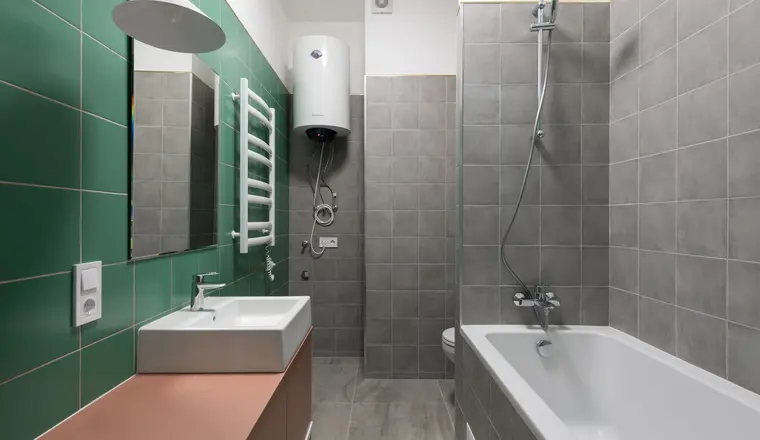
If your water heater has stopped producing hot water, before you call a technician or start thinking about replacing the whole unit, check two visible controls in order: the circuit breaker in the electrical panel, then the reset button (high-temperature cutoff) on the heater’s body. If the water stays cold despite the heater showing power, a failed heating element is a common cause for a technician to investigate rather than the entire unit needing replacement.
The quick answer
Check in this order: the circuit breaker first, then the reset button on the heater’s body. If the water stays cold despite the heater showing power, a technician should test the heating element. If the heater is under 7 to 8 years old and the fault is a single part, repair is cheaper and faster than replacing it. If it’s a gas heater, only visually check whether the pilot or flame is out and whether the supply valve is open, without relighting or adjusting anything.
Key takeaways
- The circuit breaker is the first visible thing to check, since it’s the quickest and easiest thing to rule out before anything else.
- The reset button is a safety part that shuts the heater off if temperature rises past a safe limit, so if it trips again every time you reset it, there’s a real fault, not just a tripped breaker.
- Lukewarm water despite the heater showing power can point to a burned-out heating element, which a technician should test (information on electric heating from US DOE).
- A gas heater has different visible checkpoints: whether the pilot or flame is visibly out and whether the supply valve is open, without relighting or adjusting anything (general information on water heating from ENERGY STAR).
- The heater’s age and how many faults show up at once are what determine repair versus replace, not just a gut feeling that the unit is old.
Electric heater not working: check in this order
Follow this order exactly, since it starts with the simplest, fastest cause:
- Check the heater’s circuit breaker in the electrical panel. If it’s tripped, flip it back on. If you reset it, run the heater, and it trips again within minutes, don’t keep resetting it, that’s a sign of an internal short a technician needs to check before power goes back on.
- Check the reset button (high-temperature cutoff), usually next to the thermostat on the heater’s body. Press it once. If the heater runs normally, you’re done. If it trips again after a short while, there’s a real fault, like a thermostat that isn’t shutting off correctly, not just a button that needed a press.
- Watch whether the heater shows power but the water stays lukewarm. If the indicator light is on but the water never heats up at all, or comes out very lukewarm no matter how long you wait, a failed heating element or thermostat is a common cause for a technician to investigate.
- If all of these check out fine and the problem persists, the issue likely needs a qualified technician to open the heater and test the internal wiring with a meter.
The water-heater element and sealed electrical parts are technician-only. Opening them risks electric shock and voids the warranty.
Gas heater not working: different checkpoints
If your heater runs on gas rather than electricity, limit your checks to what is visible:
- The flame itself: visually check whether the standing pilot or flame is out. Do not relight it or adjust the ignition.
- The gas supply valve: visually check whether it is open without touching or adjusting it.
Gas connections, valves, and burners are strictly technician-only. If you smell gas: do not switch anything on or off, do not light a flame, open the windows, close the gas supply if the valve is reachable, leave the area, and call your gas company’s emergency line.
Quick diagnosis table
| Symptom | Likely cause | Next step |
|---|---|---|
| Heater is completely dead, no light or indicator | Circuit breaker tripped | Reset the breaker and watch if it trips again |
| Breaker trips every time you reset it | Internal electrical short | A qualified electrician immediately |
| Reset button trips again every time | Faulty thermostat or overheat protection | Technician to check the internal wiring |
| Heater shows power but water is lukewarm or cold | Burned-out heating element | Technician: test and replace the element |
| Water heats but takes noticeably longer than usual | Sediment buildup on the element | See how to clean a water heater |
| Gas heater won’t ignite at all | Gas supply or thermocouple issue | Gas technician to check the flame and supply |
When to stop and call a technician
- There is still no hot water after checking the breaker and reset button.
- The breaker trips again.
- You smell gas.
- You see scorch marks on the heater, plug, or nearby wiring.
Repair or replace?
This decision comes down to two things: the heater’s age and how many faults are showing up at once.
- A heater under 7 to 8 years old with one clear fault (heating element, thermostat, reset button) can be cheaper and faster to repair, and it’s a part swap, not a whole new unit.
- A heater older than that, or with more than one fault, or a tank that’s already rusting or leaking, replacing it is the smarter call, since the cost of repeated repairs quickly approaches the price of a new heater, and another fault is likely to show up soon after.
If you decide to replace it, a reliable, low-maintenance heater like the Fresh Relax 50L saves you from similar problems long-term, and it’s the same heater that tops our guide to the best electric water heater in Egypt.
Bottom line
If your water heater has stopped heating, check the circuit breaker first, then the reset button. If the water stays cold despite the heater showing power, a technician should test the heating element. For a gas heater, only visually check whether the pilot or flame is out and whether the supply valve is open, without relighting or adjusting anything. If the heater is under 8 years old and the fault is a single part, repair is cheaper than replacing it, and if it’s older with more than one fault, replacement pays off long-term. If the heater developed a bad smell before it stopped working, read how to get rid of a bad water heater smell, and to prevent these failures in the first place, see how to clean a water heater and make it last longer. If you decide to replace the heater, read our how to choose a water heater guide and browse our water heaters section for every option.
Sources
- ENERGY STAR, “Residential water heater types”, general information on water heating, heater types, and their common failures: https://www.energystar.gov/products/water_heaters/residential_water_heaters_key_product_criteria
- US DOE, “Electric resistance water heating”, background on how an electric heating element works and why it fails: https://www.energy.gov/eere/femp/purchasing-energy-efficient-residential-electric-storage-water-heaters
This analysis is based on published information from ENERGY STAR (Residential water heater types), US DOE (Electric resistance water heating).
Frequently asked questions
What's the first thing to check when an electric heater stops working?
The heater's circuit breaker in the electrical panel. If it's tripped, flip it back on and see if the heater starts working. If the breaker trips again after a short while, that's a sign of an electrical problem inside the heater (like a failed heating element), not just a breaker that needs resetting.
What is the reset button and what does it do?
The reset button (or high-temperature cutoff) is a safety part that automatically shuts the heater off if the temperature inside the tank rises past a safe limit, to prevent any hazard. If it's tripped, press it once. If the heater starts up and the button trips again after a short time, that means there's a real problem, like a faulty thermostat, that a technician needs to check.
How do I know if the heating element burned out?
The clearest sign is the heater showing power (its indicator light is on) but the water never heats up at all or comes out very lukewarm no matter how long you wait. This usually means the heating element burned out or the thermostat isn't sending it power, and needs a technician to test the element with a meter and replace it if it's failed.
Should I repair the heater or replace it entirely?
If the heater is under 7 to 8 years old and the fault is a single part (heating element, thermostat, reset button), repair is usually cheaper and faster. If it's older than that, has more than one fault at once, or the tank itself is rusted, replacing it is the smarter call, since the cost of repeated repairs quickly approaches the price of a new heater.
My gas water heater isn't working, what's different about the checks?
A gas heater has different checkpoints: the burner flame (a pilot light if the model has one), the gas supply itself (a network issue or an empty cylinder), and the thermocouple, which confirms the flame is actually lit before allowing gas to keep flowing. If the flame is out and gas is connected, the issue is usually the thermocouple or ignition system and needs a gas technician.