
 UAE
UAE  Saudi Arabia
  USA
USA Do Air Purifiers Help With Dust? Here's What Actually Matters
We may earn a commission from purchases through our links, at no extra cost to you. How we choose · Disclosure.
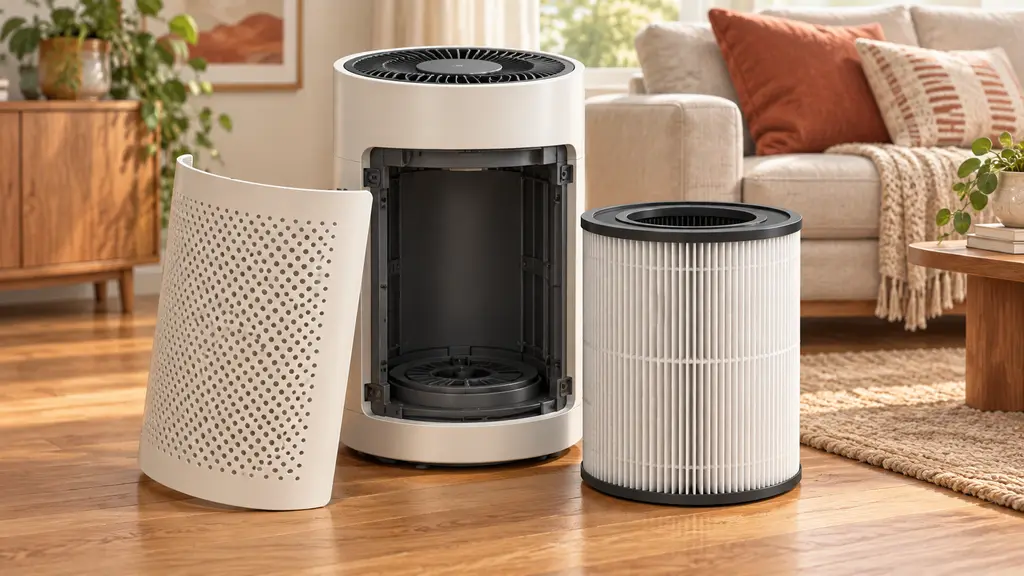
Standing in a dusty room with the AC running and the windows sealed shut, it’s a fair question: does an air purifier actually do anything about all this dust, or is it just an expensive fan with a filter sticker on it? The honest answer sits in the middle. Let’s break down what these units actually do, and don’t do, for dust.
The quick answer
A true HEPA air purifier does help with dust, specifically the fine, airborne dust that circulates through a closed room, which is a real and constant issue in Egypt’s climate. What it doesn’t do is stop dust from settling on surfaces, replace regular cleaning, or clear a room it’s too small for. The practical rule: run a properly sized HEPA unit continuously in the room you spend the most time in, and keep wiping surfaces and vacuuming as usual. The two work together, not as substitutes for each other.
The key points
- What it filters: airborne dust particles passing through the unit, not dust already resting on furniture or floors.
- Why HEPA matters here: fine dust and sand from local air conditions pass straight through a basic filter but get captured by true HEPA media.
- Closed rooms make it more relevant: AC season traps existing dust indoors with no fresh air exchange, so a purifier keeps recirculating and filtering that trapped air.
- Size has to match the room: a bedroom-size unit in a large living room simply can’t keep up with the dust load.
- It’s a reduction tool, not elimination: expect noticeably less dust buildup over time, not a dust-free room overnight.
- Cleaning still matters: surfaces and floors need regular wiping and vacuuming regardless of what’s running in the corner.
What air purifiers actually filter
An air purifier works by pulling room air through a filter and pushing clean air back out, continuously, as long as it’s running. A true HEPA filter is rated to capture very fine particles, including the kind of fine dust and sand that blow through Egyptian streets and find their way indoors through doors, cracks, and anything that isn’t perfectly sealed. That’s the category of dust an air purifier is genuinely good at handling: the airborne portion that you’d otherwise be breathing in and that keeps resettling on every surface in the room.
What it can’t do is pull dust off a shelf or out of a carpet. Dust that’s already landed is a cleaning job, not a filtration job. An air purifier’s real contribution is reducing how much new dust keeps circulating and resettling, which over days and weeks means less buildup between cleanings, not a substitute for the cleaning itself. Our full ranking of trusted units is in the best air purifier in Egypt.
Why closed AC-season rooms make this more relevant
Egypt’s AC season means windows stay shut for months at a stretch, and that has a direct effect on dust. Without fresh air exchange, whatever dust is already inside a room, from clothes, from foot traffic, from anything that came in before the windows closed, just keeps recirculating with no way out. That’s actually the ideal scenario for an air purifier: a closed system where the unit can continuously pull the same body of air through its filter and gradually reduce the particle load, instead of fighting a constant stream of new outdoor dust blowing in through open windows.
This is also why placement matters: run the purifier in the room you spend the most hours in and keep the doors closed while it works, rather than expecting one unit in a hallway to clean the whole flat.
Setting realistic expectations
A properly sized HEPA air purifier, run continuously in a closed room, will noticeably reduce the fine dust circulating in that space over time. It will not make a room dust-free, it will not replace wiping surfaces or vacuuming floors, and it will not do much good if it’s undersized for the room or only switched on occasionally. The honest expectation is a meaningful reduction in airborne dust and the fine particles that settle from it, paired with your normal cleaning routine, not a one-device fix for every kind of dust in the house.
A working example that fits this use case well: the LEVOIT Bedroom HEPA, sized for the bedroom or small closed room where dust and sealed AC air matter most, and carrying thousands of positive reviews on Amazon.eg, the biggest track record among our picks. We didn’t pick it for being the cheapest; we picked it because that trust base and room-appropriate size make it a safe, practical choice for exactly this problem, which is why it’s our top pick in the best air purifier guide. Its current price and Amazon.eg link are in the card below.
See the LEVOIT Bedroom HEPA price on Amazon.eg ↗
Read your situation in a minute
- If dust circulating in a closed, AC-sealed room is your main concern, a properly sized HEPA unit genuinely helps; see our full ranking in the best air purifier in Egypt.
- Match the unit’s CADR to your actual room size before judging its performance; the how to choose an air purifier guide covers this in detail.
- Keep your regular cleaning routine going; an air purifier reduces airborne dust, it doesn’t replace wiping and vacuuming.
- Check current price ranges at air purifier prices in Egypt before you commit.
- And to browse every option, see our whole air purifiers section.
This analysis is based on published information from Amazon.eg.
Frequently asked questions
Will an air purifier stop dust from settling on my furniture?
Not entirely. An air purifier filters airborne particles as they pass through it, which reduces how much dust is circulating in the air, but it can't reach dust that's already landed on surfaces or dust that settles faster than the unit can pull air through. Think of it as a reduction tool that works alongside cleaning, not a replacement for wiping surfaces and vacuuming.
Does a HEPA filter really make a difference for dust?
Yes, specifically for the fine dust that a basic filter lets through. HEPA-grade filtration is rated to capture very small particles, including the fine dust and sand that blow through Egyptian cities and homes, especially during dust storms and windy stretches. A basic pre-filter alone traps larger debris but lets the fine, health-relevant particles pass straight through.
Do I need an air purifier if I keep my windows closed for AC?
Closed windows actually make an air purifier more useful, not less. Sealing a room for AC traps whatever dust and particles are already indoors, and without fresh air exchange, that dust just keeps recirculating. A purifier running in a closed room continuously pulls that trapped air through its filter, which is exactly the scenario HEPA units are designed for.
How big a room can one air purifier handle for dust?
It depends on the unit's CADR (clean air delivery rate), not just its price. A compact HEPA unit is built for a bedroom or small closed room, while a higher-CADR model is needed for a large living room or open-plan space. Using an undersized unit in a big room means it never really keeps up with the dust load, so match the unit to the room before judging whether it's working.