
 UAE
UAE  Saudi Arabia
  USA
USA Air Purifier vs Humidifier: Which One Do You Need?
We may earn a commission from purchases through our links, at no extra cost to you. How we choose · Disclosure.
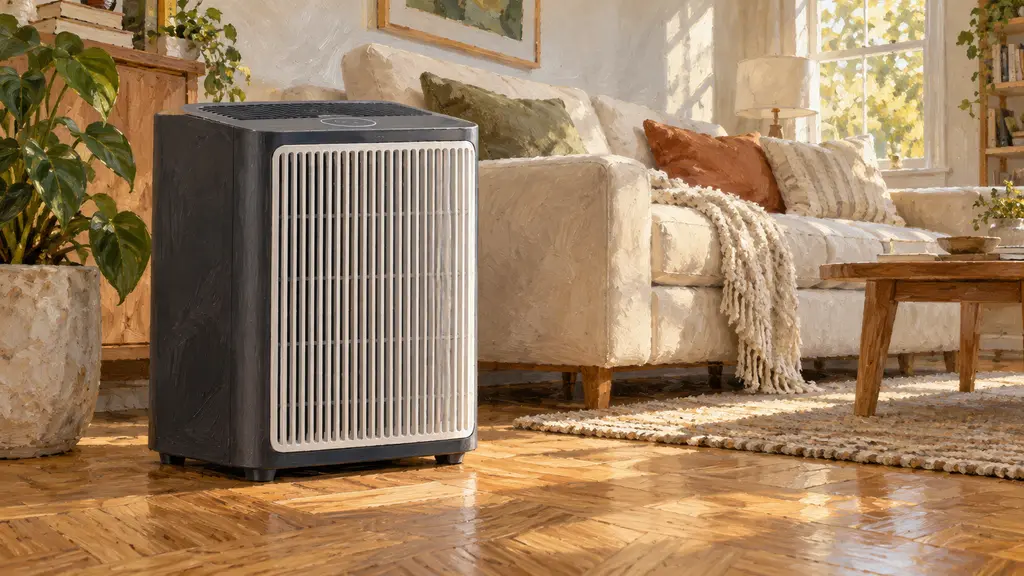
Here’s a question that comes up a lot when you’re solving an air quality problem at home: do you need an air purifier or a humidifier? The two names get mentioned in the same breath sometimes, but the appliances solve completely different problems. Buy the wrong one and you’ll spend money while your actual problem stays exactly the same. Let’s break it down.
The quick answer
An air purifier pulls room air through a filter (usually HEPA) that traps dust, pollen, and smoke, then returns cleaner air to the room. A humidifier adds moisture to dry air through steam or a fine mist. The practical rule: if your problem is sneezing, allergies, and dust, an air purifier is the fix. If your problem is cracked skin, a dry throat, and static shocks, a humidifier is the better call. And in a room running AC all day, you may need both.
Key takeaways
- An air purifier filters particles, it does not change the humidity level at all (air purifier definition from US EPA).
- A humidifier changes the humidity level of the air, it does not filter dust or pollen (humidifier definition from US EPA).
- The dust sign: frequent sneezing, an itchy nose, and a dust layer that returns fast on furniture.
- The dryness sign: cracked skin, a dry throat in the morning, and static shocks.
- AC can cause both at once: it dries the air and keeps windows shut, so dust builds up too.
- They pair well in the same room, there is no technical conflict between the two appliances.
Air purifier: what problem does it solve?
An air purifier pulls room air through a fan and passes it through a filter, usually true HEPA in serious units, that traps fine particles like dust, pollen, cigarette smoke, and some odors, then returns cleaner air to the room. It’s the direct fix if your problem is ongoing sneezing, an itchy nose or eyes, or dust that comes back fast even after you’ve just cleaned.
Its limits are clear: an air purifier doesn’t add or remove moisture from the air at all. If your room is dry, running one won’t change that, because it was never built to handle humidity. Our full ranking for the category is in the best air purifier in Egypt.
Humidifier: what problem does it solve?
A humidifier raises the relative humidity in a room through steam or a fine water mist released into the air. Dry air is very common in rooms with AC running all day, and it causes cracked skin, chapped lips, a dry throat and nose when you wake up, and static shocks when you touch anything metal. A humidifier raises the humidity level and eases these symptoms.
The trade-off: a humidifier does not filter dust, pollen, or smoke at all. If your problem is sneezing and allergies, running one won’t touch it, because dust keeps building up regardless.
Quick comparison: which one for what?
| Criterion | Air purifier | Humidifier |
|---|---|---|
| Function | Filters dust and smoke particles | Adds moisture to the air |
| How it works | Passes air through a HEPA filter | Releases steam or water mist |
| The sign that points to it | Sneezing, itchy nose, fast dust buildup | Cracked skin, dry throat, static shocks |
| Best for | Rooms with allergies or heavy dust | Rooms running AC all day, or a dry season |
| Can they be paired? | Yes, no conflict | Yes, no conflict |
The simple rule: figure out which sign you’re actually seeing at home before you buy. Sneezing and dust means an air purifier, dryness and static shocks means a humidifier. And if both problems show up together, the full fix is two separate appliances, not one unit doing everything.
So which one should you get?
Start with one simple question: what are you actually noticing in your room? Frequent sneezing, an itchy nose, a dust layer that comes back fast on furniture? That all points to a particle problem, and an air purifier is what will make a difference. On the other hand, if what you’re noticing is cracked skin, a dry throat in the morning, and static shocks, your problem is dryness rather than particles, and a humidifier is the fix.
If you’ve settled on needing an air purifier, a practical example from our shortlist: the LEVOIT Bedroom HEPA offers true HEPA filtration and a size that fits a bedroom or any small closed room, and it carries thousands of positive reviews on Amazon.eg, easily the biggest track record on this list. We didn’t pick it for being the cheapest, we picked it for the best balance of size, filtration, and buyer trust, which is why it tops our guide to the best air purifier in Egypt. You’ll find its current price in the card below.
Bottom line
Solving a dust and allergy problem is one thing, and solving a dryness problem is a completely different thing, and no single appliance does both. Figure out which sign you’re actually seeing at home, and remember a room running AC all day may need both appliances together. If your issue is specifically allergies, read the best air purifier for allergies, or if you’re unsure what coverage size you need, see what size air purifier do I need for a small apartment?. And if you want to confirm an air purifier actually helps with dust in the first place, read do air purifiers help with dust?. To browse all the options, see air purifiers in Egypt or check our how to choose an air purifier guide.
Sources
- US EPA, “Guide to air cleaners in the home”, definition of the air purifier and how filtration works: https://www.epa.gov/indoor-air-quality-iaq/guide-air-cleaners-home
- US EPA, “Use and care of home humidifiers”, definition of the humidifier and how it raises air humidity: https://www.epa.gov/indoor-air-quality-iaq/use-and-care-home-humidifiers
This analysis is based on published information from US EPA (Guide to air cleaners in the home), US EPA (Use and care of home humidifiers).
Frequently asked questions
Can I use an air purifier and a humidifier together in the same room?
Yes, and there is no conflict between them. An air purifier filters particles like dust and pollen, while a humidifier adds moisture to the air, and each does its own job independently. If your room has both problems (dry air and heavy dust), running both together covers more ground than relying on just one.
How do I know if my problem is dryness rather than dust?
Dryness signs are clear: cracked skin, a dry throat and nose when you wake up, static shocks when you touch metal, and chapped lips. Dust and allergy signs are different: frequent sneezing, an itchy nose or eyes, and a dust layer that returns quickly on furniture. If you're seeing dryness signs, a humidifier is the fix; if you're seeing dust signs, an air purifier is the priority.
How does running AC affect this decision?
Air conditioning removes moisture from the air as a byproduct of cooling, so it dries out a room even if you don't notice it directly. At the same time, keeping windows shut for the whole AC season lets indoor dust build up with no fresh air exchange. That means a room running AC all day can genuinely need both appliances, not just one.
Which one is better if I have a young child at home?
Humidifiers are commonly used in general parenting guidance to ease a dry nose and throat in children overnight, while an air purifier helps cut the dust and pollen that trigger allergies. The right choice depends on your child's actual problem (dryness or allergies), and for any specific health concern, a pediatrician's advice matters more than either appliance.