
 UAE
UAE  Saudi Arabia
  USA
USA How Long Does a Microwave Last? When to Replace It
We may earn a commission from purchases through our links, at no extra cost to you. How we choose · Disclosure.
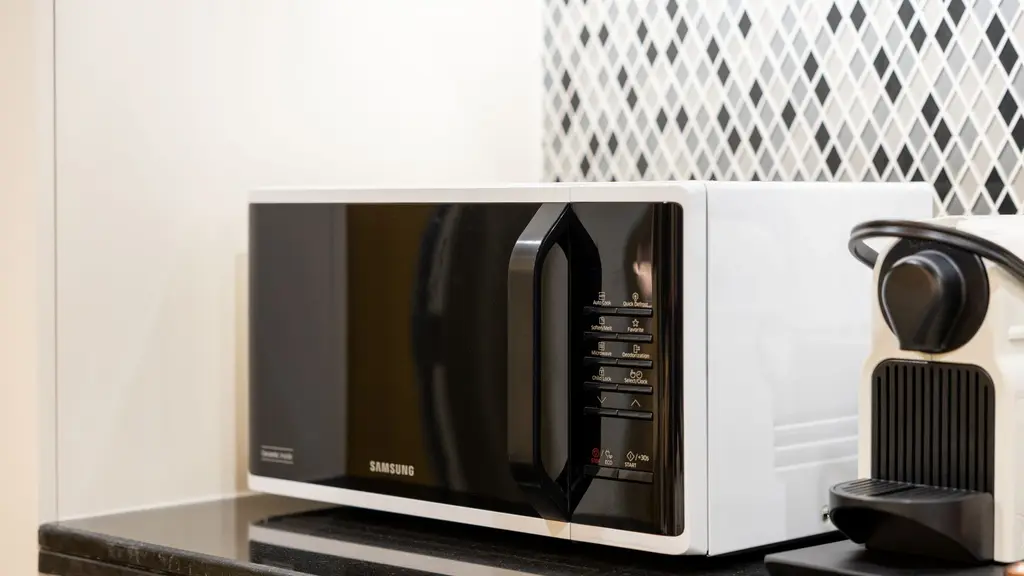
The average microwave lasts around 9 years according to US home warranty data, with a normal range of 5 to 10 years depending on model quality and how heavily it’s used. Higher-end brands can reach 10 to 15 years, while heavy daily use in a large family can shorten that to 4 to 5 years. If your microwave has started heating unevenly or making a strange noise, that’s a sign it’s nearing the end of its expected lifespan.
The quick answer
The average microwave lasts around 9 years, with a normal range of 5 to 10 years depending on model quality and how heavily it’s used. A large family using it intensively every day might replace it every 4 to 5 years, while higher-end models with moderate use can reach 10 years or more. Warning signs it’s failing: uneven heating, a strange noise, sparking, or a burning smell.
Key takeaways
- A microwave heats using a magnetron that generates electromagnetic waves inside a sealed metal cavity (microwave oven definition from US FDA).
- The average expected lifespan of a microwave is around 9 years, according to US home warranty data.
- Heavy daily use in a large family can shorten that to 4 to 5 years, while moderate use can extend it to 10 years or more.
- The rubber door seal and turntable motor are among the parts that wear fastest, from repeated opening, closing, and rotation.
- Running it empty with no food or water inside strains the magnetron directly and clearly shortens its lifespan.
The average expected lifespan
According to US home warranty data, the average microwave lasts around 9 years. The normal range runs from 5 to 10 years depending on model quality and how heavily it’s used: higher-end brands can reach 10 to 15 years with moderate use and good upkeep, while a large family running the microwave intensively every day (reheating food, warming milk, and defrosting several times a day) might find themselves replacing it every 4 to 5 years. The figure isn’t a fixed rule, but it’s a realistic benchmark for budgeting a replacement instead of being caught off guard.
What shortens or extends its lifespan?
- Frequency of use: a large family running the microwave dozens of times a day wears out its mechanical parts (the door, the turntable) faster than one person using it twice a day.
- Running it empty: running a microwave with no food or water inside strains the magnetron directly, since there’s nothing to absorb the waves, and it’s one of the fastest ways to shorten a unit’s life.
- Regular maintenance and cleaning: skipping cleaning lets residue build up on the walls and door seal, adding load on the unit over time. See the right method in how to clean a microwave and how often.
- The model’s own build quality: brands with widespread service and spare parts in Egypt tend to keep running longer than very budget models with lower-quality internal components.
Signs a microwave is about to fail
- Uneven heating or noticeably slower than usual, even though the time and power setting are the same as always.
- A grinding or squealing noise during operation, different from the normal fan and motor sound.
- Sparking inside the unit, usually caused by a worn waveguide cover or leftover metal trim, and worth checking immediately.
- A clear burning smell, distinct from the smell of the food itself.
- The unit keeps running after you open the door, which is a serious safety issue, stop using it immediately and don’t try to fix it yourself.
Repair or replace?
The practical rule: if the expected repair cost is more than roughly half the price of a new microwave in the same tier, or the unit is already near or past its average lifespan (9 years), replacing is usually more cost-effective over the medium term. But if the fault is minor and cheap (like an interior bulb or a control button) and the unit is still roughly within the first half of its expected lifespan, repairing is the sensible call.
If you decide to replace: a practical example
If your microwave is nearing the end of its expected lifespan and you’ve decided to replace it, keep in mind that a large number of ratings on a given model is a realistic signal of medium-term user satisfaction, not just satisfaction at the point of purchase. The LG MH8265DIS is our current top pick, at 42L with 1,200W, Smart Inverter tech, and a built-in grill, and it’s the most-reviewed model among our picks with over 715 ratings. It tops our guide to the best microwave in Egypt, which has picks across different budgets if this one isn’t the right fit for you. You’ll find its current price and the Amazon.eg link in the card below.
See the LG MH8265DIS price on Amazon.eg ↗
Bottom line
The average microwave lasts around 9 years, with a normal range of 5 to 10 years depending on quality and use, a large family wearing it out faster (4 to 5 years) and premium models lasting longer (10 to 15 years). If you notice uneven heating, a strange noise, or a smell, start thinking about replacement instead of waiting for a full failure, and stop using immediately any unit that keeps running after the door opens. Regular, simple cleaning extends the lifespan, and the details are in how to clean a microwave. For the right replacement criteria see our how to choose a microwave guide and best microwave in Egypt, compare current microwave prices before you decide, or browse the microwaves section for every option.
Sources
- US FDA, “Microwave ovens”, how a microwave heats using a magnetron inside a sealed metal cavity: https://www.fda.gov/radiation-emitting-products/resources-you-radiation-emitting-products/microwave-ovens
- American Home Shield, “Small appliance life expectancy”, average microwave lifespan around 9 years: https://www.ahs.com/home-matters/repair-maintenance/small-appliances-lifespan/
This analysis is based on published information from US FDA (Microwave ovens), American Home Shield (Small appliance life expectancy).
Frequently asked questions
How long does a microwave last on average?
The average lifespan is around 9 years according to US home warranty data, with a normal range of 5 to 10 years depending on model quality and how heavily it's used. Higher-end brands can reach 10 to 15 years, while heavy daily use in a large family can shorten that to 4 to 5 years.
What shortens a microwave's lifespan?
Heavy daily use, running it empty with no food or water inside (which strains the magnetron directly), skipping regular cleaning so residue builds up on the walls and door seal, and repeated power surges on the household electrical circuit.
What are the signs a microwave is about to fail?
Uneven or noticeably slower heating, a grinding or squealing noise, sparking inside the unit, a burning smell, or the unit continuing to run after you open the door. That last one is a safety issue, stop using it immediately and replace it.
Should I repair it or replace it?
If the expected repair cost is more than half the price of a new microwave in the same tier, or the unit is already near or past its average lifespan, replacing is usually more cost-effective. If the fault is minor and cheap and the unit is still well within its expected lifespan, repairing can be the sensible call.