
 UAE
UAE  Saudi Arabia
  USA
USA Microwave vs Air Fryer: Which Is Better?
We may earn a commission from purchases through our links, at no extra cost to you. How we choose · Disclosure.
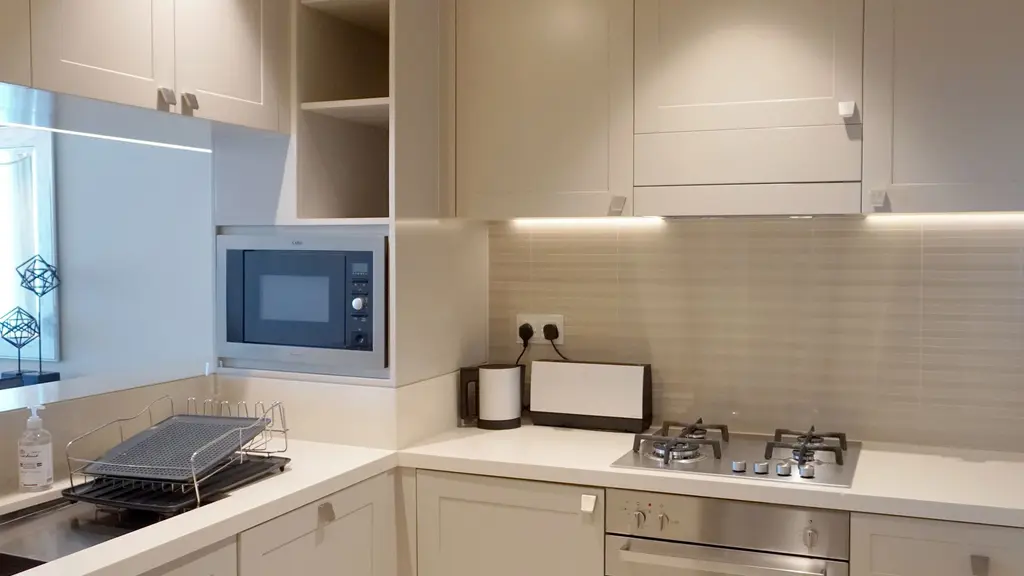
A microwave and an air fryer do entirely different jobs: a microwave heats, warms, and defrosts in minutes without any browning, while an air fryer browns and crisps with less oil than deep frying but isn’t fast for heating a plain dish or soup. If your kitchen is small and you have to pick just one, the call comes down to whether you reheat more or brown more.
The quick answer
A microwave is faster and better suited for heating food and liquids, warming, and defrosting, while an air fryer is better if you want to crisp and brown food (fries, chicken, vegetables) with less oil than frying. Neither replaces the other, each solves a different problem. If you have to pick just one, ask yourself: do you reheat more or brown more?
Key points
- A microwave heats using electromagnetic waves from inside the food, so it handles any dish or liquid in a minute or two (microwave oven definition from US FDA).
- An air fryer is essentially a compact convection oven that circulates hot air around the food, so it browns and crisps like frying but with far less oil (air fryer definition from University of Nebraska-Lincoln Extension).
- A microwave doesn’t brown food at all, and an air fryer is slow and impractical for heating soup or a cup of milk.
- An air fryer needs preheating and a longer cook time, while a microwave heats instantly with no wait.
- Counter space: both take up similar footprints, so the real difference is in function, not size.
Why does the microwave win for daily reheating?
If most of your use is reheating ready meals, warming milk, defrosting, or heating soup and rice, a microwave is always faster and simpler. No preheating, no oil, you put the dish in and press a button. An air fryer takes far longer for these jobs and won’t give you a better result, because it was designed for browning, not plain reheating.
Why does the air fryer win for browning and crisping?
If you want crispy fries, chicken with a golden crust, or browned vegetables without a litre of oil, the air fryer is the answer. The hot air circulating rapidly around the food gives a result close to deep frying with a fraction of the oil. A microwave can’t do this at all, since it heats from inside the food with no browning element.
The table: which for what?
| Criterion | Microwave | Air fryer |
|---|---|---|
| Core function | Reheating, warming, defrosting | Browning and crisping with less oil |
| Speed for simple reheating | 1 to 2 minutes | Not practical for simple reheating |
| Browning and crispiness | Not available at all | Its strong point |
| Liquids and soup | Fast and suitable | Not practical at all |
| Ideal daily use | Reheating leftovers and quick cooking | Fries, chicken, browned vegetables |
If you have to pick just one
Ask yourself: is most of your use reheating or browning? If you reheat leftovers, milk, and soup more, the microwave is the priority because it’s a core station in any kitchen. If you fry a lot of fries and chicken and want to cut back on oil, the air fryer will make more of a difference to your day. If you decide the air fryer fits your need better, our guide to the best air fryer in Egypt can help you pick one.
Most homes end up with both
The truth is the two appliances solve two different problems, they aren’t competing for the same job. Many homes start with one and add the other once a clear need shows up. The microwave is a daily reheating station, and the air fryer is an extra cooking tool for browning. If your budget allows it, there’s no conflict between them.
The microwave that covers every use
If you’ve decided the microwave is your priority right now, a practical example from our shortlist: the LG MH8265DIS at 42L and 1,200W with Smart Inverter tech, and it comes with a grill that gives you a slice of the browning benefit without giving up the microwave. We didn’t pick it for being the cheapest; we picked it because it’s the most-reviewed model among our picks with over 715 ratings, and it’s our top pick in our guide to the best microwave in Egypt.
See the LG MH8265DIS price on Amazon ↗
Bottom line
A microwave and an air fryer solve two different problems: fast reheating versus browning and crisping with less oil. If you have to pick one, choose based on your real use, not what “might come in handy someday”. Torn on plain reheating itself, microwave or oven? Read reheating: microwave or oven wins?. Torn between solo and grill on the microwave side? Read solo vs grill microwave. For every microwave option, read our how to choose a microwave guide or browse our microwaves section.
Sources
- US FDA, “Microwave ovens”, how a microwave heats using electromagnetic waves: https://www.fda.gov/radiation-emitting-products/resources-you-radiation-emitting-products/microwave-ovens
- University of Nebraska-Lincoln Extension, “How air fryers work”, definition of the air fryer and its convection principle: https://food.unl.edu/free-resources/newsletters/food-safety-tips-electric-air-fryers/
This analysis is based on published information from US FDA (Microwave ovens), University of Nebraska-Lincoln Extension (How air fryers work).
Frequently asked questions
Which uses less electricity, a microwave or an air fryer?
A microwave is usually cheaper to run for simple reheating because it only runs for a few minutes at a time. An air fryer runs longer per cycle (often 10 to 20 minutes), so its total consumption for browning ends up higher, even though its instantaneous wattage is close to a microwave's.
Can I skip buying a microwave if I have an air fryer?
It's hard to. An air fryer isn't practical for heating soup, a cup of milk, or a plate of rice, and it's far slower than a microwave for those jobs. The two appliances complement each other rather than replace one another.
Does an air fryer reheat food the same way a microwave does?
You can reheat with it, but it takes much longer and sometimes needs preheating. If your goal is a quick reheat only, the microwave fits better, and if you want leftovers to get their crispiness back, the air fryer can do that job better than a microwave.
Which is better for a small apartment?
Both take up similar counter space. If space forces you to pick just one, decide by your priority: daily reheating (microwave) or browning and using less oil (air fryer).