
 UAE
UAE  Saudi Arabia
  USA
USA Portable AC Without Emptying the Water Tank Constantly
We may earn a commission from purchases through our links, at no extra cost to you. How we choose · Disclosure.
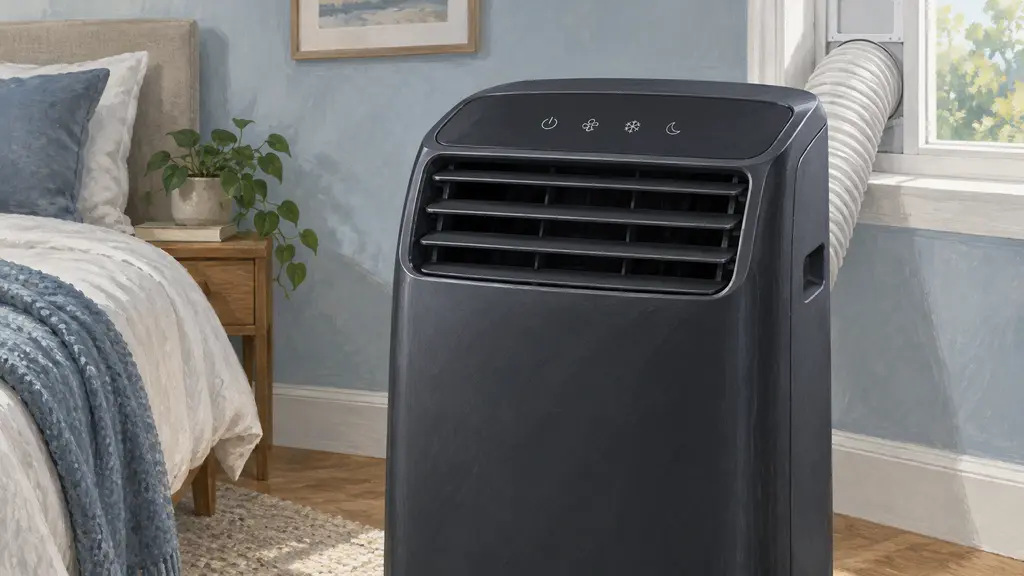
Most portable ACs collect condensate water in an internal tank that needs emptying every so often, but the real fix isn’t tolerating manual emptying, it’s checking whether your model has a continuous drain port and connecting a regular hose that carries the water out as it forms. If that port exists and is hooked up correctly, you can run the unit for weeks without ever thinking about the tank.
The quick answer
The water that collects in a portable AC comes from the humidity the unit removes from the air while it cools, it’s not a defect. Many models have a continuous drain port near the exhaust hose opening, and connecting a standard drain hose to a floor drain or an outside drain point removes the need to empty the tank by hand almost entirely. If your model doesn’t have that port, manual emptying is the only option, though it happens less often in drier air.
Key points
- The AC removes humidity from the air while it cools, and that humidity condenses into liquid water that collects in an internal tank (background on dehumidification from ENERGY STAR).
- Many models have a continuous drain port near the exhaust hose opening, designed for a separate drain hose.
- The fix isn’t finding a water-free AC, every true AC produces water, the fix is draining it properly rather than avoiding it.
- Local humidity decides how fast the tank fills: humid air produces water faster than dry heat.
- Continuous drain has no effect on cooling efficiency, it only removes the manual emptying step.
Where does this water actually come from?
A portable AC cools the room by pulling in its air, and as that air passes over the cold cooling coil inside the unit, the humidity in it condenses into liquid water, exactly like the droplets that form on a cold glass of water on a hot day. That water settles and collects in an internal tank designed to hold it until it’s emptied. The more humid the air, the more moisture the unit pulls out, and the faster the tank fills. In humid coastal cities, the tank can fill in a day or two, while in dry inland heat it might take a week.
The real fix: the continuous drain port
The fix isn’t worrying about the water, it’s using a port that already exists in many models. Check the back or base of your unit: if there’s a second small opening near the exhaust hose opening, it’s likely a continuous drain port designed for a separate hose (similar to a washing machine hose). If you connect a hose to that port and route it to a floor drain, outside through a small wall opening, or even a bucket sitting next to the unit that you empty periodically, the water drains automatically and you won’t need to think about the tank at all as long as the drain keeps working.
If your model doesn’t have that port, manual emptying is the only method, but you can reduce how often it’s needed: place the unit near a window or drain so emptying is quick, and watch the tank level in the first week to learn the actual emptying frequency in your room.
Comparison: manual emptying or continuous drain?
| Criterion | Manual tank emptying | Continuous drain with a hose |
|---|---|---|
| Ongoing effort | Periodic emptying, daily to weekly depending on humidity | Nearly zero after setup |
| Installation | None, ready out of the box | Drain hose plus an outside drain point |
| Placement flexibility | Flexible, anywhere in the room | Needs to be near a drain or opening |
| Best for | Short or temporary use | Long daily use with no monitoring |
The simple rule: if the unit will run daily for an extended period, check for the continuous drain port first, since it removes the most repetitive and annoying task in running a portable AC.
So which portable AC should you buy?
Regardless of drainage, the priority is buying a true AC with clear specs first. From this category, our pick is the Ocean 12,000 BTU Portable Air Conditioner, a true refrigerant AC with enough power for a mid-size room, which is why it tops our best portable AC in Egypt guide. Before buying any model, check its manual for a continuous drain port if that matters to you, since that spec isn’t always mentioned clearly in the listing.
See the Ocean 12,000 BTU Portable AC price on Amazon.eg ↗
If your model has a continuous drain port that isn’t connected, a continuous drain hose kit, fitted directly into that port, is a simple practical add-on that removes the manual emptying task entirely as long as there’s a nearby drain point to route it to.
Bottom line
The water that collects in a portable AC is a natural result of the cooling process itself, not a defect, and many models have a continuous drain port that removes the need for manual emptying entirely once connected to a hose leading to a drain or an outside point. Check your model’s manual first, and if the port exists, the setup is simple and saves daily effort. If your other issue is the exhaust hose itself, read is there a portable AC without an exhaust hose, and if you’re not sure a portable AC is the right category for you, read does a portable AC cool as well as a split AC. See our full pick in the best portable AC in Egypt, and get the full buying criteria in our how to choose a portable AC guide or browse our portable AC section.
Sources
- Amazon.eg, product listings and reviews used for the price and spec comparison.
- ENERGY STAR, “Dehumidifiers”,” background on how condensation-based moisture removal works: https://www.energystar.gov/products/dehumidifiers
This analysis is based on published information from Amazon.eg, ENERGY STAR (Dehumidifiers).
Frequently asked questions
Why does water collect in a portable AC at all?
The unit pulls in room air and cools it, and while doing that it removes humidity from the air, which condenses into liquid water inside the unit exactly like it does in any air conditioner or refrigerator. That water settles into an internal tank, and the more humid the air, the faster the tank fills.
Does every portable AC have a continuous drain port?
No, not every model. Some portable ACs have a continuous drain port on the back or bottom near the exhaust hose opening, while others rely solely on the internal tank with a manual drain outlet you empty by hand. Check your model's manual or spec sheet before assuming a continuous drain port exists.
Can I attach a regular drain hose instead of emptying the tank by hand?
If your model has a continuous drain port, yes, a standard drain hose (similar to a washing machine hose) fits into that port and carries the water to a floor drain, out a window, or into a bucket sitting next to the unit, removing the need for manual emptying almost entirely as long as the hose stays connected and draining properly.
Does continuous drain affect cooling efficiency?
No, drainage only deals with the excess water produced by condensation, and has nothing to do with the cooling cycle itself. The unit cools just as efficiently whether the water collects in a tank or drains directly, the only difference is you won't need to open the unit and empty it yourself periodically.