
 UAE
UAE  Saudi Arabia
  USA
USA Is a Portable Blender Worth It? Or Is a Regular One Better?
We may earn a commission from purchases through our links, at no extra cost to you. How we choose · Disclosure.
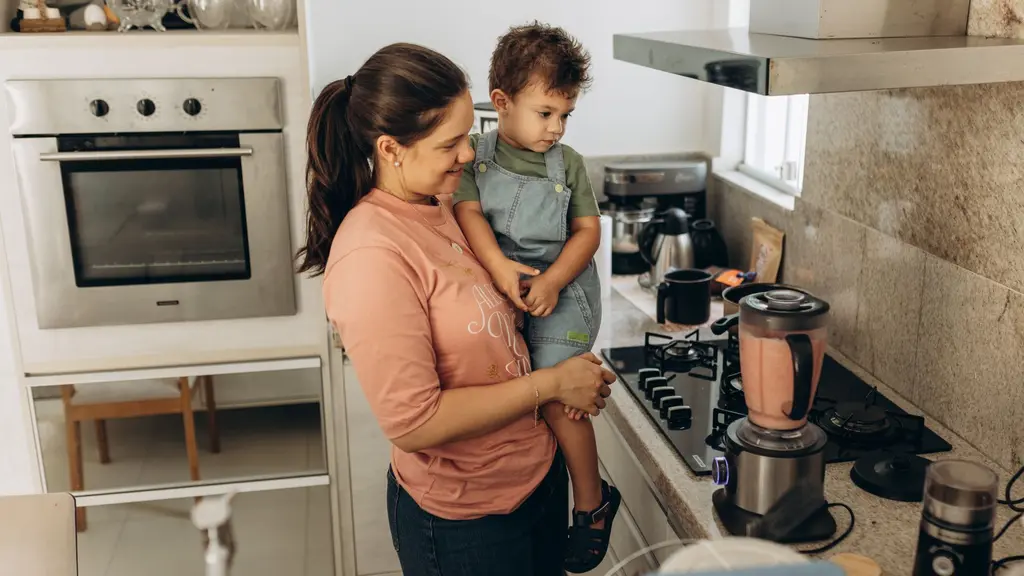
A portable blender is worth it if your use case is specific: a single smoothie outside the house at work, the gym, or while traveling. But it’s not a replacement for a regular blender in the kitchen, since its capacity is much smaller and its motor weaker, and it won’t crush hard ice or blend family-size batches. If most of your blending happens at home, a regular blender covers far more needs for a similar or even lower price.
The quick answer
A portable USB blender is worth it for anyone who regularly needs a single smoothie away from home: work, the gym, travel. Its motor and battery are limited, so it won’t crush hard ice or blend large batches, and that’s not a flaw, it’s simply the design’s ceiling. If blending happens mainly in the kitchen for a family or varied daily use, a regular blender is the better value for the power and capacity you get for the price.
Key points
- A portable blender is a small blender with a rechargeable battery instead of plugging directly into power (rechargeable battery background from Britannica), which gives it mobility but also caps its power.
- A regular blender runs on a motor wired directly into the mains (blender definition from Britannica), so its power stays high and steady the whole time it runs.
- A portable blender is built for a single smoothie in small amounts, not for crushing hard ice or blending family-size batches.
- The battery caps how many uses you get before recharging, and its own lifespan shrinks over time like any rechargeable battery.
- Neither replaces the other: a portable blender is an on-the-go addition, a regular blender is the kitchen staple.
What exactly is a portable blender?
A portable blender is a small device, usually with a jug between half a liter and 600ml, with a small motor and a rechargeable lithium battery charged over a USB cable instead of plugging directly into the wall. The idea is that you can take it outside the house and make a single smoothie or drink anywhere, as long as the battery has a prior charge, without needing a nearby power outlet.
Its real advantages
- Mobility and size: fits in a bag or a gym bag without any bulk.
- Works without power: useful on trips or at the office if there’s no outlet nearby.
- Fast cleanup: its small jug is usually easier and quicker to wash than a large one.
- Drink from the same jug: most models let you drink straight from the jug you blended in, without transferring the smoothie to another cup.
Its limits
- A much weaker motor than a regular blender, so it won’t crush hard ice or grind fibrous ingredients like raw carrot easily.
- Small capacity, usually one cup, not suited to a family or making enough for more than one person.
- The battery has a limited lifespan and number of uses, and needs frequent recharging if you use it daily.
- Not built for heavy or frequent blending, so heavy use wears it out faster than a regular blender built for intensive daily use.
Comparison table: portable versus regular blender
| Criterion | Portable blender | Regular blender |
|---|---|---|
| Power source | Rechargeable battery (USB) | Direct power outlet |
| Jug capacity | Usually around half a liter | Usually 1.5 to 2L |
| Ice crushing | Weak or not available | Available on most mid-tier and strong models |
| Best use | Single smoothie away from home | Daily blending for a family, soup, sauces, ice |
| Power | Limited, handles soft ingredients | 500W to 1000W depending on model |
| Main advantage | Light and mobile without power | More power and capacity for a similar price |
So who should buy what?
If you regularly make a single smoothie away from home (work, the gym, travel) and need something light with no nearby power outlet, a portable blender is worth the money for that specific use. But if most of your blending happens in the kitchen, whether for a family or even just yourself across varied things (juices, soup, sauces), a regular blender gives you more power and capacity for a similar or lower price than a good portable one, which makes it the smarter pick for most households. Most people who buy a portable blender already have a regular blender at home and use the portable one as an addition, not a replacement.
A middle ground: personal size without the battery limits
If what draws you to a portable blender is the personal size rather than the battery specifically, there’s a sensible middle ground: a regular personal blender instead of a USB model. A practical example from our shortlist: the Black+Decker SBX300-B5, a 6-piece personal sports blender per the listing at 300W and ≈ 1,950 EGP, carrying the biggest rating base among the personal blenders in our sweep: 1,791 ratings averaging 4.1 of 5, with a two-year warranty stated in the listing title itself.
And plainly, so you know its limits: the listing does not describe it as battery-powered and does not detail what the 6 pieces are, so don’t assume a travel lid or a battery, check the box contents on the product page before you buy. Its 300W is also the lowest power among our picks, which makes it a soft-fruit smoothie machine rather than one for frequent ice crushing. This pick sits in the personal-smoothie tier of our guide to the best blender in Egypt. And of course, if you have no blender at home at all, start with a full jug blender as the foundation before anything else. You’ll find its current price and the Amazon link in the card below.
Bottom line
A portable blender is worth it if your use case is specific and clear: a single smoothie away from home on a regular basis. But it’s an addition, not a replacement for a regular blender in the kitchen, since its power and capacity are limited by design. If you already own a portable blender, it’s still worth having a regular blender at home first to cover daily use, then deciding if the portable one adds value for mobility. If you’re still choosing your main blender, see our guide to the best blender in Egypt or how to choose a blender, and if smoothies are your daily job at home, see the best blender for smoothies. And if you want another comparison before buying any electric blender, read the best electric blender.
Sources
- Britannica, “Blender”, definition of the blender and its basic parts: https://www.britannica.com/dictionary/blender
- Britannica, “Rechargeable storage batteries”, background on rechargeable batteries and their lifespan: https://www.britannica.com/technology/battery-electronics
This analysis is based on published information from Britannica (Blender), Britannica (Rechargeable storage batteries).
Frequently asked questions
Can a portable blender crush ice like a regular blender?
Usually not. Most portable blenders have a small motor and a limited battery, so they aren't built for crushing hard ice or blending heavy loads, and their real ceiling is juices and smoothies with soft ingredients or ice that's already crushed. If crushing ice regularly matters to you, a regular blender with a stronger motor and blade is the right pick.
Is a portable blender worth the money or a waste of it?
It's worth it if your use case is specific: a single smoothie at work, the gym, or while traveling without easy access to power. But it's not a full replacement for a regular blender in the kitchen, since its capacity is smaller and its power is lower. If you're only buying one blender for the house, a regular blender covers more needs.
Who should buy a portable blender?
People who regularly make a single smoothie outside the house: at work, the gym, or on trips, and need something light with a battery and no power outlet nearby. If most of your blending happens in the kitchen for a family or in varied amounts larger than one cup, a portable blender isn't the priority.
Does a portable blender replace a regular blender at home?
No, it's an addition, not a replacement. The jug capacity is much smaller (usually under half a liter) and the motor is weaker, so it won't cover a family's needs or daily blending of varied things like soup and sauces. Most people who buy one already own a regular blender at home and need an extra option for on the go.
How long does a portable blender's battery last?
It varies by model and use, but it usually covers a limited number of batches (roughly 6 to 15 cups) before needing a recharge, and the battery's own lifespan shrinks after hundreds of charge cycles like any rechargeable battery. If you plan to use it daily, check the battery specs before buying.